Before you buy a used Ford Focus (I).
Taken only from Testigo's sourced sheets. Use it to question the seller and on the test drive: it does not confirm that any particular car is affected.
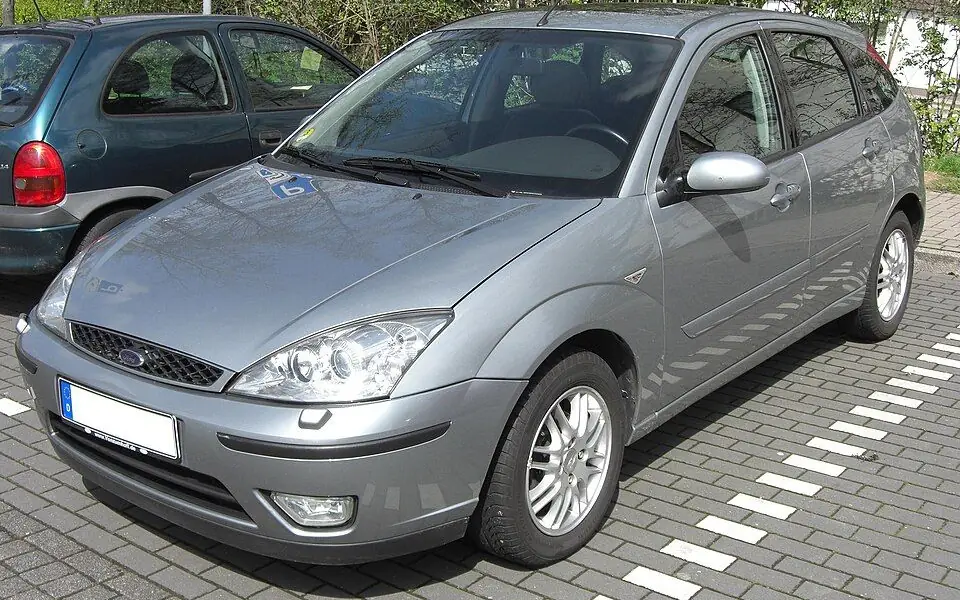
The essentials.
- 2 documented, sourced faults across its 2 engines.
- That is not much data: if no other faults show up here, it does not mean it has none.
- They all depend on the equipment or the production date: ask what this car has.
- 4 official recalls on record: ask for the chassis number (VIN) and confirm they have been done.
- According to the data we have, the engine with the fewest documented faults is the 1.4 / 1.6 / 1.8 / 2.0 Zetec (Petrol).
Typical faults by engine
The period and mileage are those mentioned by each sheet's sources. They are not a maintenance interval and do not predict that any particular car will fail.
All versions
Sheets the catalogue links to all 2 of its engines.
- Weak points of the first-generation FocusKnown weak points
- Period mentioned
- 1998–2004
- Mileage mentioned
- The sheet does not mention a mileage.
Applies if: First-generation Focus.
1.4 / 1.6 / 1.8 / 2.0 Zetec
Petrol
We have no faults specific to this engine, only those common to every version.
1.8 TDDi / TDCi
Diesel
- Will not start or runs rough with the glow-plug light flashing: high-pressure pump on the first TDCi engines (2001–2002)Injection / turbo
- Period mentioned
- 2001–2002
- Mileage mentioned
- The sheet does not mention a mileage.
Applies if: Only the 1.8 TDCi built from 05/2001 to 04/2002 (not the TDDi).
Which engine has the fewest documented faults?
| Engine | Documented faults | Recalls |
|---|---|---|
| 1.4 / 1.6 / 1.8 / 2.0 ZetecPetrolFewest documented | 11 with conditions | 4 |
| 1.8 TDDi / TDCiDiesel | 22 with conditions | 4 |
According to the data we have, the engine with the fewest documented faults is the 1.4 / 1.6 / 1.8 / 2.0 Zetec (Petrol).
By fuel type, the one with the fewest documented faults is: Petrol.
We only count the sourced sheets we have. An engine with fewer is not guaranteed to be more reliable: it may have been studied less or sold in smaller numbers.
Official recalls: ask before you pay
A recall existing does not mean this car is affected or that it is still outstanding: it depends on the chassis number, the market and the production date.
- Ask the seller for the chassis number (VIN): it has 17 characters, appears in the car's documents and can usually also be seen at the base of the windscreen.
- Ask an official Ford dealer, or the brand's official website if it lets you check by chassis number, whether each recall has been done or is still outstanding for that VIN.
- Manufacturer recalls are normally carried out free of charge by the official service network. If one is outstanding, ask for it to be done before you close the sale.
Ford brake recalls (2001–2026)Brakes
How to check it: Check by VIN whether any of the recalls is outstanding (at the dealer or on the DVSA website) and carry out the inspection or replacement it requires.
View full entryFord fuel-system recalls (2002–2026)Fuel system
How to check it: Check by VIN whether any of the recalls is outstanding (at the dealer or on the DVSA website) and carry out the inspection or replacement it requires.
View full entryFord engine, transmission and software recalls (2000–2026)Powertrain and engine management
How to check it: Check by VIN whether any of the recalls is outstanding (at the dealer or on the DVSA website) and carry out the inspection or replacement it requires.
View full entryFord electrical, lighting and electronics recalls (2002–2026)Electrical and electronic systems
How to check it: Check by VIN whether any of the recalls is outstanding (at the dealer or on the DVSA website) and carry out the inspection or replacement it requires.
View full entryOn the test drive: what to look and listen for
Taken from each sheet's symptoms and checks. You can tick off what you have already looked at: it is saved only in this browser.
0 of 2 checked
Known weak points
Look out for: Unstable idle, thermostat-housing leaks and coil failures; on diesels, injection-pump failure (TDDi), a weak turbo or camshaft sensor (TDCi). Also rust on door seams, tailgate and bonnet, water in the footwells and seizing rear brakes.
Ask them to check: Clean or replace the idle valve, check for coolant leaks and coils; on diesels, read codes and check the pump. Check rust, wet carpets and rear brakes before the roadworthiness test.
Injection / turbo
Look out for: The engine will not start or runs unevenly, and the glow-plug warning light flashes.
Ask them to check: The garage measures rail pressure and looks for metal particles in the fuel. The repair is a modified high-pressure pump plus new injectors, and the whole fuel system has to be cleaned so no particles remain; replacing only the pump is not enough.
Sources
Every fact on this page comes from these Testigo sheets and their original sources. Sources are not checked in real time.
- Weak points of the first-generation Focus
- Will not start or runs rough with the glow-plug light flashing: high-pressure pump on the first TDCi engines (2001–2002)
- Ford brake recalls (2001–2026)
- Ford fuel-system recalls (2002–2026)
- Ford engine, transmission and software recalls (2000–2026)
- Ford electrical, lighting and electronics recalls (2002–2026)
More Ford buying guides
- Ford Galaxy (II)2000–2006
- Ford Ranger (I)2000–2006
- Ford Transit (VI)2000–2006
- Ford Mondeo (III)2000–2007
- Ford Ka (I)2000–2008
- Ford Fiesta (V)2002–2008
- Ford C-Max (I)2003–2010
- Ford Fusion2002–2012