Before you buy a used Mercedes-Benz Clase S (W220).
Taken only from Testigo's sourced sheets. Use it to question the seller and on the test drive: it does not confirm that any particular car is affected.
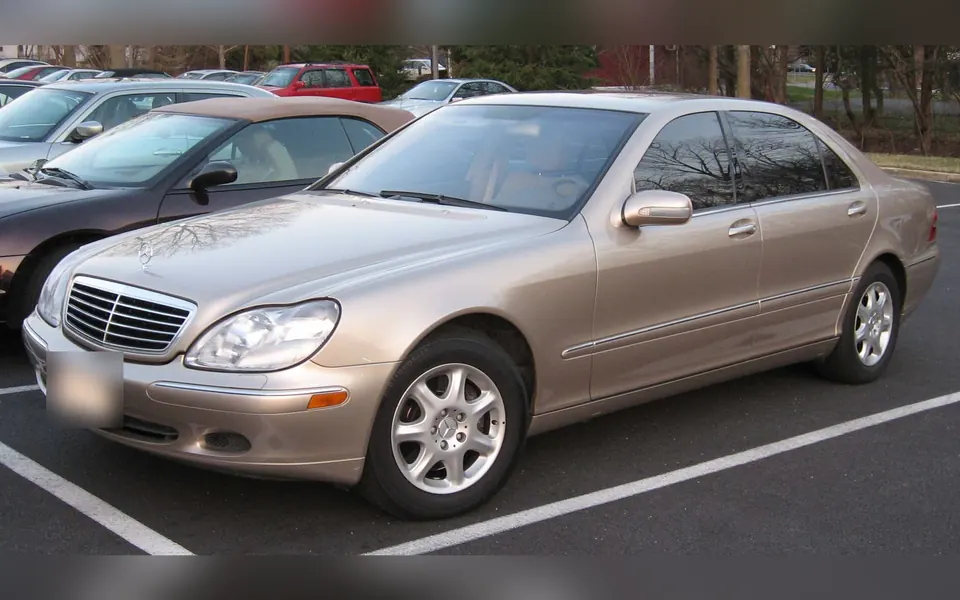
The essentials.
- 4 documented, sourced faults across its 4 engines.
- They all depend on the equipment or the production date: ask what this car has.
- We have no official recalls on record for this model; ask anyway, with the chassis number (VIN).
- According to the data we have, all its engines have the same number of documented faults.
Typical faults by engine
The period and mileage are those mentioned by each sheet's sources. They are not a maintenance interval and do not predict that any particular car will fail.
All versions
Sheets the catalogue links to all 4 of its engines.
- AIRMATIC leaks and compressorSuspension
- Period mentioned
- 2002–2026
- Mileage mentioned
- 95,000–115,000 km
Applies if: Only if fitted with air suspension.
- 13-pin connector leak on the 722.6 gearboxAutomatic gearbox
- Period mentioned
- 1996–2013
- Mileage mentioned
- The sheet does not mention a mileage.
Applies if: Only if fitted with the automatic gearbox described in the record.
- The Mercedes S-Class (W220) sits low because of leaks in the AIRmatic air suspensionSuspension and steering
- Period mentioned
- 1998–2005, mostly cars built before 2003
- Mileage mentioned
- The sheet does not mention a mileage.
Applies if: Only those with AIRmatic air suspension; those with ABC hydraulic suspension have other faults.
- COMAND screen goes black and electronic faults on the Mercedes S-Class (W220)Electrical and electronic systems
- Period mentioned
- 1998–2005
- Mileage mentioned
- The sheet does not mention a mileage.
Applies if: All versions.
S 320 / 400 CDI · S 350 / 430 / 500 · S 55 AMG (5.4 V8) · S 65 AMG (6.0 V12)
S 320 / 400 CDI (Diesel) · S 350 / 430 / 500 (Petrol) · S 55 AMG (5.4 V8) (Petrol) · S 65 AMG (6.0 V12) (Petrol)
We have no faults specific to this engine, only those common to every version.
Which engine has the fewest documented faults?
| Engine | Documented faults |
|---|---|
| S 320 / 400 CDIDiesel | 44 with conditions |
| S 350 / 430 / 500Petrol | 44 with conditions |
| S 55 AMG (5.4 V8)Petrol | 44 with conditions |
| S 65 AMG (6.0 V12)Petrol | 44 with conditions |
According to the data we have, all its engines have the same number of documented faults.
We only count the sourced sheets we have. An engine with fewer is not guaranteed to be more reliable: it may have been studied less or sold in smaller numbers.
Official recalls: ask before you pay
We have no official recalls on record for this model. Our list is not complete: ask anyway, with the chassis number.
- Ask the seller for the chassis number (VIN): it has 17 characters, appears in the car's documents and can usually also be seen at the base of the windscreen.
- Ask an official Mercedes-Benz dealer, or the brand's official website if it lets you check by chassis number, whether each recall has been done or is still outstanding for that VIN.
- Manufacturer recalls are normally carried out free of charge by the official service network. If one is outstanding, ask for it to be done before you close the sale.
On the test drive: what to look and listen for
Taken from each sheet's symptoms and checks. You can tick off what you have already looked at: it is saved only in this browser.
0 of 4 checked
Suspension
Look out for: One corner sags overnight, suspension fault warning, the compressor runs a lot or a compressor overheated message appears; eventually the car sits low and rides hard.
Ask them to check: Spray soapy water on bellows, lines and valve block; read each corner's data with Xentry; check the compressor fuse and relay. Do not replace the compressor without fixing the leak first, or the new one will fail soon.
Automatic gearbox
Look out for: Oil around the electrical connector on the side of the gearbox, harsh shifts or slipping, delayed engagement and limp mode: the car stays in one gear (usually 2nd and reverse after a restart) and the engine light comes on.
Ask them to check: Read the gearbox control unit codes before switching off if possible (a restart can clear them). Look for oil at the connector and, with it unplugged, on its pins and at the control unit plug. According to the service bulletin, the connector should only be removed with gearbox oil below 50 °C to avoid damaging the conductor plate, and the harness must be routed without tension.
Suspension and steering
Look out for: The car looks sunk, with one or more wheels lower than normal, sometimes almost touching the ground after a night parked; a suspension warning may appear or it may stay low after starting.
Ask them to check: Read the suspension faults with Mercedes diagnostic equipment, check the air strut seals, lines and valve block with soapy water, and see whether the compressor manages to lift the car. Replace the part that leaks air; if the compressor has worked hard because of the leak, check it too.
Electrical and electronic systems
Look out for: The COMAND screen (navigation, radio and phone) stays black or stops working altogether; more rarely, engine management or immobiliser faults that stop the car from starting.
Ask them to check: Read the faults in all the control units with Mercedes diagnostic equipment before replacing parts. Check the battery and the COMAND power supply, because low voltage causes similar faults.
Sources
Every fact on this page comes from these Testigo sheets and their original sources. Sources are not checked in real time.
- AIRMATIC leaks and compressor
- 13-pin connector leak on the 722.6 gearboxBrake & Front End (ALLDATA): oil leak at the 722.6 connectorMercedesMedic: replacing the 722.6 13-pin connectorMercedesMedic: P0715 and P0720 codes and limp modeMBClub UK (forum): oil in the 722.6 harness on an ML55Bob Is The Oil Guy (forum): CLK320 in limp modeThe Transmission Shop: leaks and limp mode in Mercedes gearboxes
- The Mercedes S-Class (W220) sits low because of leaks in the AIRmatic air suspension
- COMAND screen goes black and electronic faults on the Mercedes S-Class (W220)
More Mercedes-Benz buying guides
- Mercedes-Benz ML (W163)2000–2005
- Mercedes-Benz Clase A (W168)2000–2004
- Mercedes-Benz CL (C215)2000–2006
- Mercedes-Benz SLK (R170)2000–2004
- Mercedes-Benz Sprinter (T1N)2000–2006
- Mercedes-Benz Vaneo (W414)2002–2005
- Mercedes-Benz Clase C (W203)2000–2007
- Mercedes-Benz Vito / Clase V (W638)2000–2003