Before you buy a used Opel Corsa E.
Taken only from Testigo's sourced sheets. Use it to question the seller and on the test drive: it does not confirm that any particular car is affected.
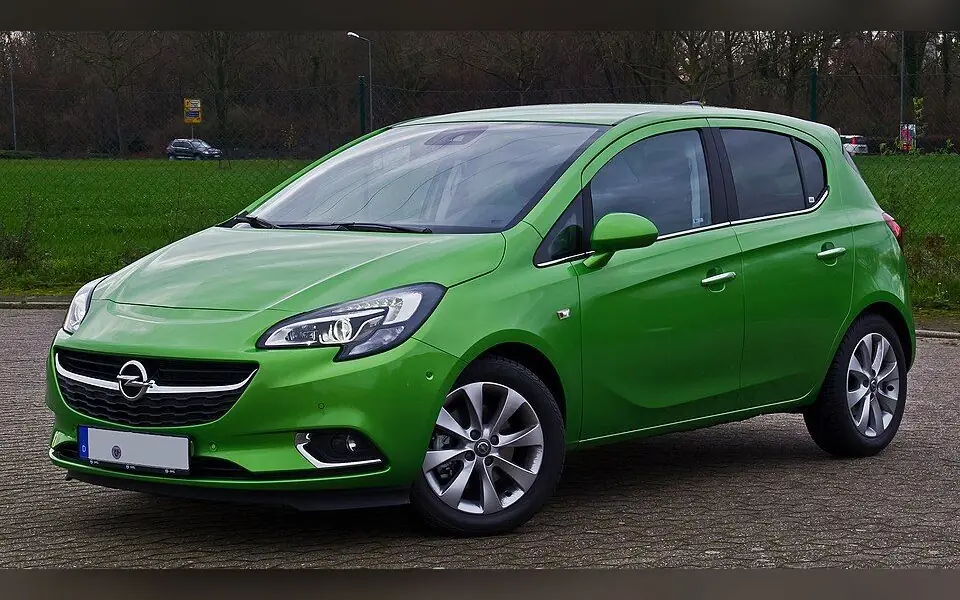
The essentials.
- 4 documented, sourced faults across its 2 engines.
- 2 of them depend on the equipment or the production date: ask what this car has.
- We have no official recalls on record for this model; ask anyway, with the chassis number (VIN).
- According to the data we have, all its engines have the same number of documented faults.
Typical faults by engine
The period and mileage are those mentioned by each sheet's sources. They are not a maintenance interval and do not predict that any particular car will fail.
All versions
Sheets the catalogue links to all 2 of its engines.
- Period mentioned
- 2007–2017
- Mileage mentioned
- The sheet does not mention a mileage.
Applies if: Built from 2007 to 2017; affects every version.
- Rear doors that do not lock or unlock with the remote because of water in the harness connector (5-door Corsa, 2015–2017)Electrical and electronic systems
- Period mentioned
- 2015–2017
- Mileage mentioned
- What the sheet says: According to L'argus (August 2019), water gets into the connector of the rear door wiring harness. Opel replaced the harness and covered it up to 5 years or 100,000 km.
Applies if: Only five-door cars built from 2015 to 2017.
1.0 Turbo / 1.2 / 1.4
Petrol
- Ecotec 1.0–1.4 timing chainValve timing
- Period mentioned
- 2003–2019
- Mileage mentioned
- The sheet does not mention a mileage.
1.3 CDTI
Diesel
- 1.3 Multijet chain, DPF and EGRTiming / DPF / EGR
- Period mentioned
- 2003–2020
- Mileage mentioned
- 80,000–120,000 km
Which engine has the fewest documented faults?
| Engine | Documented faults |
|---|---|
| 1.0 Turbo / 1.2 / 1.4Petrol | 32 with conditions |
| 1.3 CDTIDiesel | 32 with conditions |
According to the data we have, all its engines have the same number of documented faults.
We only count the sourced sheets we have. An engine with fewer is not guaranteed to be more reliable: it may have been studied less or sold in smaller numbers.
Official recalls: ask before you pay
We have no official recalls on record for this model. Our list is not complete: ask anyway, with the chassis number.
- Ask the seller for the chassis number (VIN): it has 17 characters, appears in the car's documents and can usually also be seen at the base of the windscreen.
- Ask an official Opel dealer, or the brand's official website if it lets you check by chassis number, whether each recall has been done or is still outstanding for that VIN.
- Manufacturer recalls are normally carried out free of charge by the official service network. If one is outstanding, ask for it to be done before you close the sale.
On the test drive: what to look and listen for
Taken from each sheet's symptoms and checks. You can tick off what you have already looked at: it is saved only in this browser.
0 of 4 checked
Valve timing
Look out for: Engine rattle, especially on start-up, power loss and misfires (P0300 to P0304).
Ask them to check: Listen to a cold start, read misfire codes, look for the yellow mark on the timing cover (Astra H) and check chain stretch.
Timing / DPF / EGR
Look out for: Chain rattle on cold starts; oil level rising and smelling of diesel; particulate filter warning; power loss from a dirty EGR or the turbo.
Ask them to check: Listen to a cold start, check whether the oil is above maximum or smells of diesel, read the DPF status and check the oil change history.
Climate control
Look out for: The cabin fan (heating and air conditioning) stops blowing; before that it may work on and off or only on some speeds.
Ask them to check: Check the fan motor connector and its resistor (behind the glovebox, in the front passenger footwell) for burnt or deformed plastic; check whether the motor gets voltage. If the motor is replaced, also replace the damaged connector and ask Opel about contributing to the cost.
Electrical and electronic systems
Look out for: Rear door faults, mainly with the central locking: they do not lock or unlock, often after rain or a car wash; the front doors work.
Ask them to check: Check the harness connector between the door frame and the rear door (moisture, green deposits or corroded pins) and test the lock on each door. Opel's fix is to replace the wiring harness.
Sources
Every fact on this page comes from these Testigo sheets and their original sources. Sources are not checked in real time.
More Opel buying guides
- Opel Karl2015–2019
- Opel Cascada2013–2019
- Opel Adam2012–2019
- Opel Mokka / Mokka X2012–2019
- Opel Movano B2010–2021
- Opel Ampera / Ampera-e2012–2019
- Opel Astra K2015–2021
- Opel Zafira Tourer C2011–2019