Before you buy a used Opel Insignia A.
Taken only from Testigo's sourced sheets. Use it to question the seller and on the test drive: it does not confirm that any particular car is affected.
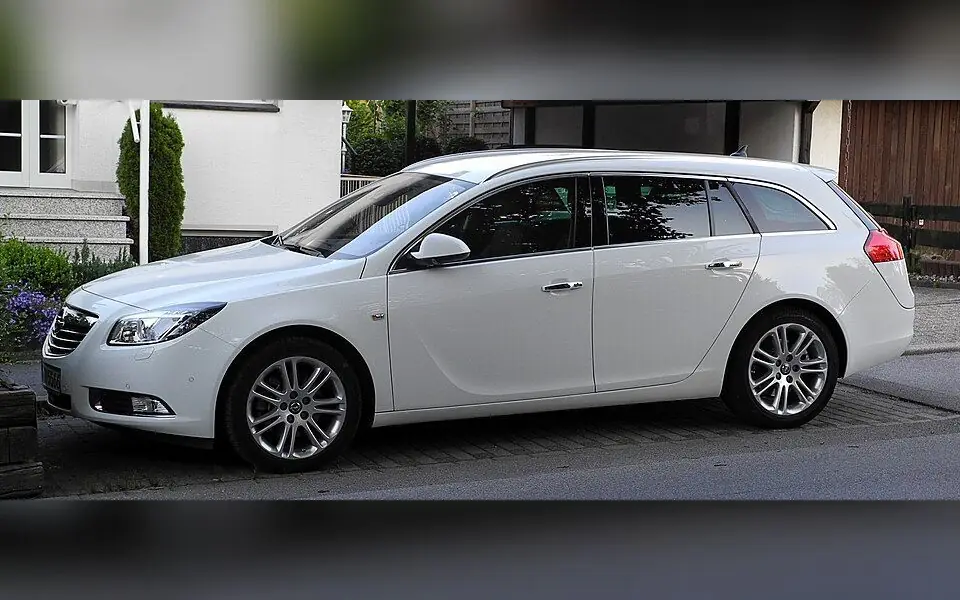
The essentials.
- 7 documented, sourced faults across its 2 engines.
- 6 of them depend on the equipment or the production date: ask what this car has.
- We have no official recalls on record for this model; ask anyway, with the chassis number (VIN).
- According to the data we have, the engine with the fewest documented faults is the 1.4 / 1.6 / 2.0 Turbo (Petrol).
Typical faults by engine
The period and mileage are those mentioned by each sheet's sources. They are not a maintenance interval and do not predict that any particular car will fail.
All versions
Sheets the catalogue links to all 2 of its engines.
- M32 manual gearbox bearingsGearbox
- Period mentioned
- 2004–2019
- Mileage mentioned
- The sheet does not mention a mileage.
Applies if: Only if fitted with the M32 six-speed manual (common on six-speed turbo and diesel versions); confirm by VIN.
- Rear-axle toe link that breaks because of corrosion (Opel Insignia A, 2022 recall)Suspension and steering
- Period mentioned
- 2008–2013
- Mileage mentioned
- The sheet does not mention a mileage.
Applies if: Built from 2007 to 2013 (February 2022 recall). Confirm by VIN.
- Rear differential clutch worn early because of a blocked breather (Insignia A 4x4, 2009)Transmission
- Period mentioned
- 2009
- Mileage mentioned
- The sheet does not mention a mileage.
Applies if: Only with all-wheel drive (4x4), model year 2009.
- The power tailgate stops working because of water in its control unit (Insignia A with glass roof)Electrical and electronic systems
- Period mentioned
- 2008–2017
- Mileage mentioned
- The sheet does not mention a mileage.
Applies if: Only with power tailgate and glass roof (July 2017 recall). Confirm by VIN.
1.4 / 1.6 / 2.0 Turbo
Petrol
- Insignia A radar moisture causes bus interferenceElectrical and electronic systems
- Period mentioned
- Bulletin-specific period and equipment stated in each assignment.
- Mileage mentioned
- The sheet does not mention a mileage.
Applies if: Only Insignia A 2013–2015 fitted with Lane Change Assistant and the rear left radar described by HELLA; check equipment and moisture/corrosion before attributing the fault.
2.0 CDTI
Diesel
- Opel CDTI EGR cooler and timing beltEGR / timing
- Period mentioned
- 2006–2019
- Mileage mentioned
- 80,000–180,000 km
- Period mentioned
- 2009–2012
- Mileage mentioned
- The sheet does not mention a mileage.
Applies if: Built from 2009 to 2012; confirm by VIN which campaign applies.
Which engine has the fewest documented faults?
| Engine | Documented faults |
|---|---|
| 1.4 / 1.6 / 2.0 TurboPetrolFewest documented | 55 with conditions |
| 2.0 CDTIDiesel | 65 with conditions |
According to the data we have, the engine with the fewest documented faults is the 1.4 / 1.6 / 2.0 Turbo (Petrol).
By fuel type, the one with the fewest documented faults is: Petrol.
We only count the sourced sheets we have. An engine with fewer is not guaranteed to be more reliable: it may have been studied less or sold in smaller numbers.
Official recalls: ask before you pay
We have no official recalls on record for this model. Our list is not complete: ask anyway, with the chassis number.
- Ask the seller for the chassis number (VIN): it has 17 characters, appears in the car's documents and can usually also be seen at the base of the windscreen.
- Ask an official Opel dealer, or the brand's official website if it lets you check by chassis number, whether each recall has been done or is still outstanding for that VIN.
- Manufacturer recalls are normally carried out free of charge by the official service network. If one is outstanding, ask for it to be done before you close the sale.
On the test drive: what to look and listen for
Taken from each sheet's symptoms and checks. You can tick off what you have already looked at: it is saved only in this browser.
0 of 7 checked
EGR / timing
Look out for: Coolant loss with no visible leak or white smoke (cracked EGR cooler); power loss and rough idle (clogged EGR); on the 2.0 CDTI, water pump noise before the belt breaks.
Ask them to check: Watch the coolant level, check whether the 2.0 CDTI belt and water pump were replaced together and inspect the EGR.
Electrical and electronic systems
Look out for: Parking-aid, radio, climate-control, electric-tailgate or cluster faults; control-unit communication problems.
Ask them to check: Inspect the left rear radar and connector; if corroded, replace the sensor and repair contacts according to diagnosis, then perform manufacturer calibration.
Look out for: The power tailgate does not open or close, or fails now and then.
Ask them to check: Check by VIN with Opel whether the campaign has been done. If the tailgate fails, you smell burning or see damp around the control unit, do not leave it: there is a fire risk.
Gearbox
Look out for: A whine that rises with speed, mainly in 5th and 6th (also in 1st and 2nd), a loose gear lever that moves on and off the throttle and, when advanced, gears jumping out. Left unrepaired, the bearing can break through the casing.
Ask them to check: In a garage test: confirm whether the noise depends on road speed (wheel bearing, tyre) or the gear engaged (gearbox), and whether the lever moves under load. Check the oil for metal debris. Repair early: replacing all bearings and fitting the revised end case costs far less than a new gearbox.
Suspension and steering
Look out for: The link that guides a rear wheel (toe link) can break because of rust; if it does, that wheel is no longer properly guided and the rear of the car becomes unstable, with knocks or pulling when braking or cornering.
Ask them to check: Check by VIN with Opel whether the campaign has been done. If you hear knocks at the rear or the car pulls when braking, do not carry on: have the rear-axle links checked on a lift. With the car raised, rust on the links can be seen.
Transmission
Look out for: Over time, the all-wheel drive may work less well because the rear differential clutch plates wear out early.
Ask them to check: Check by VIN with Opel whether the campaign has been done (in Germany it was marked with a silver paint dot on the fuel-flap hinge). If the all-wheel drive fails, the garage checks the breather and the condition of the rear differential oil.
Engine
Look out for: Engine judder and noises in the exhaust, or loss of power with the engine warning light on.
Ask them to check: Ask Opel by VIN whether the ECU has the software from both campaigns (each takes half an hour and is free). If the engine light comes on with loss of power, read the codes before replacing parts; if the exhaust smells burnt or smokes, stop and let it cool.
OBD codes worth looking for
If they let you read the fault memory with an OBD reader, these are the codes mentioned in this model's sheets:
Sources
Every fact on this page comes from these Testigo sheets and their original sources. Sources are not checked in real time.
- Opel CDTI EGR cooler and timing belt
- Insignia A radar moisture causes bus interference
- M32 manual gearbox bearings
- Rear-axle toe link that breaks because of corrosion (Opel Insignia A, 2022 recall)
- Rear differential clutch worn early because of a blocked breather (Insignia A 4x4, 2009)
- The power tailgate stops working because of water in its control unit (Insignia A with glass roof)
- Judder, lack of power or an overheated particulate filter due to the 2.0 CDTI software (Insignia A, 2009 and 2013 campaigns)
More Opel buying guides
- Opel Astra J2009–2015
- Opel Meriva B2010–2017
- Opel Antara2006–2015
- Opel Combo D2011–2018
- Opel Corsa D2006–2014
- Opel Zafira Tourer C2011–2019
- Opel Vivaro2001–2019
- Opel Adam2012–2019