Before you buy a used Skoda Fabia II (5J).
Taken only from Testigo's sourced sheets. Use it to question the seller and on the test drive: it does not confirm that any particular car is affected.
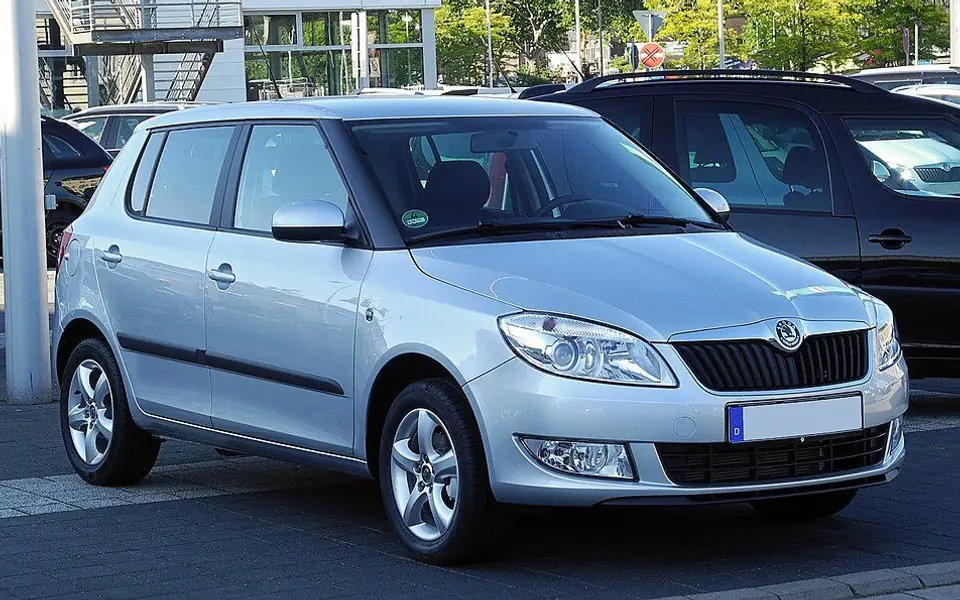
The essentials.
- 12 documented, sourced faults across its 5 engines.
- 7 of them depend on the equipment or the production date: ask what this car has.
- 1 official recall on record: ask for the chassis number (VIN) and confirm it has been done.
- According to the data we have, the engine with the fewest documented faults is the 1.6 TDI (EA189) (Diesel).
Typical faults by engine
The period and mileage are those mentioned by each sheet's sources. They are not a maintenance interval and do not predict that any particular car will fail.
All versions
Sheets the catalogue links to all 5 of its engines.
- A/C not cooling: N280 valveClimate control
- Period mentioned
- 2006–2026
- Mileage mentioned
- The sheet does not mention a mileage.
Applies if: Only if fitted with the air conditioning system described.
- Period mentioned
- 2007–2014
- Mileage mentioned
- The sheet does not mention a mileage.
Applies if: All versions.
- Period mentioned
- 2007–2014
- Mileage mentioned
- The sheet does not mention a mileage.
Applies if: All versions.
- Period mentioned
- 2007–2009 (L'argus, May 2009)
- Mileage mentioned
- What the sheet says: L'argus (May 2009) reports three faults of the Fabia II gearbox from the technical notes going round garages: the synchroniser, which makes 3rd and 4th hard to engage; a badly fitted bearing, which makes the gearbox noisy after about 30,000 km; and distortion of the gearbox centring dowels (modified at the factory), which ends up damaging the clutch disc and the flywheel.
Applies if: With manual gearbox; L'argus reported it in May 2009, in the model's first years.
- Bosch ABS fault fixed by reprogramming and condensation inside headlights and rear lights (Fabia II)Electrical and electronic systems
- Period mentioned
- 2007–2009 (L'argus, May 2009)
- Mileage mentioned
- The sheet does not mention a mileage.
Applies if: All versions.
1.2 HTP
Petrol
- 1.2 three-cylinder chain and valvesTiming / cylinder head
- Period mentioned
- 2001–2014
- Mileage mentioned
- Up to 50,000 km
- Period mentioned
- 2006–2010
- Mileage mentioned
- The sheet does not mention a mileage.
Applies if: Only with the 5-speed manual gearbox.
1.2 TSI (EA111)
Petrol
- EA111 TSI chain and tensionerValve timing
- Period mentioned
- 2006–2014
- Mileage mentioned
- 60,000–100,000 km
- Period mentioned
- 2008 onwards
- Mileage mentioned
- The sheet does not mention a mileage.
Applies if: Only if fitted with the 7-speed DQ200 DSG. Confirm the gearbox type.
These also apply, described above: Oil leak at the selector shaft of the 5-speed manual gearbox (petrol Fabia II and Roomster)
1.4 TSI RS (EA111)
Petrol
These also apply, described above: EA111 TSI chain and tensioner · DSG7 gearbox mechatronic unit (DQ200)
1.4 / 1.9 TDI PD
Diesel
- PD TDI camshaft, injectors and cylinder headInjection / cylinder head
- Period mentioned
- 2000–2010
- Mileage mentioned
- 120,000–200,000 km
- Period mentioned
- 2007–2010
- Mileage mentioned
- The sheet does not mention a mileage.
1.6 TDI (EA189)
Diesel
- Cracked EGR coolerCooling / EGR
- Period mentioned
- Approx. 2010–2020
- Mileage mentioned
- The sheet does not mention a mileage.
Which engine has the fewest documented faults?
| Engine | Documented faults | Recalls |
|---|---|---|
| 1.2 HTPPetrol | 76 with conditions | 1 |
| 1.2 TSI (EA111)Petrol | 87 with conditions | 1 |
| 1.4 TSI RS (EA111)Petrol | 76 with conditions | 1 |
| 1.4 / 1.9 TDI PDDiesel | 75 with conditions | 1 |
| 1.6 TDI (EA189)DieselFewest documented | 65 with conditions | 1 |
According to the data we have, the engine with the fewest documented faults is the 1.6 TDI (EA189) (Diesel).
By fuel type, the one with the fewest documented faults is: Diesel.
We only count the sourced sheets we have. An engine with fewer is not guaranteed to be more reliable: it may have been studied less or sold in smaller numbers.
Official recalls: ask before you pay
A recall existing does not mean this car is affected or that it is still outstanding: it depends on the chassis number, the market and the production date.
- Ask the seller for the chassis number (VIN): it has 17 characters, appears in the car's documents and can usually also be seen at the base of the windscreen.
- Ask an official Skoda dealer, or the brand's official website if it lets you check by chassis number, whether each recall has been done or is still outstanding for that VIN.
- Manufacturer recalls are normally carried out free of charge by the official service network. If one is outstanding, ask for it to be done before you close the sale.
Takata driver airbag that may throw out metal fragments (recalls 69PB and 69PC; since June 2026 Škoda asks owners not to drive)Airbags and seat belts
How to check it: Ask a Škoda dealer today, with the VIN, whether your car has 69PB or 69PC outstanding; the replacement is free. If 69PC is outstanding, do not drive the car until the airbag has been replaced: ask them to collect it or for an urgent appointment.
View full entryOn the test drive: what to look and listen for
Taken from each sheet's symptoms and checks. You can tick off what you have already looked at: it is saved only in this browser.
0 of 12 checked
Timing / cylinder head
Look out for: Chain noise, rough running, hesitation or intermittent over-fuelling; loss of compression from burnt exhaust valves; in severe cases the chain jumps and bends the valves.
Ask them to check: Listen for the chain at start-up, measure compression, check the oil change history and whether the chain kit has already been replaced.
Valve timing
Look out for: Rattle on a cold start, engine light for timing deviation; if the chain jumps, the engine cranks but won't start.
Ask them to check: Listen to a cold start and read the timing deviation values with VCDS. Ask for an invoice showing the revised kit was fitted.
Injection / cylinder head
Look out for: Growing noise from the cylinder head, power loss and rough running (cams and lifters); unstable idle, smoke or hesitation (injectors); on the 16-valve 2.0 TDI, coolant loss with no visible leak from a cracked head.
Ask them to check: Check the oil history (VW 505.01), listen to the head, check injector balance rates with a diagnostic tool and, on the 16-valve 2.0 TDI, read the head part number (03G 103 351) and look for coolant loss.
Engine
Look out for: Diesel mixes with the engine oil: the level can rise and the oil smells of diesel. If it carries on, the engine is damaged.
Ask them to check: Check the oil level and smell with the engine cold. If there is diesel in the oil, drive as little as possible and have the garage check the injector seats. Change the oil after the repair.
Cooling / EGR
Look out for: Coolant level drops with no visible leak, white smoke with a sweet smell, rising temperature or engine light. In severe cases the engine hydrolocks.
Ask them to check: Cooling system pressure test and check for coolant in the intake or manifold.
Climate control
Look out for: The air does not cool or cools intermittently (for example only at motorway speed), and sometimes the compressor rattles with the A/C on. Codes 01232 (N280 valve), P2612 or 00898.
Ask them to check: Read the codes and N280 control current with VCDS or ODIS, measure its resistance (about 10 ohms) and check the connector and wiring before replacing parts. If the valve or compressor is replaced, the whole circuit must be flushed.
Gearbox
Look out for: Oil on the gearbox where the drive shaft comes out; it often shows up as early as the first roadworthiness test.
Ask them to check: With the car on a lift, look for oil where the drive shaft meets the gearbox. If there is, replace the seal and check the gearbox oil level, because a gearbox low on oil gets damaged.
Look out for: Oil leaking from the gearbox around the shaft that moves the gears.
Ask them to check: Look for oil around the gearbox selector shaft. According to AUTO BILD, replacing the seal is not a big job; check the gearbox oil level afterwards.
Look out for: Third and fourth are hard to engage; gearbox noise from about 30,000 km; damaged clutch disc and flywheel.
Ask them to check: Tell the garage which gears are hard to engage and when the gearbox makes noise (on releasing the clutch, in a particular gear, in neutral). If the clutch slips or judders, have them also check the flywheel and the gearbox centring when it is taken apart.
Look out for: Judder or shudder pulling away in 1st/2nd, reverse won't engage, PRNDS letters flashing or a spanner warning, gearbox stuck in one gear (limp mode).
Ask them to check: Read the gearbox module faults with VCDS, OBDeleven or similar and check the mechatronic fuse.
Bodywork
Look out for: Wind noise on the move and water getting into the cabin through the front doors.
Ask them to check: Check that the front door seals are seated and stuck down properly. If they are crooked or coming away, have them refitted or replaced, and dry the carpet.
Electrical and electronic systems
Look out for: ABS fault (L'argus does not say what the driver notices); headlights and rear lights misted up inside.
Ask them to check: With the ABS warning light on, ask first for a code read-out and ask about reprogramming the unit before replacing it. If a headlight or rear light mists up, check its seals and rear cap: with a lot of water inside, the light may fail the MOT or periodic inspection.
Sources
Every fact on this page comes from these Testigo sheets and their original sources. Sources are not checked in real time.
- 1.2 three-cylinder chain and valves
- EA111 TSI chain and tensioner
- PD TDI camshaft, injectors and cylinder head
- Diesel in the oil from injectors loose in the cylinder head (Fabia II 1.4 and 1.9 TDI)
- Cracked EGR cooler
- A/C not cooling: N280 valve
- Oil leak at the drive shaft flange on the gearbox (Fabia II)
- Wind noise and water inside from the front door seals (Fabia II)
- Oil leak at the selector shaft of the 5-speed manual gearbox (petrol Fabia II and Roomster)
- Hard to engage 3rd and 4th, gearbox noise or damaged clutch and flywheel on early Fabia II
- Bosch ABS fault fixed by reprogramming and condensation inside headlights and rear lights (Fabia II)
- DSG7 gearbox mechatronic unit (DQ200)
- Takata driver airbag that may throw out metal fragments (recalls 69PB and 69PC; since June 2026 Škoda asks owners not to drive)
More Skoda buying guides
- Skoda Roomster2006–2015
- Skoda Superb II (3T)2008–2015
- Skoda Octavia II (1Z)2004–2013
- Skoda Yeti2009–2017
- Skoda Rapid2012–2019
- Skoda Citigo2012–2020
- Skoda Octavia I (1U)2000–2010
- Skoda Octavia III (5E)2012–2020