Before you buy a used Toyota RAV4 (IV).
Taken only from Testigo's sourced sheets. Use it to question the seller and on the test drive: it does not confirm that any particular car is affected.
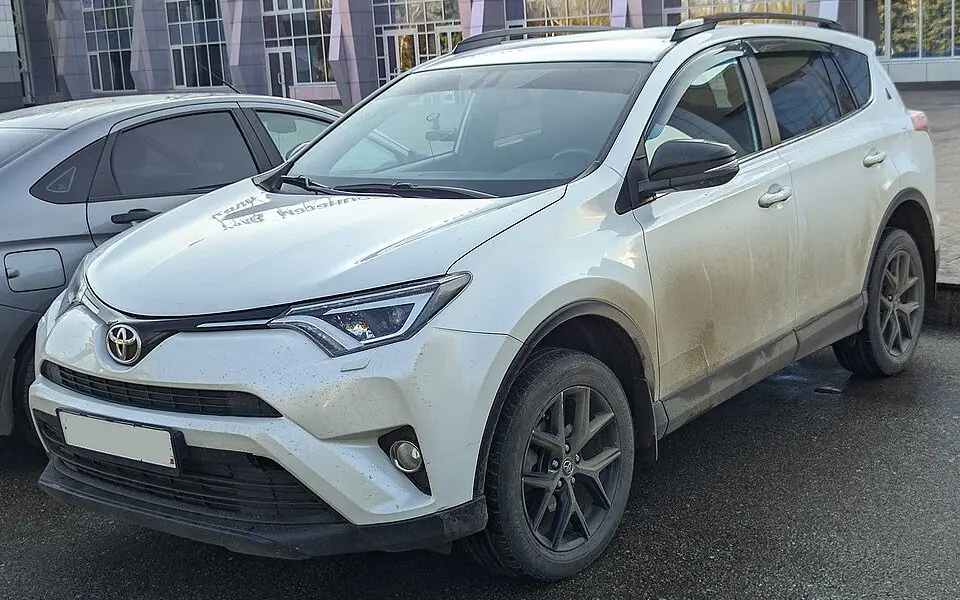
The essentials.
- 4 documented, sourced faults across its 3 engines.
- 3 of them depend on the equipment or the production date: ask what this car has.
- 3 official recalls on record: ask for the chassis number (VIN) and confirm they have been done.
- According to the data we have, the engines with the fewest documented faults are: 2.0 VVT-i (Petrol), 2.0 / 2.2 D-4D (Diesel).
Typical faults by engine
The period and mileage are those mentioned by each sheet's sources. They are not a maintenance interval and do not predict that any particular car will fail.
All versions
Sheets the catalogue links to all 3 of its engines.
- Period mentioned
- 2016 tech tip for all its models
- Mileage mentioned
- The sheet does not mention a mileage.
Applies if: Toyota USA tech tip for all its models: it applies if the judder began after wheels, pads or discs were removed or changed.
- Water pump, handbrake and campaigns on the RAV4 IVKnown weak points
- Period mentioned
- 2013–2018
- Mileage mentioned
- The sheet does not mention a mileage.
Applies if: Weak points of this model from inspections, breakdown statistics and recalls; anything specific to one engine is stated in the sheet.
- Will not start because of the 12 V battery on the Toyota RAV4 and C-HRElectrical and electronic systems
- Period mentioned
- RAV4: 2017–2022; C-HR: 2020–2022
- Mileage mentioned
- The sheet does not mention a mileage.
Applies if: Only those built in 2017 and 2018.
2.0 VVT-i · 2.0 / 2.2 D-4D
2.0 VVT-i (Petrol) · 2.0 / 2.2 D-4D (Diesel)
We have no faults specific to this engine, only those common to every version.
2.5 Hybrid
Hybrid
- Clogged hybrid battery cooling fan and filterHigh-voltage battery
- Period mentioned
- 2003 onwards
- Mileage mentioned
- The sheet does not mention a mileage.
Which engine has the fewest documented faults?
| Engine | Documented faults | Recalls |
|---|---|---|
| 2.0 VVT-iPetrolFewest documented | 33 with conditions | 3 |
| 2.5 HybridHybrid | 43 with conditions | 3 |
| 2.0 / 2.2 D-4DDieselFewest documented | 33 with conditions | 3 |
According to the data we have, the engines with the fewest documented faults are: 2.0 VVT-i (Petrol), 2.0 / 2.2 D-4D (Diesel).
By fuel type, the ones with the fewest documented faults are: Petrol, Diesel.
We only count the sourced sheets we have. An engine with fewer is not guaranteed to be more reliable: it may have been studied less or sold in smaller numbers.
Official recalls: ask before you pay
A recall existing does not mean this car is affected or that it is still outstanding: it depends on the chassis number, the market and the production date.
- Ask the seller for the chassis number (VIN): it has 17 characters, appears in the car's documents and can usually also be seen at the base of the windscreen.
- Ask an official Toyota dealer, or the brand's official website if it lets you check by chassis number, whether each recall has been done or is still outstanding for that VIN.
- Manufacturer recalls are normally carried out free of charge by the official service network. If one is outstanding, ask for it to be done before you close the sale.
Toyota fuel-system recalls (2002–2026)Fuel system
How to check it: Check by VIN whether any of the recalls is outstanding (at the dealer or on the DVSA website) and carry out the inspection or replacement it requires.
View full entryToyota engine, transmission and software recalls (2002–2026)Powertrain and engine management
How to check it: Check by VIN whether any of the recalls is outstanding (at the dealer or on the DVSA website) and carry out the inspection or replacement it requires.
View full entryToyota other recalls (2019–2022)Bodywork
How to check it: Check by VIN whether any of the recalls is outstanding (at the dealer or on the DVSA website) and carry out the inspection or replacement it requires.
View full entryOn the test drive: what to look and listen for
Taken from each sheet's symptoms and checks. You can tick off what you have already looked at: it is saved only in this browser.
0 of 4 checked
High-voltage battery
Look out for: Hybrid battery cooling maintenance message, warning light with codes P0A80 or P0A7F, a noisy fan and less electric assistance; if ignored, the battery ages faster.
Ask them to check: Clean or replace the filter and clean the fan before condemning the battery; keep the intake grille clear. At the garage, read the codes and, if needed, install the software Toyota specifies.
Brakes
Look out for: Vibration in the steering wheel and the pedal when braking, even gently and at any speed, often shortly after wheels, pads or discs were changed.
Ask them to check: Ask the garage to loosen and re-tighten the nuts with a torque wrench, to the manual's torque and in a star pattern, and to measure whether the discs have been left warped; if so, they will need skimming or replacing.
Known weak points
Look out for: A water pump that leaks or fails and some oil loss on the 2.0 petrol; an insufficient or one-sided handbrake already at the first roadworthiness test; headlamps; a sluggish torque converter in the automatic; leaking differentials.
Ask them to check: Check every campaign by VIN; check the handbrake and coolant.
Electrical and electronic systems
Look out for: The car will not start or does not go to “Ready”; when you unlock it, the dashboard and lights come on weakly or not at all, and several warnings may appear at once. It happens mostly after a few days parked.
Ask them to check: Measure the 12 V battery voltage and load-test it; check that the system recharges it while driving. If it is weak, replace it and ask Toyota whether there is any action for that model. If the car stays parked for days, a battery maintainer helps.
Sources
Every fact on this page comes from these Testigo sheets and their original sources. Sources are not checked in real time.
- Clogged hybrid battery cooling fan and filter
- Brake judder from wheel nuts over-tightened or tightened unevenly (Toyota tech tip)
- Water pump, handbrake and campaigns on the RAV4 IV
- Will not start because of the 12 V battery on the Toyota RAV4 and C-HR
- Toyota fuel-system recalls (2002–2026)
- Toyota engine, transmission and software recalls (2002–2026)
- Toyota other recalls (2019–2022)
More Toyota buying guides
- Toyota Yaris (III)2011–2020
- Toyota Auris (II)2012–2018
- Toyota Prius+2012–2021
- Toyota Land Cruiser (J150)2009–2024
- Toyota Land Cruiser V8 (J200)2008–2021
- Toyota Proace (I)2013–2016
- Toyota Avensis (III)2009–2018
- Toyota Verso2009–2018