Before you buy a used MINI MINI (F56/F55/F57).
Taken only from Testigo's sourced sheets. Use it to question the seller and on the test drive: it does not confirm that any particular car is affected.
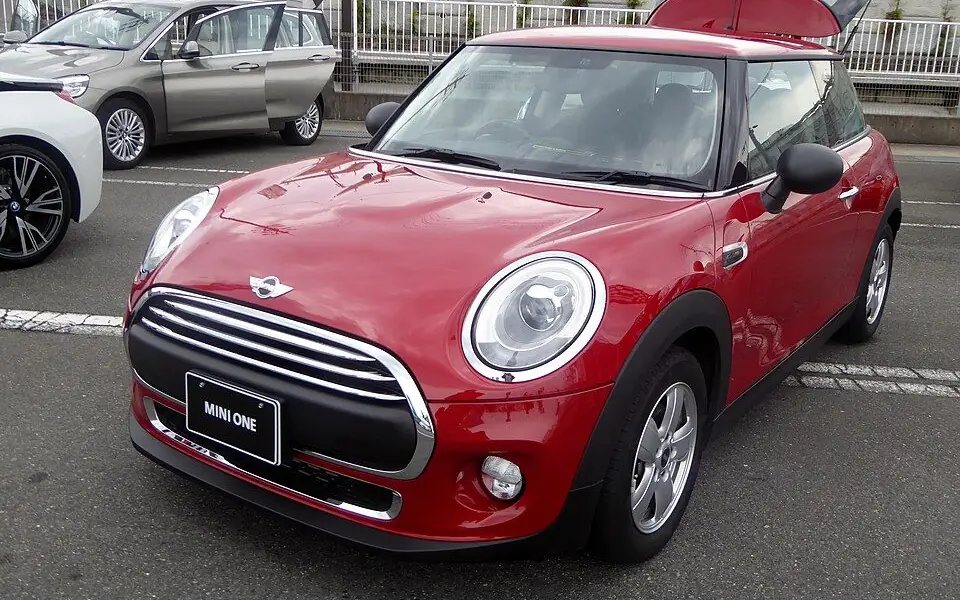
The essentials.
- 4 documented, sourced faults across its 5 engines.
- 2 of them depend on the equipment or the production date: ask what this car has.
- 3 official recalls on record: ask for the chassis number (VIN) and confirm they have been done.
- According to the data we have, the engines with the fewest documented faults are: One D / Cooper D 1.5 (B37) (Diesel), Cooper SE (Electric).
Typical faults by engine
The period and mileage are those mentioned by each sheet's sources. They are not a maintenance interval and do not predict that any particular car will fail.
All versions
Sheets the catalogue links to all 5 of its engines.
- Engine mounts, wet boot and campaigns on the MINI F55/F56/F57Known weak points
- Period mentioned
- 2014–2024
- Mileage mentioned
- The sheet does not mention a mileage.
Applies if: Weak points of this model from inspections, breakdown statistics and recalls; anything specific to one engine is stated in the sheet.
One / Cooper 1.5 (B38)
Petrol
- Period mentioned
- 2014 onwards
- Mileage mentioned
- The sheet does not mention a mileage.
- Rear axle knocking in cold weather from the rear shock absorbers (MINI F56)Suspension and steering
- Period mentioned
- 2014–2015
- Mileage mentioned
- The sheet does not mention a mileage.
Applies if: Only the 3-door F56 with standard suspension built up to 14/7/2015.
Cooper S / JCW 2.0 (B48)
Petrol
- B-engine coolant leaks and EGR coolerCooling / EGR
- Period mentioned
- 2014–2026
- Mileage mentioned
- 80,000–195,000 km
These also apply, described above: Rear axle knocking in cold weather from the rear shock absorbers (MINI F56)
One D / Cooper D 1.5 (B37) · Cooper SE
One D / Cooper D 1.5 (B37) (Diesel) · Cooper SE (Electric)
We have no faults specific to this engine, only those common to every version.
Which engine has the fewest documented faults?
| Engine | Documented faults | Recalls |
|---|---|---|
| One / Cooper 1.5 (B38)Petrol | 32 with conditions | 1 |
| Cooper S / JCW 2.0 (B48)Petrol | 32 with conditions | 0 |
| One D / Cooper D 1.5 (B37)DieselFewest documented | 11 with conditions | 1 |
| Cooper SD 2.0 (B47)Diesel | 21 with conditions | 0 |
| Cooper SEElectricFewest documented | 11 with conditions | 1 |
According to the data we have, the engines with the fewest documented faults are: One D / Cooper D 1.5 (B37) (Diesel), Cooper SE (Electric).
By fuel type, the one with the fewest documented faults is: Electric.
We only count the sourced sheets we have. An engine with fewer is not guaranteed to be more reliable: it may have been studied less or sold in smaller numbers.
Official recalls: ask before you pay
A recall existing does not mean this car is affected or that it is still outstanding: it depends on the chassis number, the market and the production date.
- Ask the seller for the chassis number (VIN): it has 17 characters, appears in the car's documents and can usually also be seen at the base of the windscreen.
- Ask an official MINI dealer, or the brand's official website if it lets you check by chassis number, whether each recall has been done or is still outstanding for that VIN.
- Manufacturer recalls are normally carried out free of charge by the official service network. If one is outstanding, ask for it to be done before you close the sale.
Recall: belt pretensioner generatorPassive safety
Engines: One / Cooper 1.5 (B38) (Petrol)
How to check it: Check VIN; inspect belts and replace damaged units.
View full entryRecall: front backrest adjustmentSeats / safety
Engines: One D / Cooper D 1.5 (B37) (Diesel)
How to check it: Confirm VIN; adjust backrests to manufacturer specifications.
View full entryRecall: high-voltage battery protectionBattery / electronics
Engines: Cooper SE (Electric)
How to check it: Check VIN; update battery management software.
View full entryOn the test drive: what to look and listen for
Taken from each sheet's symptoms and checks. You can tick off what you have already looked at: it is saved only in this browser.
0 of 4 checked
Engine
Look out for: On early engines with a manual gearbox, crankshaft thrust-bearing damage that can end in serious failure; over the years, loss of power and higher consumption from carbon in the intake, valves and injectors.
Ask them to check: On engines before April 2015 with a manual gearbox, ask BMW whether the bearing upgrade was done and listen for crankshaft noises; use quality fuel and inspect the intake if power drops.
Cooling / EGR
Look out for: Coolant loss with a low-level warning, coolant or oil residue at the rear of the engine; on diesels, internal coolant loss with no visible leak (EGR cooler).
Ask them to check: Check the coolant level, look for leaks under the water pump and at the oil filter housing, and on diesels confirm by VIN whether the EGR cooler campaign was done.
Suspension and steering
Look out for: Hammering from the rear axle area over rough road surfaces in low temperatures; it goes away when it gets warmer.
Ask them to check: Tell the garage it only happens in the cold and over bumps; ask them to check the rear shock absorbers before looking at the engine or the brakes.
Known weak points
Look out for: Knocking from the engine bay due to engine mounts and a torque strut worn at low mileage; water in the boot and spare-wheel well of the F56; at inspection, headlights and handbrake and service brake; on petrols, carbon on the injectors and intake at high mileage; on the B37/B47 diesels, particulate filter, dual-mass flywheel, turbo, EGR and injectors.
Ask them to check: Listen for knocks when accelerating and lifting off; lift the boot floor; check campaigns by VIN.
Sources
Every fact on this page comes from these Testigo sheets and their original sources. Sources are not checked in real time.
- Crankshaft thrust bearing and carbon on the 1.5 three-cylinder (B38)
- B-engine coolant leaks and EGR cooler
- Rear axle knocking in cold weather from the rear shock absorbers (MINI F56)
- Engine mounts, wet boot and campaigns on the MINI F55/F56/F57
- Recall: belt pretensioner generator
- Recall: front backrest adjustment
- Recall: high-voltage battery protection
More MINI buying guides
- MINI Clubman (F54)2015–2024
- MINI Countryman (F60)2017–2024
- MINI MINI Coupé / Roadster (R58/R59)2011–2015
- MINI Countryman (R60) / Paceman (R61)2010–2016
- MINI MINI Cooper (F66/J01)2024–2026
- MINI Countryman (U25) / Aceman2024–2026
- MINI MINI (R56/R55/R57)2006–2014
- MINI MINI (R50/R52/R53)2001–2006