Before you buy a used Opel Combo E.
Taken only from Testigo's sourced sheets. Use it to question the seller and on the test drive: it does not confirm that any particular car is affected.
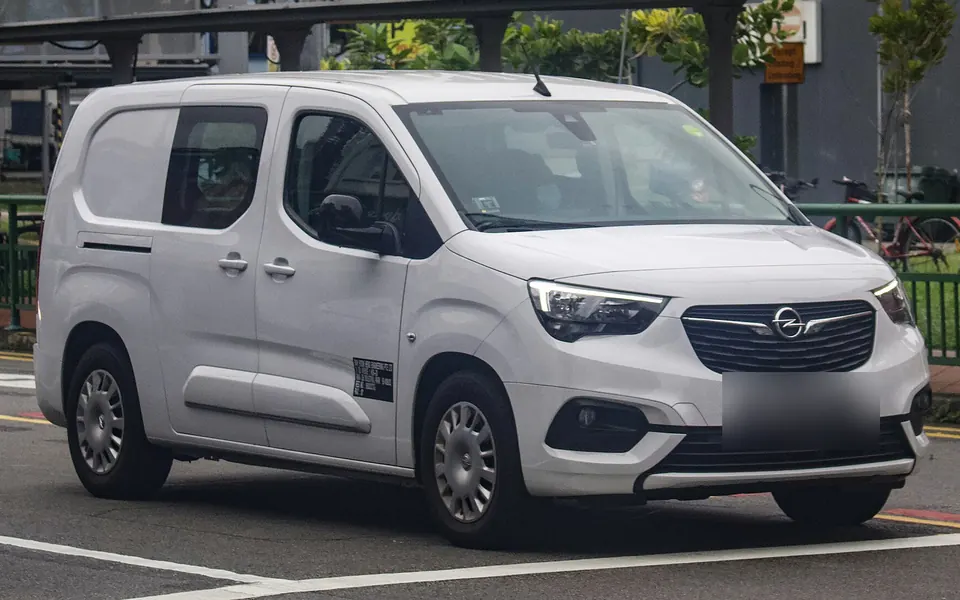
The essentials.
- 4 documented, sourced faults across its 3 engines.
- 1 official recall on record: ask for the chassis number (VIN) and confirm it has been done.
- According to the data we have, the engines with the fewest documented faults are: 1.2 Turbo (PureTech) (Petrol), Combo-e (Electric).
Typical faults by engine
The period and mileage are those mentioned by each sheet's sources. They are not a maintenance interval and do not predict that any particular car will fail.
1.2 Turbo (PureTech)
Petrol
- Oil-bath timing belt degradationTiming / lubrication
- Period mentioned
- 2012 – approx. 2022
- Mileage mentioned
- The sheet does not mention a mileage.
1.5 Diesel (BlueHDi)
Diesel
- AdBlue system failure (start countdown)Exhaust and emissions (AdBlue)
- Period mentioned
- Approx. 2014 onwards
- Mileage mentioned
- The sheet does not mention a mileage.
- 1.5 BlueHDi camshaft chainTiming system
- Period mentioned
- 2017–2023
- Mileage mentioned
- The sheet does not mention a mileage.
Combo-e
Electric
- On-board charger failure (e-CMP)Charging (on-board charger)
- Period mentioned
- 2019–2024
- Mileage mentioned
- The sheet does not mention a mileage.
Which engine has the fewest documented faults?
| Engine | Documented faults | Recalls |
|---|---|---|
| 1.2 Turbo (PureTech)PetrolFewest documented | 1 | 0 |
| 1.5 Diesel (BlueHDi)Diesel | 2 | 0 |
| Combo-eElectricFewest documented | 1 | 1 |
According to the data we have, the engines with the fewest documented faults are: 1.2 Turbo (PureTech) (Petrol), Combo-e (Electric).
By fuel type, the ones with the fewest documented faults are: Petrol, Electric.
We only count the sourced sheets we have. An engine with fewer is not guaranteed to be more reliable: it may have been studied less or sold in smaller numbers.
Official recalls: ask before you pay
A recall existing does not mean this car is affected or that it is still outstanding: it depends on the chassis number, the market and the production date.
- Ask the seller for the chassis number (VIN): it has 17 characters, appears in the car's documents and can usually also be seen at the base of the windscreen.
- Ask an official Opel dealer, or the brand's official website if it lets you check by chassis number, whether each recall has been done or is still outstanding for that VIN.
- Manufacturer recalls are normally carried out free of charge by the official service network. If one is outstanding, ask for it to be done before you close the sale.
Opel battery-software propulsion lossPowertrain and engine management
Engines: Combo-e (Electric)
How to check it: Confirm VIN and contact the dealer for the stated recall; the notice does not publish the workshop procedure.
View full entryOn the test drive: what to look and listen for
Taken from each sheet's symptoms and checks. You can tick off what you have already looked at: it is saved only in this browser.
0 of 4 checked
Timing / lubrication
Look out for: Oil pressure warning, hard brake pedal or reduced assistance, oil consumption, blue smoke, squeal at the front of the engine, turbo whistles or loses power.
Ask them to check: Measure the belt through the oil filler opening with the manufacturer's tool. Confirm whether the vacuum pump campaign was done.
Exhaust and emissions (AdBlue)
Look out for: Emission system fault message and a “starting impossible in X km” countdown, AdBlue/UREA warning and engine light.
Ask them to check: Diagnose with Diagbox or equivalent: AdBlue pressure, flow test and tank temperature.
Timing system
Look out for: Rattle from the top of the engine, loss of power; in severe cases the chain breaks and the engine fails.
Ask them to check: Ask the dealer whether the car is in the campaign (free inspection and replacement if needed) and whether the 8 mm chain is fitted.
Charging (on-board charger)
Look out for: AC charging (home or public) becomes erratic, drops from 11 kW to about 7 kW or fails completely with messages such as “Charging paused” or a critical error. DC fast charging keeps working.
Ask them to check: Test charging on a three-phase and a single-phase AC point, read the charger codes with DiagBox and check whether it has already been replaced and by which version. Claim warranty or known-defect treatment before paying.
Sources
Every fact on this page comes from these Testigo sheets and their original sources. Sources are not checked in real time.
More Opel buying guides
- Opel Corsa F2019–2026
- Opel Crossland X2017–2026
- Opel Vivaro C / Zafira Life2019–2026
- Opel Mokka (B)2020–2026
- Opel Astra L2021–2026
- Opel Grandland X / Grandland (I)2017–2024
- Opel Movano C2021–2026
- Opel Insignia B2017–2022