Before you buy a used Hyundai Ioniq 6.
Taken only from Testigo's sourced sheets. Use it to question the seller and on the test drive: it does not confirm that any particular car is affected.
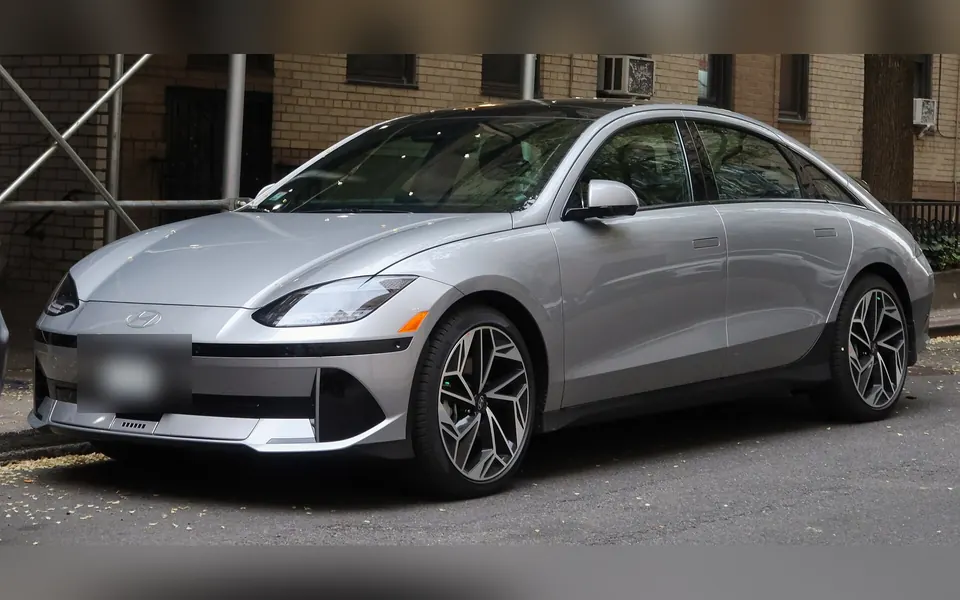
The essentials.
- 4 documented, sourced faults for its engine.
- 3 of them depend on the equipment or the production date: ask what this car has.
- 3 official recalls on record: ask for the chassis number (VIN) and confirm they have been done.
Typical faults by engine
The period and mileage are those mentioned by each sheet's sources. They are not a maintenance interval and do not predict that any particular car will fail.
Ioniq 6
Electric
- Integrated charging control unit (ICCU) that stops charging the 12 V batteryElectrical and electronic systems
- Period mentioned
- 2021–2025
- Mileage mentioned
- The sheet does not mention a mileage.
- The Ioniq 6 horn stops working because of water entering through its vent holeElectrical and electronic systems
- Period mentioned
- 2023–2025
- Mileage mentioned
- The sheet does not mention a mileage.
Applies if: Hyundai USA bulletin for a car built the same way for Europe; in Europe, ask Hyundai by VIN.
- Charging on an AC charger stops or slows down (Ioniq 5, Ioniq 6 and Kona Electric, campaign 9B5)Electric charging
- Period mentioned
- 2022–2024
- Mileage mentioned
- The sheet does not mention a mileage.
Applies if: Only cars built from 14/12/2022 to 25/12/2023. Hyundai USA bulletin for a car built the same way for Europe; in Europe, ask Hyundai by VIN.
- Turtle warning light and “power is limited” because of the motor's electric oil pump (Ioniq 5 and Ioniq 6, P0A2F)Electric drive
- Period mentioned
- 2022–2024
- Mileage mentioned
- The sheet does not mention a mileage.
Applies if: The bulletin names the 2023 Ioniq 6. Hyundai USA bulletin for a car built the same way for Europe; in Europe, ask Hyundai by VIN.
Official recalls: ask before you pay
A recall existing does not mean this car is affected or that it is still outstanding: it depends on the chassis number, the market and the production date.
- Ask the seller for the chassis number (VIN): it has 17 characters, appears in the car's documents and can usually also be seen at the base of the windscreen.
- Ask an official Hyundai dealer, or the brand's official website if it lets you check by chassis number, whether each recall has been done or is still outstanding for that VIN.
- Manufacturer recalls are normally carried out free of charge by the official service network. If one is outstanding, ask for it to be done before you close the sale.
Hyundai airbag and seat-belt recalls (2003–2026)Airbags and seat belts
How to check it: Check by VIN whether any of the recalls is outstanding (at the dealer or on the DVSA website) and carry out the inspection or replacement it requires.
View full entryHyundai electric and hybrid drive recalls (2018–2026)Electric drive
How to check it: Check by VIN whether any of the recalls is outstanding (at the dealer or on the DVSA website) and carry out the inspection or replacement it requires.
View full entryHyundai wheel, axle and suspension recalls (2010–2024)Suspension and steering
How to check it: Check by VIN whether any of the recalls is outstanding (at the dealer or on the DVSA website) and carry out the inspection or replacement it requires.
View full entryOn the test drive: what to look and listen for
Taken from each sheet's symptoms and checks. You can tick off what you have already looked at: it is saved only in this browser.
0 of 4 checked
Electrical and electronic systems
Look out for: Fault warnings, the car goes into limp mode and can lose drive power while moving; the 12 V battery runs flat.
Ask them to check: Check the ICCU campaigns and software by VIN; if the warning appears, find a safe place to stop and call for assistance.
Look out for: The horn does not sound or only sounds now and then.
Ask them to check: Test the horn. If it does not sound, check the fuse first; if that is fine, the garage checks whether water has got into the horn and replaces it. Ask Hyundai whether a similar warranty extension exists in your country. Without a horn the car fails the roadworthiness test.
Electric charging
Look out for: When charging on an AC point (at home or on a 7–11 kW post), the session is interrupted or charging is slower than normal.
Ask them to check: Check the build date and ask Hyundai by VIN whether the charging manager has the campaign 9B5 update. Also check that the cable and socket are not hot, dirty or damaged: if they are, do not charge until they have been checked.
Electric drive
Look out for: The turtle warning light comes on and the instrument panel shows “power is limited”; P0A2F may be stored, or there may be no code.
Ask them to check: Drive gently to the garage. The garage reads the codes and, with the diagnostic tool, compares the command and the speed of the electric oil pump during a road test, as the bulletin says.
OBD codes worth looking for
If they let you read the fault memory with an OBD reader, these are the codes mentioned in this model's sheets:
Sources
Every fact on this page comes from these Testigo sheets and their original sources. Sources are not checked in real time.
- Integrated charging control unit (ICCU) that stops charging the 12 V battery
- The Ioniq 6 horn stops working because of water entering through its vent hole
- Charging on an AC charger stops or slows down (Ioniq 5, Ioniq 6 and Kona Electric, campaign 9B5)
- Turtle warning light and “power is limited” because of the motor's electric oil pump (Ioniq 5 and Ioniq 6, P0A2F)
- Hyundai airbag and seat-belt recalls (2003–2026)
- Hyundai electric and hybrid drive recalls (2018–2026)
- Hyundai wheel, axle and suspension recalls (2010–2024)
More Hyundai buying guides
- Hyundai Bayon2021–2026
- Hyundai Kona (II)2023–2026
- Hyundai Ioniq 52021–2026
- Hyundai i20 (III)2020–2026
- Hyundai Tucson (IV)2020–2026
- Hyundai Santa Fe (V)2024–2026
- Hyundai Inster2024–2026
- Hyundai i10 (III)2019–2026