Before you buy a used Hyundai Kona (II).
Taken only from Testigo's sourced sheets. Use it to question the seller and on the test drive: it does not confirm that any particular car is affected.
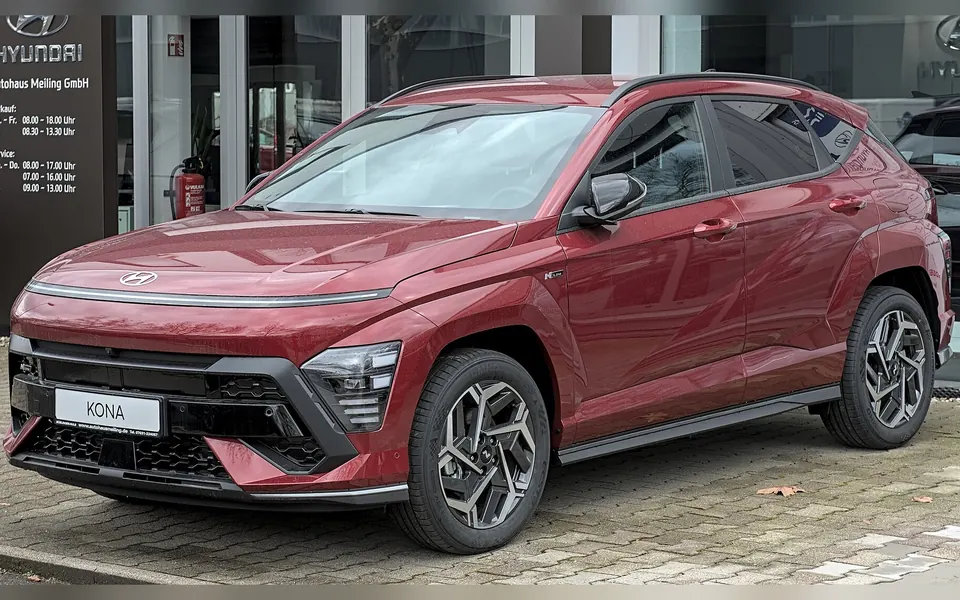
The essentials.
- 3 documented, sourced faults across its 3 engines.
- They all depend on the equipment or the production date: ask what this car has.
- 2 official recalls on record: ask for the chassis number (VIN) and confirm they have been done.
- According to the data we have, the engines with the fewest documented faults are: 1.0 T-GDi (Petrol), 1.6 Hybrid (Hybrid).
Typical faults by engine
The period and mileage are those mentioned by each sheet's sources. They are not a maintenance interval and do not predict that any particular car will fail.
1.0 T-GDi
Petrol
- Carbon on the injectors and intake of the T-GDi petrol enginesInjection / turbo
- Period mentioned
- 2015 onwards
- Mileage mentioned
- The sheet does not mention a mileage.
Applies if: Same type of direct-injection turbo engine (T-GDi).
1.6 Hybrid
Hybrid
- Battery wiring on the Kona II that can short-circuit after a crashElectrical and electronic systems
- Period mentioned
- 2023–2024
- Mileage mentioned
- The sheet does not mention a mileage.
Applies if: The notice does not name the version: confirm by VIN.
Kona Electric
Electric
- Charging on an AC charger stops or slows down (Ioniq 5, Ioniq 6 and Kona Electric, campaign 9B5)Electric charging
- Period mentioned
- 2022–2024
- Mileage mentioned
- The sheet does not mention a mileage.
Applies if: Only cars built from 5/10/2023 to 13/7/2024. Hyundai USA bulletin for a car built the same way for Europe; in Europe, ask Hyundai by VIN.
These also apply, described above: Battery wiring on the Kona II that can short-circuit after a crash
Which engine has the fewest documented faults?
| Engine | Documented faults | Recalls |
|---|---|---|
| 1.0 T-GDiPetrolFewest documented | 11 with conditions | 2 |
| 1.6 HybridHybridFewest documented | 11 with conditions | 2 |
| Kona ElectricElectric | 22 with conditions | 2 |
According to the data we have, the engines with the fewest documented faults are: 1.0 T-GDi (Petrol), 1.6 Hybrid (Hybrid).
By fuel type, the ones with the fewest documented faults are: Petrol, Hybrid.
We only count the sourced sheets we have. An engine with fewer is not guaranteed to be more reliable: it may have been studied less or sold in smaller numbers.
Official recalls: ask before you pay
A recall existing does not mean this car is affected or that it is still outstanding: it depends on the chassis number, the market and the production date.
- Ask the seller for the chassis number (VIN): it has 17 characters, appears in the car's documents and can usually also be seen at the base of the windscreen.
- Ask an official Hyundai dealer, or the brand's official website if it lets you check by chassis number, whether each recall has been done or is still outstanding for that VIN.
- Manufacturer recalls are normally carried out free of charge by the official service network. If one is outstanding, ask for it to be done before you close the sale.
Hyundai engine, transmission and software recalls (2013–2026)Powertrain and engine management
How to check it: Check by VIN whether any of the recalls is outstanding (at the dealer or on the DVSA website) and carry out the inspection or replacement it requires.
View full entryHyundai electrical, lighting and electronics recalls (2016–2026)Electrical and electronic systems
How to check it: Check by VIN whether any of the recalls is outstanding (at the dealer or on the DVSA website) and carry out the inspection or replacement it requires.
View full entryOn the test drive: what to look and listen for
Taken from each sheet's symptoms and checks. You can tick off what you have already looked at: it is saved only in this browser.
0 of 3 checked
Injection / turbo
Look out for: Loss of power, higher consumption, hesitation or rough idle, usually at high mileage.
Ask them to check: Read misfire and fuel-trim codes; inspect the injectors and valves with a borescope; clean the intake if there are deposits.
Electrical and electronic systems
Look out for: No symptoms in normal use; after an accident the battery wiring can short-circuit and overheat the engine bay.
Ask them to check: Check by VIN at the dealer that the campaign has been done.
Electric charging
Look out for: When charging on an AC point (at home or on a 7–11 kW post), the session is interrupted or charging is slower than normal.
Ask them to check: Check the build date and ask Hyundai by VIN whether the charging manager has the campaign 9B5 update. Also check that the cable and socket are not hot, dirty or damaged: if they are, do not charge until they have been checked.
Sources
Every fact on this page comes from these Testigo sheets and their original sources. Sources are not checked in real time.
- Carbon on the injectors and intake of the T-GDi petrol engines
- Battery wiring on the Kona II that can short-circuit after a crash
- Charging on an AC charger stops or slows down (Ioniq 5, Ioniq 6 and Kona Electric, campaign 9B5)
- Hyundai engine, transmission and software recalls (2013–2026)
- Hyundai electrical, lighting and electronics recalls (2016–2026)
More Hyundai buying guides
- Hyundai Santa Fe (V)2024–2026
- Hyundai Ioniq 62022–2026
- Hyundai Inster2024–2026
- Hyundai Bayon2021–2026
- Hyundai Ioniq 52021–2026
- Hyundai i20 (III)2020–2026
- Hyundai Tucson (IV)2020–2026
- Hyundai i10 (III)2019–2026