Before you buy a used Mercedes-Benz Sprinter (VS30).
Taken only from Testigo's sourced sheets. Use it to question the seller and on the test drive: it does not confirm that any particular car is affected.
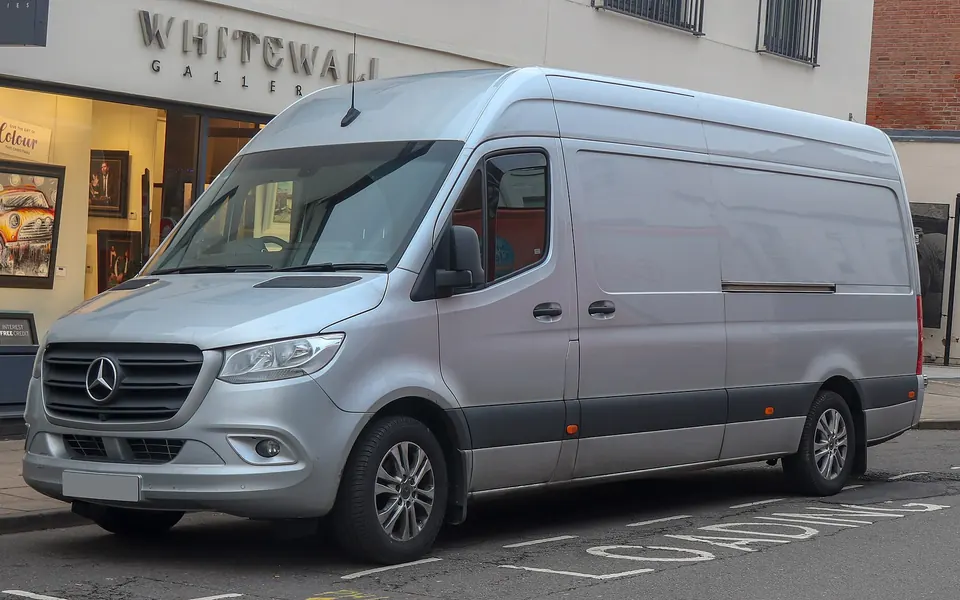
The essentials.
- 7 documented, sourced faults across its 4 engines.
- 2 of them depend on the equipment or the production date: ask what this car has.
- 1 official recall on record: ask for the chassis number (VIN) and confirm it has been done.
- According to the data we have, the engines with the fewest documented faults are: 2.1 CDI (OM651) (Diesel), eSprinter (Electric).
Typical faults by engine
The period and mileage are those mentioned by each sheet's sources. They are not a maintenance interval and do not predict that any particular car will fail.
2.1 CDI (OM651)
Diesel
- Chain, injectors and coolant leaksTiming / injection
- Period mentioned
- 2008 onwards
- Mileage mentioned
- The sheet does not mention a mileage.
2.0 d (OM654)
Diesel
- OM654/OM656 AdBlue, DPF and EGRAdBlue / DPF / EGR
- Period mentioned
- 2016–2026
- Mileage mentioned
- From 100,000 km
- Period mentioned
- Intercoolers built before 02/02/2024
- Mileage mentioned
- The sheet does not mention a mileage.
Applies if: Mercedes-Benz USA technical note for the OM654 engine; ask the dealer whether it applies to yours.
- Sprinter OM654 engine warning light with P20F409 or P202E84: AdBlue leak, AdBlue injector or air in its lineExhaust and emissions
- Period mentioned
- Model years 2023 and 2024 (built before 01/08/2024)
- Mileage mentioned
- The sheet does not mention a mileage.
Applies if: Mercedes-Benz USA technical note for the Sprinter with the OM654 and 4th-generation SCR; ask the dealer whether it applies to yours.
3.0 V6 (OM642)
Diesel
- Oil cooler and injector leaksOil leaks / injectors
- Period mentioned
- 2005 onwards
- Mileage mentioned
- The sheet does not mention a mileage.
- Bucking between 1,700 and 1,900 rpm caused by soot in the OM642 EGR valveIntake / engine management
- Period mentioned
- 2006–2026
- Mileage mentioned
- The sheet does not mention a mileage.
eSprinter
Electric
- ESP software and rear e-axle gear on the eSprinterKnown weak points
- Period mentioned
- 2024–2025
- Mileage mentioned
- The sheet does not mention a mileage.
Which engine has the fewest documented faults?
| Engine | Documented faults | Recalls |
|---|---|---|
| 2.1 CDI (OM651)DieselFewest documented | 1 | 0 |
| 2.0 d (OM654)Diesel | 32 with conditions | 0 |
| 3.0 V6 (OM642)Diesel | 2 | 0 |
| eSprinterElectricFewest documented | 1 | 1 |
According to the data we have, the engines with the fewest documented faults are: 2.1 CDI (OM651) (Diesel), eSprinter (Electric).
By fuel type, the one with the fewest documented faults is: Electric.
We only count the sourced sheets we have. An engine with fewer is not guaranteed to be more reliable: it may have been studied less or sold in smaller numbers.
Official recalls: ask before you pay
A recall existing does not mean this car is affected or that it is still outstanding: it depends on the chassis number, the market and the production date.
- Ask the seller for the chassis number (VIN): it has 17 characters, appears in the car's documents and can usually also be seen at the base of the windscreen.
- Ask an official Mercedes-Benz dealer, or the brand's official website if it lets you check by chassis number, whether each recall has been done or is still outstanding for that VIN.
- Manufacturer recalls are normally carried out free of charge by the official service network. If one is outstanding, ask for it to be done before you close the sale.
Recall: unnecessary battery contactor openingElectric drive
Engines: eSprinter (Electric)
How to check it: Check VIN; update gateway; inspect eVito BMS and replace if required.
View full entryOn the test drive: what to look and listen for
Taken from each sheet's symptoms and checks. You can tick off what you have already looked at: it is saved only in this browser.
0 of 7 checked
Timing / injection
Look out for: Chain rattle on a cold start; on early units, loud injector knocking; coolant loss from the plastic coolant manifold or the EGR cooler.
Ask them to check: Listen to a cold start, check the dealer's injector campaign history and check the coolant level.
AdBlue / DPF / EGR
Look out for: AdBlue or emissions warnings with a start countdown; particulate filter warning; power loss or rough idle from a dirty EGR.
Ask them to check: Read AdBlue and NOx sensor codes with Xentry, check the particulate filter regeneration history and how the car is used (short trips).
Oil leaks / injectors
Look out for: Oil pooling in the engine's V, burning oil smell, drips under the engine; or a hiss or chirp next to an injector with an exhaust smell.
Ask them to check: Visual inspection of the engine's V and the base of the injectors.
Intake / engine management
Look out for: Bucking or surging always between 1,700 and 1,900 rpm, especially on level roads with a light load; above and below that it runs fine. Sometimes with EGR valve codes and the engine warning light.
Ask them to check: Note the exact rpm at which it happens. At the garage, the manufacturer's test is to unplug the EGR valve and test drive: if the bucking disappears, the EGR is cleaned before replacing injectors or the turbo.
Known weak points
Look out for: More pedal force is needed and the stopping distance grows; loss of drive and a park lock (P) that may not hold.
Ask them to check: Check by VIN whether the campaigns exist in your country; always apply the handbrake when parking.
Cooling
Look out for: Yellow low coolant warning with no leak to be seen; sometimes the engine misfires or surges. Possible codes: P25567B (coolant level too low) and P30040B (temperature sensor after the intercooler).
Ask them to check: Pressure test of the cooling system. If it loses pressure with no visible leak, the garage removes the throttle valve or the charge air temperature sensor to look for coolant inside the intercooler and does a compression test. If confirmed, the coolant is cleaned out of the intake and cylinders and the intercooler (one built after 02/02/2024), glow plugs, oil and filter are replaced.
Exhaust and emissions
Look out for: Engine warning light on, sometimes with an AdBlue warning, with codes P20F409 (AdBlue consumption too low) or P202E84 (fault of AdBlue metering valve 1, engine side). It happens more with frequent starts and stops.
Ask them to check: The garage runs the guided tests for those codes, looks for leaks at the AdBlue tank, pump, line and injectors and checks the line does not touch the exhaust. If there is no leak and the injector passes its test, on 2023 and 2024 vans it is enough to reset the AdBlue pump learned values, run the SCR system start-up again and do a test drive of about 30 km; no parts need replacing.
Sources
Every fact on this page comes from these Testigo sheets and their original sources. Sources are not checked in real time.
- Chain, injectors and coolant leaks
- OM654/OM656 AdBlue, DPF and EGR
- Oil cooler and injector leaks
- Bucking between 1,700 and 1,900 rpm caused by soot in the OM642 EGR valve
- ESP software and rear e-axle gear on the eSprinter
- OM654 low coolant warning and misfires from an internal intercooler leak
- Sprinter OM654 engine warning light with P20F409 or P202E84: AdBlue leak, AdBlue injector or air in its line
- Recall: unnecessary battery contactor opening
More Mercedes-Benz buying guides
- Mercedes-Benz Clase A (W177)2018–2026
- Mercedes-Benz Clase B (W247)2018–2026
- Mercedes-Benz AMG GT 4-Door Coupé (X290)2018–2026
- Mercedes-Benz Clase G (W463A)2018–2026
- Mercedes-Benz CLA (C118) / GLA (H247) / GLB2019–2026
- Mercedes-Benz GLS (X167)2019–2026
- Mercedes-Benz GLE (V167)2019–2026
- Mercedes-Benz EQA / EQB / EQC / EQE / EQS / EQV2019–2026