Before you buy a used Dodge Journey.
Taken only from Testigo's sourced sheets. Use it to question the seller and on the test drive: it does not confirm that any particular car is affected.
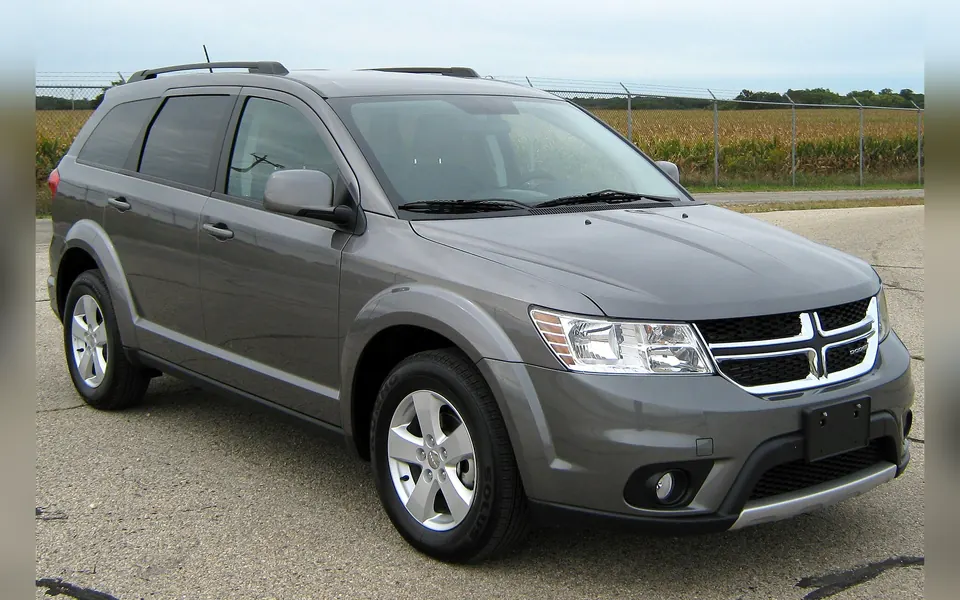
The essentials.
- 3 documented, sourced faults across its 2 engines.
- 2 of them depend on the equipment or the production date: ask what this car has.
- 4 official recalls on record: ask for the chassis number (VIN) and confirm they have been done.
- According to the data we have, the engine with the fewest documented faults is the 2.0 CRD (VW TDI) (Diesel).
Typical faults by engine
The period and mileage are those mentioned by each sheet's sources. They are not a maintenance interval and do not predict that any particular car will fail.
2.4 / 3.6
Petrol
- Period mentioned
- 2016
- Mileage mentioned
- The sheet does not mention a mileage.
Applies if: Only cars built from 6/1/2016 to 2/8/2016 with the 4-speed automatic.
- Period mentioned
- 2011 onwards
- Mileage mentioned
- The sheet does not mention a mileage.
Applies if: Only the 3.6 V6 Pentastar (from 2011); not the 2.4.
2.0 CRD (VW TDI)
Diesel
- PD TDI camshaft, injectors and cylinder headInjection / cylinder head
- Period mentioned
- 2000–2010
- Mileage mentioned
- 120,000–200,000 km
Which engine has the fewest documented faults?
| Engine | Documented faults | Recalls |
|---|---|---|
| 2.4 / 3.6Petrol | 22 with conditions | 4 |
| 2.0 CRD (VW TDI)DieselFewest documented | 1 | 3 |
According to the data we have, the engine with the fewest documented faults is the 2.0 CRD (VW TDI) (Diesel).
By fuel type, the one with the fewest documented faults is: Diesel.
We only count the sourced sheets we have. An engine with fewer is not guaranteed to be more reliable: it may have been studied less or sold in smaller numbers.
Official recalls: ask before you pay
A recall existing does not mean this car is affected or that it is still outstanding: it depends on the chassis number, the market and the production date.
- Ask the seller for the chassis number (VIN): it has 17 characters, appears in the car's documents and can usually also be seen at the base of the windscreen.
- Ask an official Dodge dealer, or the brand's official website if it lets you check by chassis number, whether each recall has been done or is still outstanding for that VIN.
- Manufacturer recalls are normally carried out free of charge by the official service network. If one is outstanding, ask for it to be done before you close the sale.
Front door wiring fatigueElectrical and electronic systems
Engines: 2.4 / 3.6 (Petrol)
How to check it: Confirm VIN; inspect and repair wiring under the recall.
View full entryDodge airbag and seat-belt recalls (2017–2017)Airbags and seat belts
How to check it: Check by VIN whether any of the recalls is outstanding (at the dealer or on the DVSA website) and carry out the inspection or replacement it requires.
View full entryDodge steering recalls (2011–2011)Steering
How to check it: Check by VIN whether any of the recalls is outstanding (at the dealer or on the DVSA website) and carry out the inspection or replacement it requires.
View full entryDodge engine, transmission and software recalls (2007–2015)Powertrain and engine management
How to check it: Check by VIN whether any of the recalls is outstanding (at the dealer or on the DVSA website) and carry out the inspection or replacement it requires.
View full entryOn the test drive: what to look and listen for
Taken from each sheet's symptoms and checks. You can tick off what you have already looked at: it is saved only in this browser.
0 of 3 checked
Injection / cylinder head
Look out for: Growing noise from the cylinder head, power loss and rough running (cams and lifters); unstable idle, smoke or hesitation (injectors); on the 16-valve 2.0 TDI, coolant loss with no visible leak from a cracked head.
Ask them to check: Check the oil history (VW 505.01), listen to the head, check injector balance rates with a diagnostic tool and, on the 16-valve 2.0 TDI, read the head part number (03G 103 351) and look for coolant loss.
Bodywork
Look out for: The floor carpet gets soaked after driving through deep puddles or flooded stretches, although no water gets in with normal rain.
Ask them to check: Dry the carpet to avoid smells and rust. At the garage, have them check whether the underbody plug is missing before looking for leaks in the doors or roof.
Engine
Look out for: Oil spots under the car, oil on the block below the housing (in the engine’s “V”), frequent top-ups and, in serious cases, a low oil-pressure warning; sometimes coolant leaks too.
Ask them to check: Look for oil in the centre of the engine and under the car; do not overtighten the filter cap. The usual repair is replacing the whole assembly (aluminium versions exist), removing the intake manifolds, with new gaskets.
Sources
Every fact on this page comes from these Testigo sheets and their original sources. Sources are not checked in real time.
- PD TDI camshaft, injectors and cylinder head
- Wet carpet after driving through deep water because an underbody plug is missing
- Leaking oil filter housing and cooler on the 3.6 Pentastar
- Front door wiring fatigue
- Dodge airbag and seat-belt recalls (2017–2017)
- Dodge steering recalls (2011–2011)
- Dodge engine, transmission and software recalls (2007–2015)
More Dodge buying guides
- Dodge Nitro2007–2011
- Dodge Caliber2006–2011
- Dodge Avenger2007–2010