Before you buy a used Ford Transit (VIII).
Taken only from Testigo's sourced sheets. Use it to question the seller and on the test drive: it does not confirm that any particular car is affected.
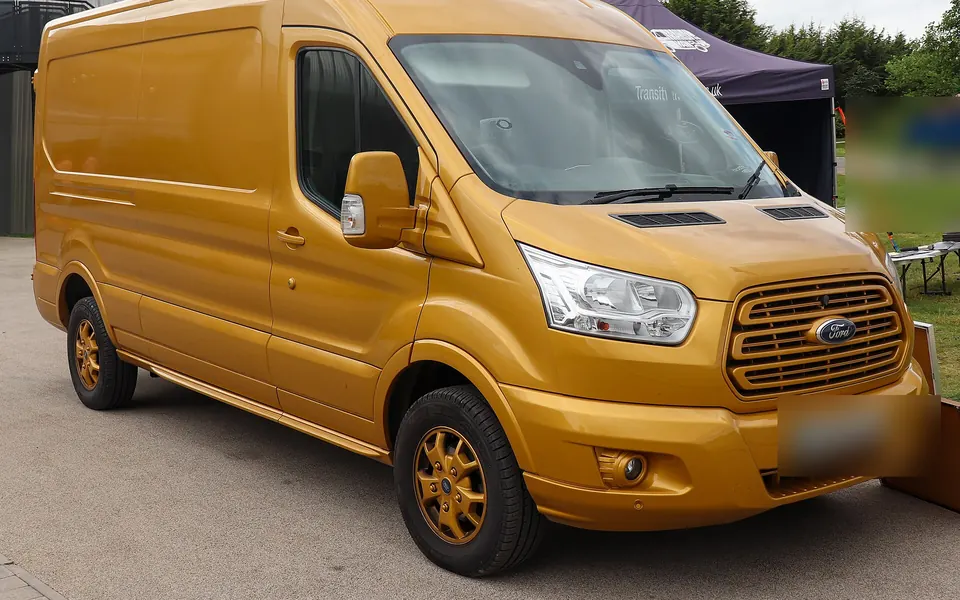
The essentials.
- 3 documented, sourced faults across its 3 engines.
- 2 of them depend on the equipment or the production date: ask what this car has.
- 8 official recalls on record: ask for the chassis number (VIN) and confirm they have been done.
- According to the data we have, the engine with the fewest documented faults is the 2.2 TDCi (Diesel).
Typical faults by engine
The period and mileage are those mentioned by each sheet's sources. They are not a maintenance interval and do not predict that any particular car will fail.
All versions
Sheets the catalogue links to all 3 of its engines.
- Starter, oil leaks, exhaust and campaigns on the Transit (from 2014)Known weak points
- Period mentioned
- 2014 onwards
- Mileage mentioned
- The sheet does not mention a mileage.
Applies if: Weak points of this model from inspections, breakdown statistics and recalls; anything specific to one engine is stated in the sheet.
2.2 TDCi
Diesel
We have no faults specific to this engine, only those common to every version.
3.2 TDCi (hasta 2016)
Diesel
- Period mentioned
- 2014–2019
- Mileage mentioned
- The sheet does not mention a mileage.
Applies if: Bulletin for the US Transit with the same 3.2 engine.
2.0 EcoBlue
Diesel
- Oil-immersed timing belt on the 2.0 EcoBlueTiming system
- Period mentioned
- 2016 onwards
- Mileage mentioned
- What the sheet says: Diesel from unfinished particulate-filter regenerations gets into the oil and degrades the belt, which runs in it; in extreme cases material comes off and blocks the oil-pump strainer. Ford cut the belt, tensioner and idler change from 10 years or 240,000 km to 6 years or 160,000 km on the Transit and Transit Custom.
Which engine has the fewest documented faults?
| Engine | Documented faults | Recalls |
|---|---|---|
| 2.2 TDCiDieselFewest documented | 11 with conditions | 8 |
| 3.2 TDCi (hasta 2016)Diesel | 22 with conditions | 8 |
| 2.0 EcoBlueDiesel | 21 with conditions | 8 |
According to the data we have, the engine with the fewest documented faults is the 2.2 TDCi (Diesel).
We only count the sourced sheets we have. An engine with fewer is not guaranteed to be more reliable: it may have been studied less or sold in smaller numbers.
Official recalls: ask before you pay
A recall existing does not mean this car is affected or that it is still outstanding: it depends on the chassis number, the market and the production date.
- Ask the seller for the chassis number (VIN): it has 17 characters, appears in the car's documents and can usually also be seen at the base of the windscreen.
- Ask an official Ford dealer, or the brand's official website if it lets you check by chassis number, whether each recall has been done or is still outstanding for that VIN.
- Manufacturer recalls are normally carried out free of charge by the official service network. If one is outstanding, ask for it to be done before you close the sale.
Ford airbag and seat-belt recalls (2001–2026)Airbags and seat belts
How to check it: Check by VIN whether any of the recalls is outstanding (at the dealer or on the DVSA website) and carry out the inspection or replacement it requires.
View full entryFord brake recalls (2001–2026)Brakes
How to check it: Check by VIN whether any of the recalls is outstanding (at the dealer or on the DVSA website) and carry out the inspection or replacement it requires.
View full entryFord steering recalls (2003–2026)Steering
How to check it: Check by VIN whether any of the recalls is outstanding (at the dealer or on the DVSA website) and carry out the inspection or replacement it requires.
View full entryFord fuel-system recalls (2002–2026)Fuel system
How to check it: Check by VIN whether any of the recalls is outstanding (at the dealer or on the DVSA website) and carry out the inspection or replacement it requires.
View full entryFord wheel, axle and suspension recalls (2001–2026)Suspension and steering
How to check it: Check by VIN whether any of the recalls is outstanding (at the dealer or on the DVSA website) and carry out the inspection or replacement it requires.
View full entryFord engine, transmission and software recalls (2000–2026)Powertrain and engine management
How to check it: Check by VIN whether any of the recalls is outstanding (at the dealer or on the DVSA website) and carry out the inspection or replacement it requires.
View full entryFord electrical, lighting and electronics recalls (2002–2026)Electrical and electronic systems
How to check it: Check by VIN whether any of the recalls is outstanding (at the dealer or on the DVSA website) and carry out the inspection or replacement it requires.
View full entryFord body, seat and fitting recalls (2001–2026)Bodywork
How to check it: Check by VIN whether any of the recalls is outstanding (at the dealer or on the DVSA website) and carry out the inspection or replacement it requires.
View full entryOn the test drive: what to look and listen for
Taken from each sheet's symptoms and checks. You can tick off what you have already looked at: it is saved only in this browser.
0 of 3 checked
Timing system
Look out for: Often with no prior warning: belt debris in the oil, an oil-pressure warning or a broken belt with serious engine damage.
Ask them to check: Follow the new 6-year or 160,000 km interval, check the belt condition and whether the oil level rises (diesel dilution); avoid trips that cut regenerations short.
Known weak points
Look out for: Starters and alternators on early vans (2014), flat batteries (2019), engine and gearbox oil leaks, an exhaust that corrodes early, torn drive-shaft boots, wiring looms with breaks (door locks not working) and wear of brakes, bearings and suspension.
Ask them to check: Check the campaigns by VIN; check leaks, exhaust, boots and wiring.
Cooling / EGR
Look out for: It slowly loses coolant with no puddles or stains, the temperature rises on long climbs and sometimes white, sweet-smelling smoke comes out on starting.
Ask them to check: With the temperature rising, stop in a safe place and do not drive on. Only check the level with the engine cold. At the garage, have them pressure-test the EGR cooler before suspecting the head gasket.
Sources
Every fact on this page comes from these Testigo sheets and their original sources. Sources are not checked in real time.
- Oil-immersed timing belt on the 2.0 EcoBlue
- Starter, oil leaks, exhaust and campaigns on the Transit (from 2014)
- Coolant loss with no visible leak and overheating caused by the Transit 3.2 EGR cooler
- Ford airbag and seat-belt recalls (2001–2026)
- Ford brake recalls (2001–2026)
- Ford steering recalls (2003–2026)
- Ford fuel-system recalls (2002–2026)
- Ford wheel, axle and suspension recalls (2001–2026)
- Ford engine, transmission and software recalls (2000–2026)
- Ford electrical, lighting and electronics recalls (2002–2026)
- Ford body, seat and fitting recalls (2001–2026)
More Ford buying guides
- Ford Fiesta (VII)2017–2023
- Ford S-Max / Galaxy (II)2015–2023
- Ford Explorer (VI)2019–2023
- Ford Mustang (VI)2015–2023
- Ford Focus (IV)2018–2025
- Ford Transit / Tourneo Courier (I)2014–2023
- Ford Ka+2016–2020
- Ford EcoSport2014–2022