Before you buy a used Hyundai i20 (I).
Taken only from Testigo's sourced sheets. Use it to question the seller and on the test drive: it does not confirm that any particular car is affected.
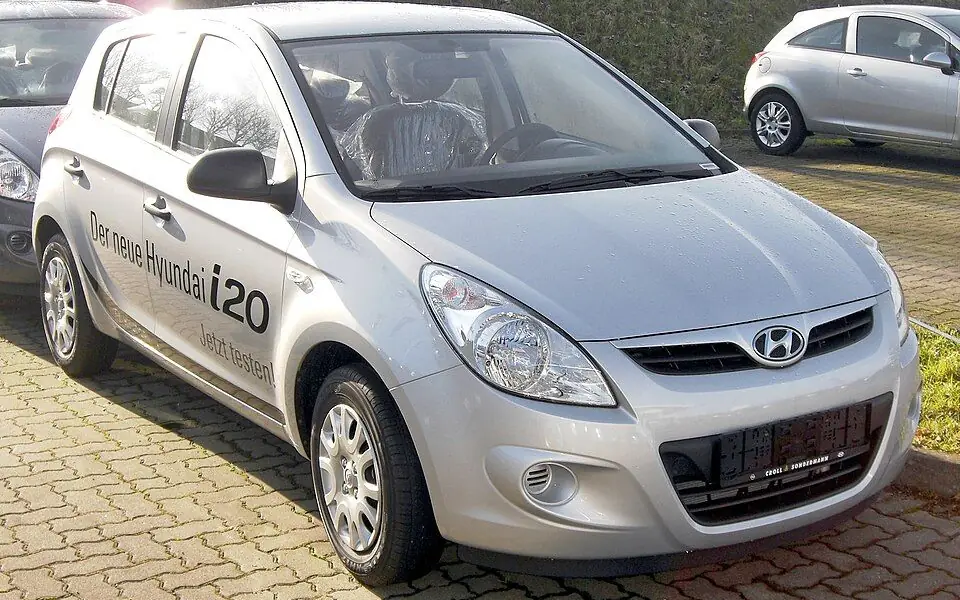
The essentials.
- 3 documented, sourced faults across its 2 engines.
- They all depend on the equipment or the production date: ask what this car has.
- We have no official recalls on record for this model; ask anyway, with the chassis number (VIN).
- According to the data we have, all its engines have the same number of documented faults.
Typical faults by engine
The period and mileage are those mentioned by each sheet's sources. They are not a maintenance interval and do not predict that any particular car will fail.
All versions
Sheets the catalogue links to all 2 of its engines.
- Electric steering, clutch, coolant and recalls on the i20 IKnown weak points
- Period mentioned
- 2008–2014
- Mileage mentioned
- The sheet does not mention a mileage.
Applies if: Weak points of this model from inspections, breakdown statistics and recalls; anything specific to one engine is stated in the sheet.
1.2 / 1.4
Petrol
- Timing chain on the 1.4 and 1.6 Gamma petrol enginesTiming system
- Period mentioned
- Approx. 2006–2013
- Mileage mentioned
- The sheet does not mention a mileage.
Applies if: Only the 1.4 petrol (Gamma).
1.4 / 1.6 CRDi
Diesel
- Period mentioned
- Approx. 2005 onwards
- Mileage mentioned
- What the sheet says: German guides rate these engines as robust if maintained: the faults are the typical wear of a modern diesel. Specific points: a stretched chain on some 1.7s (ix35), cracked heads cited by the TÜV on the i30 I, the 1.1 silencer (Rio III), diesel clutches at 60,000–100,000 km (Cee'd I) and a recall of the 1.7 CRDi vacuum pump (5/10/2010–30/4/2011).
Applies if: U-family CRDi diesel; the specific points were documented on other models with the same engine.
Which engine has the fewest documented faults?
| Engine | Documented faults |
|---|---|
| 1.2 / 1.4Petrol | 22 with conditions |
| 1.4 / 1.6 CRDiDiesel | 22 with conditions |
According to the data we have, all its engines have the same number of documented faults.
We only count the sourced sheets we have. An engine with fewer is not guaranteed to be more reliable: it may have been studied less or sold in smaller numbers.
Official recalls: ask before you pay
We have no official recalls on record for this model. Our list is not complete: ask anyway, with the chassis number.
- Ask the seller for the chassis number (VIN): it has 17 characters, appears in the car's documents and can usually also be seen at the base of the windscreen.
- Ask an official Hyundai dealer, or the brand's official website if it lets you check by chassis number, whether each recall has been done or is still outstanding for that VIN.
- Manufacturer recalls are normally carried out free of charge by the official service network. If one is outstanding, ask for it to be done before you close the sale.
On the test drive: what to look and listen for
Taken from each sheet's symptoms and checks. You can tick off what you have already looked at: it is saved only in this browser.
0 of 3 checked
Timing system
Look out for: Chain rattle on cold start or under load, engine warning light and, in the worst case, the chain jumping with serious engine damage.
Ask them to check: Listen on a cold start; read the camshaft–crankshaft correlation codes; replace chain, tensioner and guides if it rattles; keep to the oil-change intervals.
Known weak points
Look out for: Electric power steering that switches off when hot and returns once cooled; worn clutch, stiff first gear and blocked reverse; coolant loss with a risk of overheating; speedometer, loose radiator fan, leaks at the A-pillar; battery, terminals and spark plugs.
Ask them to check: Check outstanding recalls by VIN (manufacturer, KBA or ADAC website) and have a garage inspect the points listed before buying or before the roadworthiness test.
Injection / turbo
Look out for: At high mileage or with short trips: carbon in injectors and EGR, a clogged particulate filter, dual-mass flywheel and turbo; isolated cases of a stretched chain (1.7) and cracked heads (early 1.6); a clutch that wears early; on some cars, a cracked silencer (1.1) or the brake-servo vacuum pump (1.7 campaign).
Ask them to check: Drive long trips to regenerate the filter; listen to the chain when cold; test injectors and EGR; check the vacuum-pump campaign by VIN on the 1.7.
Sources
Every fact on this page comes from these Testigo sheets and their original sources. Sources are not checked in real time.
More Hyundai buying guides
- Hyundai i10 (I)2008–2013
- Hyundai i30 (I)2007–2012
- Hyundai ix352010–2015
- Hyundai Santa Fe (II)2006–2012
- Hyundai ix202010–2019
- Hyundai i30 (II)2012–2017
- Hyundai Veloster2011–2018
- Hyundai H-1 / i800 / iLoad2008–2021