Before you buy a used Hyundai Kona (I).
Taken only from Testigo's sourced sheets. Use it to question the seller and on the test drive: it does not confirm that any particular car is affected.
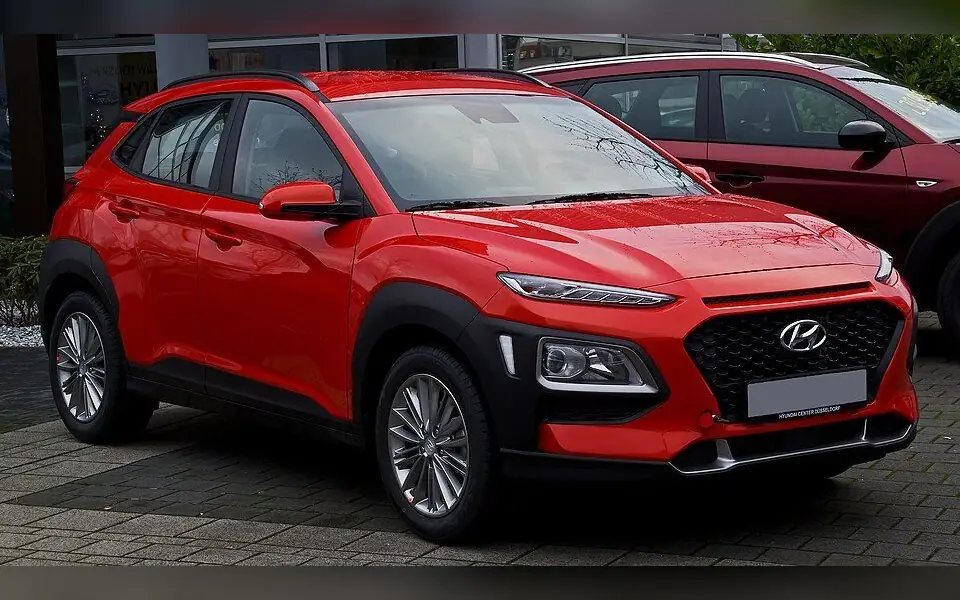
The essentials.
- 4 documented, sourced faults across its 4 engines.
- They all depend on the equipment or the production date: ask what this car has.
- 6 official recalls on record: ask for the chassis number (VIN) and confirm they have been done.
- According to the data we have, the engine with the fewest documented faults is the 1.6 Hybrid (Hybrid).
Typical faults by engine
The period and mileage are those mentioned by each sheet's sources. They are not a maintenance interval and do not predict that any particular car will fail.
All versions
Sheets the catalogue links to all 4 of its engines.
- Period mentioned
- 2017–2023
- Mileage mentioned
- The sheet does not mention a mileage.
Applies if: Weak points of this model from inspections, breakdown statistics and recalls; anything specific to one engine is stated in the sheet.
1.0 / 1.6 T-GDi
Petrol
- Shift shock between 1st and 2nd in the 7-speed DCT caused by an input shaft snap ringAutomatic gearbox
- Period mentioned
- 2021–2022
- Mileage mentioned
- The sheet does not mention a mileage.
Applies if: Only the 1.6 T-GDi with the 7-speed DCT from 2021–2022 (US bulletin).
- Judder on the 7-speed dual-clutch gearbox (7DCT)Automatic gearbox
- Period mentioned
- Approx. 2015–2021
- Mileage mentioned
- The sheet does not mention a mileage.
Applies if: Only with the 7-speed dual-clutch automatic (7DCT). Confirm the gearbox type.
1.6 Hybrid
Hybrid
We have no faults specific to this engine, only those common to every version.
Kona Electric
Electric
- Battery fire risk on the Kona Electric: battery replacementHigh-voltage battery
- Period mentioned
- 2018–2020
- Mileage mentioned
- The sheet does not mention a mileage.
Applies if: Built from 2018 to 2020.
Which engine has the fewest documented faults?
| Engine | Documented faults | Recalls |
|---|---|---|
| 1.0 / 1.6 T-GDiPetrol | 33 with conditions | 5 |
| 1.6 HybridHybridFewest documented | 11 with conditions | 5 |
| 1.6 CRDiDiesel | 22 with conditions | 5 |
| Kona ElectricElectric | 22 with conditions | 6 |
According to the data we have, the engine with the fewest documented faults is the 1.6 Hybrid (Hybrid).
By fuel type, the one with the fewest documented faults is: Hybrid.
We only count the sourced sheets we have. An engine with fewer is not guaranteed to be more reliable: it may have been studied less or sold in smaller numbers.
Official recalls: ask before you pay
A recall existing does not mean this car is affected or that it is still outstanding: it depends on the chassis number, the market and the production date.
- Ask the seller for the chassis number (VIN): it has 17 characters, appears in the car's documents and can usually also be seen at the base of the windscreen.
- Ask an official Hyundai dealer, or the brand's official website if it lets you check by chassis number, whether each recall has been done or is still outstanding for that VIN.
- Manufacturer recalls are normally carried out free of charge by the official service network. If one is outstanding, ask for it to be done before you close the sale.
Hyundai airbag and seat-belt recalls (2003–2026)Airbags and seat belts
How to check it: Check by VIN whether any of the recalls is outstanding (at the dealer or on the DVSA website) and carry out the inspection or replacement it requires.
View full entryHyundai brake recalls (2004–2024)Brakes
How to check it: Check by VIN whether any of the recalls is outstanding (at the dealer or on the DVSA website) and carry out the inspection or replacement it requires.
View full entryHyundai fuel-system recalls (2003–2026)Fuel system
How to check it: Check by VIN whether any of the recalls is outstanding (at the dealer or on the DVSA website) and carry out the inspection or replacement it requires.
View full entryHyundai engine, transmission and software recalls (2013–2026)Powertrain and engine management
How to check it: Check by VIN whether any of the recalls is outstanding (at the dealer or on the DVSA website) and carry out the inspection or replacement it requires.
View full entryHyundai electrical, lighting and electronics recalls (2016–2026)Electrical and electronic systems
How to check it: Check by VIN whether any of the recalls is outstanding (at the dealer or on the DVSA website) and carry out the inspection or replacement it requires.
View full entryHyundai electric and hybrid drive recalls (2018–2026)Electric powertrain
Engines: Kona Electric (Electric)
How to check it: Check by VIN whether any of the recalls is outstanding (at the dealer or on the DVSA website) and carry out the inspection or replacement it requires.
View full entryOn the test drive: what to look and listen for
Taken from each sheet's symptoms and checks. You can tick off what you have already looked at: it is saved only in this browser.
0 of 4 checked
Automatic gearbox
Look out for: A sharp knock or jolt when shifting from 1st to 2nd, or when changing down from 2nd to 1st while slowing down. The other gears are fine.
Ask them to check: Explain that the knock is only between 1st and 2nd and ask them to check whether the car has campaign T7E outstanding, or the input shaft snap ring, before replacing clutches or the gearbox control unit.
Look out for: Abnormal vibration or shudder when pulling away and at low speed, especially in traffic.
Ask them to check: At the dealer: run the judder test with the diagnostic tool, install the latest gearbox software and replace the dual clutch only if the judder remains.
Known weak points
Look out for: A stretched chain on early 1.6 T-GDIs (noise on cold start); direct-injection carbon; a dirty EGR on the diesel; dual-clutch judder; on the EV, cells that discharge quickly; on hybrids and EVs, faults in the integrated electronic brake (IEB).
Ask them to check: Check the campaigns and updates by VIN; listen to the chain when cold; test the gearbox in traffic.
High-voltage battery
Look out for: No prior warning: fire risk from the high-voltage battery, also when parked or charging.
Ask them to check: Check by VIN that the battery has already been replaced under the campaign; if not, follow Hyundai’s instructions until it is replaced.
Sources
Every fact on this page comes from these Testigo sheets and their original sources. Sources are not checked in real time.
- Shift shock between 1st and 2nd in the 7-speed DCT caused by an input shaft snap ring
- 1.6 T-GDI chain, electronic brake on hybrids and EVs, and campaigns on the Kona
- Judder on the 7-speed dual-clutch gearbox (7DCT)
- Battery fire risk on the Kona Electric: battery replacement
- Hyundai airbag and seat-belt recalls (2003–2026)
- Hyundai brake recalls (2004–2024)
- Hyundai fuel-system recalls (2003–2026)
- Hyundai engine, transmission and software recalls (2013–2026)
- Hyundai electrical, lighting and electronics recalls (2016–2026)
- Hyundai electric and hybrid drive recalls (2018–2026)
More Hyundai buying guides
- Hyundai i30 (III)2017–2025
- Hyundai Santa Fe (IV)2018–2024
- Hyundai Ioniq2016–2022
- Hyundai Nexo2018–2026
- Hyundai i10 (III)2019–2026
- Hyundai Tucson (III)2015–2020
- Hyundai i20 (II)2014–2020
- Hyundai i20 (III)2020–2026