Before you buy a used Hyundai Nexo.
Taken only from Testigo's sourced sheets. Use it to question the seller and on the test drive: it does not confirm that any particular car is affected.
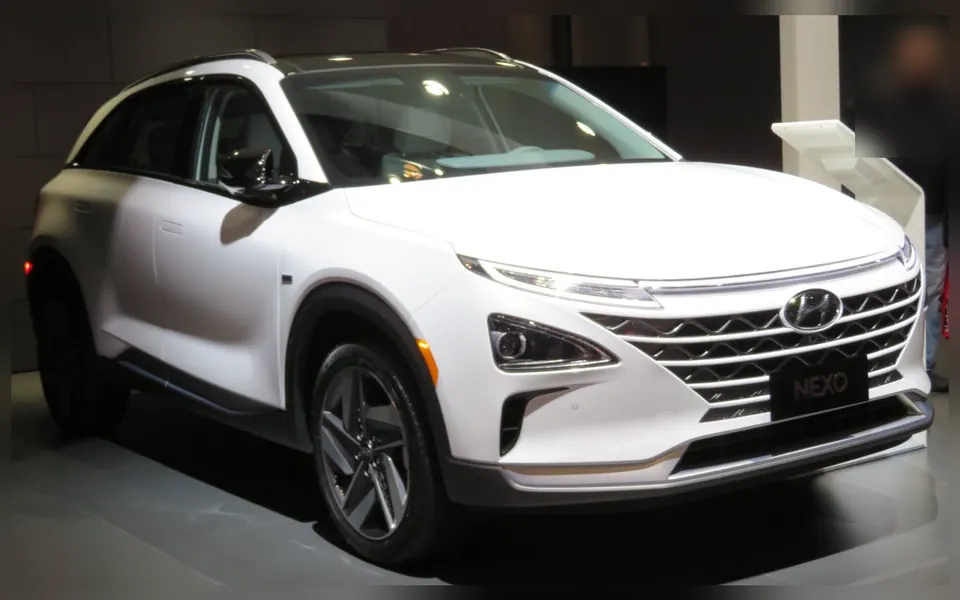
The essentials.
- 1 documented, sourced fault for its engine.
- That is not much data: if no other faults show up here, it does not mean it has none.
- It only applies with certain equipment or production dates: ask what this car has.
- 4 official recalls on record: ask for the chassis number (VIN) and confirm they have been done.
Typical faults by engine
The period and mileage are those mentioned by each sheet's sources. They are not a maintenance interval and do not predict that any particular car will fail.
Nexo FCEV
Electric
- Fuel-cell stack losing power and hydrogen leaks on the NexoHigh-voltage battery
- Period mentioned
- 2018–2024
- Mileage mentioned
- What the sheet says: Since August 2021 Hyundai has been checking the roughly 15,000 Nexo cars built up to July 2021 for faulty fuel-cell stacks and replacing them (electrive); the Korean press explains that a control-logic fault triggers the stack protection and cuts power, that the software is updated first and the stack replaced if the fault persists, and that a stack costs about 40 million won (10-year or 160,000 km warranty). In the US there were also recalls for the refuelling-inlet filter, which can come loose after refuelling and leak hydrogen (2019), for hydrogen sensors that may not detect a leak (2019–2021) and for the integrated electronic brake software (2019–2020).
Applies if: Only the first generation (2018–2024).
Official recalls: ask before you pay
A recall existing does not mean this car is affected or that it is still outstanding: it depends on the chassis number, the market and the production date.
- Ask the seller for the chassis number (VIN): it has 17 characters, appears in the car's documents and can usually also be seen at the base of the windscreen.
- Ask an official Hyundai dealer, or the brand's official website if it lets you check by chassis number, whether each recall has been done or is still outstanding for that VIN.
- Manufacturer recalls are normally carried out free of charge by the official service network. If one is outstanding, ask for it to be done before you close the sale.
Hydrogen-tank pressure relief device on the NexoFuel system
How to check it: Check the campaign by VIN; until the repair, park outdoors away from buildings; with the symptoms, move away from the car and call roadside assistance.
View full entryHyundai brake recalls (2004–2024)Brakes
How to check it: Check by VIN whether any of the recalls is outstanding (at the dealer or on the DVSA website) and carry out the inspection or replacement it requires.
View full entryHyundai fuel-system recalls (2003–2026)Fuel system
How to check it: Check by VIN whether any of the recalls is outstanding (at the dealer or on the DVSA website) and carry out the inspection or replacement it requires.
View full entryHyundai electrical, lighting and electronics recalls (2016–2026)Electrical and electronic systems
How to check it: Check by VIN whether any of the recalls is outstanding (at the dealer or on the DVSA website) and carry out the inspection or replacement it requires.
View full entryOn the test drive: what to look and listen for
Taken from each sheet's symptoms and checks. You can tick off what you have already looked at: it is saved only in this browser.
0 of 1 checked
High-voltage battery
Look out for: When overtaking or on hills the car loses power for a few seconds and then surges; a power-limited warning from a fuel-cell system fault; hydrogen-leak warnings.
Ask them to check: Ask Hyundai for the stack and campaign history by VIN; on the test drive, accelerate hard up a hill; park outside if a hydrogen warning comes on.
Sources
Every fact on this page comes from these Testigo sheets and their original sources. Sources are not checked in real time.
More Hyundai buying guides
- Hyundai i10 (III)2019–2026
- Hyundai i20 (III)2020–2026
- Hyundai i30 (III)2017–2025
- Hyundai Tucson (IV)2020–2026
- Hyundai Santa Fe (IV)2018–2024
- Hyundai Bayon2021–2026
- Hyundai Ioniq 52021–2026
- Hyundai Kona (I)2017–2023