Before you buy a used Jeep Renegade.
Taken only from Testigo's sourced sheets. Use it to question the seller and on the test drive: it does not confirm that any particular car is affected.
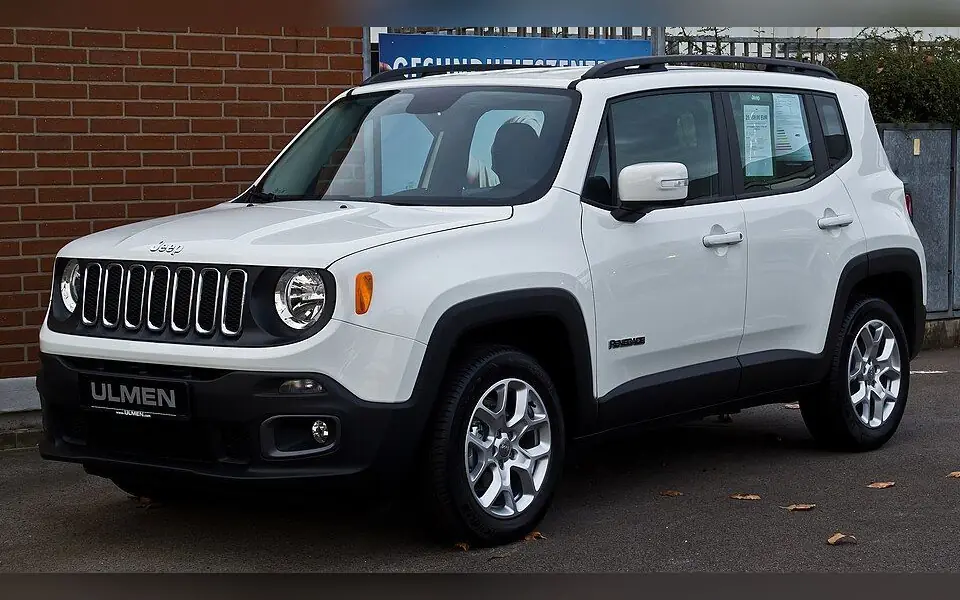
The essentials.
- 6 documented, sourced faults across its 4 engines.
- 5 of them depend on the equipment or the production date: ask what this car has.
- 6 official recalls on record: ask for the chassis number (VIN) and confirm they have been done.
- According to the data we have, the engine with the fewest documented faults is the 4xe (Plug-in hybrid).
Typical faults by engine
The period and mileage are those mentioned by each sheet's sources. They are not a maintenance interval and do not predict that any particular car will fail.
All versions
Sheets the catalogue links to all 4 of its engines.
- Period mentioned
- 2014 onwards
- Mileage mentioned
- The sheet does not mention a mileage.
Applies if: Weak points of this model from inspections, breakdown statistics and recalls; anything specific to one engine is stated in the sheet.
1.4 MultiAir
Petrol
- MultiAir actuator starved of oil pressureValvetrain (MultiAir actuator)
- Period mentioned
- 2009–2024
- Mileage mentioned
- The sheet does not mention a mileage.
- Won't start in frost because of frozen water in the silencer (500X, Renegade and Compass)Exhaust and emissions
- Period mentioned
- 2015–2020
- Mileage mentioned
- The sheet does not mention a mileage.
Applies if: Only cars built up to 21/2/2020 without a drain hole in the silencer.
- ABS and stability warning lights caused by oxidised or wet wheel speed sensorsBrakes / electronics
- Period mentioned
- 2018–2019
- Mileage mentioned
- The sheet does not mention a mileage.
Applies if: Bulletin for Latin America, cars built up to 31/7/2019.
1.0 / 1.3 Turbo
Petrol
- Period mentioned
- Specific production period stated in the condition and evidence.
- Mileage mentioned
- The sheet does not mention a mileage.
Applies if: Brazil only; Renegade B1 MY 2022–2026 built up to 06/03/2026 with the 1.3 EYJ engine; TSB 14-002-26 and the specified DTCs. Not the 1.0 or other markets.
These also apply, described above: Won't start in frost because of frozen water in the silencer (500X, Renegade and Compass) · ABS and stability warning lights caused by oxidised or wet wheel speed sensors
1.6 / 2.0 Multijet
Diesel
These also apply, described above: Won't start in frost because of frozen water in the silencer (500X, Renegade and Compass) · ABS and stability warning lights caused by oxidised or wet wheel speed sensors
4xe
Plug-in hybrid
- Jeep 4xe batteryHigh-voltage battery
- Period mentioned
- 2020–2025
- Mileage mentioned
- The sheet does not mention a mileage.
Applies if: Same Stellantis 4xe system; the sheet was documented on the Wrangler and Grand Cherokee 4xe.
Which engine has the fewest documented faults?
| Engine | Documented faults | Recalls |
|---|---|---|
| 1.4 MultiAirPetrol | 43 with conditions | 4 |
| 1.0 / 1.3 TurboPetrol | 44 with conditions | 5 |
| 1.6 / 2.0 MultijetDiesel | 33 with conditions | 5 |
| 4xePlug-in hybridFewest documented | 22 with conditions | 5 |
According to the data we have, the engine with the fewest documented faults is the 4xe (Plug-in hybrid).
By fuel type, the one with the fewest documented faults is: Plug-in hybrid.
We only count the sourced sheets we have. An engine with fewer is not guaranteed to be more reliable: it may have been studied less or sold in smaller numbers.
Official recalls: ask before you pay
A recall existing does not mean this car is affected or that it is still outstanding: it depends on the chassis number, the market and the production date.
- Ask the seller for the chassis number (VIN): it has 17 characters, appears in the car's documents and can usually also be seen at the base of the windscreen.
- Ask an official Jeep dealer, or the brand's official website if it lets you check by chassis number, whether each recall has been done or is still outstanding for that VIN.
- Manufacturer recalls are normally carried out free of charge by the official service network. If one is outstanding, ask for it to be done before you close the sale.
Jeep airbag and seat-belt recalls (2000–2026)Airbags and seat belts
How to check it: Check by VIN whether any of the recalls is outstanding (at the dealer or on the DVSA website) and carry out the inspection or replacement it requires.
View full entryJeep electric and hybrid drive recalls (2023–2026)Electric powertrain
How to check it: Check by VIN whether any of the recalls is outstanding (at the dealer or on the DVSA website) and carry out the inspection or replacement it requires.
View full entryJeep wheel, axle and suspension recalls (2004–2024)Suspension and steering
How to check it: Check by VIN whether any of the recalls is outstanding (at the dealer or on the DVSA website) and carry out the inspection or replacement it requires.
View full entryJeep engine, transmission and software recalls (2001–2026)Powertrain and engine management
How to check it: Check by VIN whether any of the recalls is outstanding (at the dealer or on the DVSA website) and carry out the inspection or replacement it requires.
View full entryIncorrect ORC unit configurationAirbags and seat belts
Engines: 1.0 / 1.3 Turbo (Petrol) · 1.6 / 2.0 Multijet (Diesel)
How to check it: Confirm recall and VIN; update ORC software as instructed.
View full entryInsufficient torque at PHEV 12 V connectionsElectrical and electronic systems
Engines: 4xe (Plug-in hybrid)
How to check it: Confirm VIN; check connection torque and cable condition; replace damaged parts under the recall.
View full entryOn the test drive: what to look and listen for
Taken from each sheet's symptoms and checks. You can tick off what you have already looked at: it is saved only in this browser.
0 of 6 checked
Valvetrain (MultiAir actuator)
Look out for: Hard or rough cold starts, hesitation, stalling and an engine light with P1523 (low oil pressure in the MultiAir system).
Ask them to check: Change the oil and filter with the correct specification, inspect the MultiAir mesh filter and measure oil pressure before replacing the actuator.
Exhaust and emissions
Look out for: Below freezing the starter turns but the engine does not start; on days without frost it starts fine. More likely after short trips.
Ask them to check: Ask the garage about bulletin 09-004-20 and whether the silencer already has the drain hole; until then, avoid leaving the car outside in frost right after a very short trip.
Brakes / electronics
Look out for: The ABS, stability control and engine warning lights come on together, especially after washing the car or in rain, and sometimes go off by themselves; codes C0031, C0034, C0037 or C003A.
Ask them to check: With the ABS light on the brakes work, but without ABS or stability control: drive carefully and go to the garage soon, where they can read the wheel sensor codes.
Known weak points
Look out for: The early 1.4 MultiAir turbo; oil dilution on the direct-injection petrols even at low mileage; a ZF 9-speed (4x4) that shifts badly from 4th to 5th; cracking door seals, wind noise and Uconnect faults; on diesels, typical high-mileage wear.
Ask them to check: Check every campaign by VIN; check the oil level (dilution); test the automatic shifts.
Fuel system
Look out for: MIL, rough idle or partial power loss with DTC P0087-00, P0088-00 or P0089-00.
Ask them to check: Confirm Brazil, EYJ engine, VIN and DTCs. Exclude if P0169/P0171. Compare actual/target rail pressure and low pressure: at 5.2–6 bar follow approved cleaning; replace pump and pipe only if unresolved. Below 5.2 bar diagnose low pressure and do not apply this repair.
High-voltage battery
Look out for: Usually none. In rare cases, a battery fire, including when parked.
Ask them to check: Confirm the recall status by VIN; if one is open with no fix, do not charge and park away from buildings.
Sources
Every fact on this page comes from these Testigo sheets and their original sources. Sources are not checked in real time.
- MultiAir actuator starved of oil pressure
- Won't start in frost because of frozen water in the silencer (500X, Renegade and Compass)
- ABS and stability warning lights caused by oxidised or wet wheel speed sensors
- 1.4 MultiAir turbo, oil dilution, 9-speed gearbox and campaigns on the Renegade
- 1.3 EYJ high-pressure fuel pump contamination
- Jeep 4xe battery
- Jeep airbag and seat-belt recalls (2000–2026)
- Jeep electric and hybrid drive recalls (2023–2026)
- Jeep wheel, axle and suspension recalls (2004–2024)
- Jeep engine, transmission and software recalls (2001–2026)
- Incorrect ORC unit configuration
- Insufficient torque at PHEV 12 V connections
More Jeep buying guides
- Jeep Compass (II)2017–2025
- Jeep Cherokee (KL)2014–2023
- Jeep Wrangler (JL)2018–2026
- Jeep Gladiator (JT)2020–2026
- Jeep Grand Cherokee (WK2)2011–2021
- Jeep Grand Cherokee (WL)2022–2026
- Jeep Avenger2023–2026
- Jeep Compass (III)2025–2026