Before you buy a used Peugeot Expert (I / II).
Taken only from Testigo's sourced sheets. Use it to question the seller and on the test drive: it does not confirm that any particular car is affected.
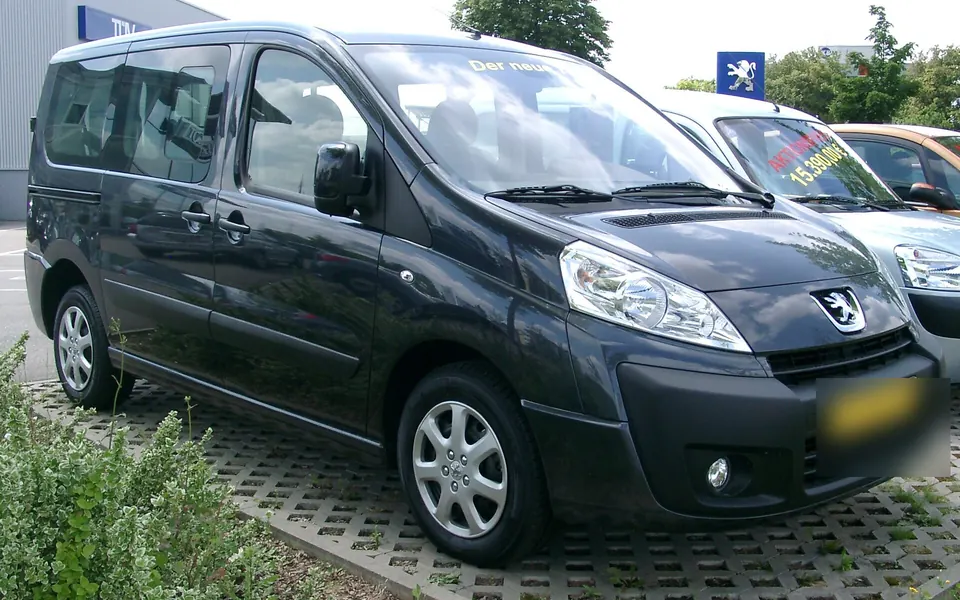
The essentials.
- 3 documented, sourced faults across its 3 engines.
- 1 of them depends on the equipment or the production date: ask what this car has.
- 1 official recall on record: ask for the chassis number (VIN) and confirm it has been done.
- According to the data we have, the engine with the fewest documented faults is the 2.0 (Petrol).
Typical faults by engine
The period and mileage are those mentioned by each sheet's sources. They are not a maintenance interval and do not predict that any particular car will fail.
All versions
Sheets the catalogue links to all 3 of its engines.
- Period mentioned
- 1995–2016
- Mileage mentioned
- The sheet does not mention a mileage.
Applies if: Twin of the Citroën Jumpy (same van and engines); the German guide covers the Jumpy.
2.0
Petrol
We have no faults specific to this engine, only those common to every version.
1.6 HDi
Diesel
- Turbo oil starvation from injector carbonTurbo / injection
- Period mentioned
- Approx. 2004–2015
- Mileage mentioned
- The sheet does not mention a mileage.
1.9 D / 2.0 HDi
Diesel
- 2.0/2.2 HDi DPF, EGR, turbo and flywheelDPF / EGR / turbo / flywheel
- Period mentioned
- 1998–2015
- Mileage mentioned
- 120,000–180,000 km
Which engine has the fewest documented faults?
| Engine | Documented faults | Recalls |
|---|---|---|
| 2.0PetrolFewest documented | 11 with conditions | 1 |
| 1.6 HDiDiesel | 21 with conditions | 0 |
| 1.9 D / 2.0 HDiDiesel | 21 with conditions | 0 |
According to the data we have, the engine with the fewest documented faults is the 2.0 (Petrol).
By fuel type, the one with the fewest documented faults is: Petrol.
We only count the sourced sheets we have. An engine with fewer is not guaranteed to be more reliable: it may have been studied less or sold in smaller numbers.
Official recalls: ask before you pay
A recall existing does not mean this car is affected or that it is still outstanding: it depends on the chassis number, the market and the production date.
- Ask the seller for the chassis number (VIN): it has 17 characters, appears in the car's documents and can usually also be seen at the base of the windscreen.
- Ask an official Peugeot dealer, or the brand's official website if it lets you check by chassis number, whether each recall has been done or is still outstanding for that VIN.
- Manufacturer recalls are normally carried out free of charge by the official service network. If one is outstanding, ask for it to be done before you close the sale.
Lights switch off due to incorrect switch detectionElectrical and electronic systems
Engines: 2.0 (Petrol)
How to check it: Check the VIN and update lighting-control software specified in the campaign.
View full entryOn the test drive: what to look and listen for
Taken from each sheet's symptoms and checks. You can tick off what you have already looked at: it is saved only in this browser.
0 of 3 checked
Turbo / injection
Look out for: Loud turbo whistle, power loss, blue or black smoke, oil that gets dirty very quickly. Before the failure, often a puffing or ticking from the cylinder head and an exhaust smell from an injector.
Ask them to check: Check injector bolt torque and carbon at their base, the turbo banjo bolt and the sump strainer.
DPF / EGR / turbo / flywheel
Look out for: Particulate filter warning and power loss; rough idle from a dirty EGR; vibration and knocks when starting or in low gears (dual-mass flywheel); smoke or hesitation from injectors at high mileage.
Ask them to check: Read the DPF status and additive level, check the EGR and cooler, check the dual-mass flywheel at start-up and measure injector balance rates.
Known weak points
Look out for: First generation: rust on the body, underside and sills, worn shock absorbers, springs and brakes, turbo and the 2.0 HDi common-rail system, oil leaks. Second generation: suspension and steering, brakes, clogged EGR on the HDi (smoke, hesitation, low power), dual-mass flywheel and turbo at high mileage.
Ask them to check: Check rust on the underside and sills, suspension and brakes; on diesels, test turbo, EGR and dual-mass flywheel.
Sources
Every fact on this page comes from these Testigo sheets and their original sources. Sources are not checked in real time.
More Peugeot buying guides
- Peugeot 8072002–2014
- Peugeot 4072004–2011
- Peugeot 10072005–2009
- Peugeot 2072006–2014
- Peugeot 308 (I)2007–2013
- Peugeot 206 / 206+1998–2013
- Peugeot 6072000–2010
- Peugeot 3072001–2008