Before you buy a used Renault Twingo (III).
Taken only from Testigo's sourced sheets. Use it to question the seller and on the test drive: it does not confirm that any particular car is affected.
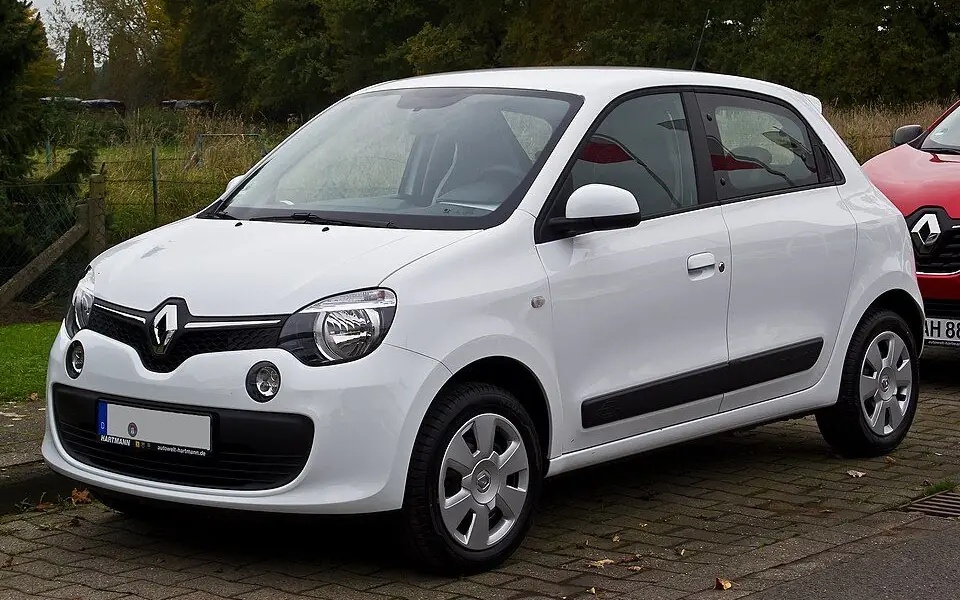
The essentials.
- 9 documented, sourced faults across its 3 engines.
- 1 of them depends on the equipment or the production date: ask what this car has.
- 4 official recalls on record: ask for the chassis number (VIN) and confirm they have been done.
- According to the data we have, the engines with the fewest documented faults are: 1.0 SCe (H4D) (Petrol), Twingo Electric (Electric).
Typical faults by engine
The period and mileage are those mentioned by each sheet's sources. They are not a maintenance interval and do not predict that any particular car will fail.
All versions
Sheets the catalogue links to all 3 of its engines.
- Period mentioned
- 2014–2024
- Mileage mentioned
- The sheet does not mention a mileage.
- Renault Twingo (III): known faults of the chassis, steering and brakes according to L'argusSuspension and steering
- Period mentioned
- 2014–2024
- Mileage mentioned
- The sheet does not mention a mileage.
- Renault Twingo (III): known faults of the electronics and interior according to L'argusElectrical and electronic systems
- Period mentioned
- 2014–2024
- Mileage mentioned
- The sheet does not mention a mileage.
- Period mentioned
- 2014–2024
- Mileage mentioned
- The sheet does not mention a mileage.
- Suspension, rust and electronics on the Twingo IIIKnown weak points
- Period mentioned
- 2014 onwards
- Mileage mentioned
- The sheet does not mention a mileage.
Applies if: Weak points of this model from inspections, breakdown statistics and recalls; anything specific to one engine is stated in the sheet.
1.0 SCe (H4D)
Petrol
- Period mentioned
- 2014–2024
- Mileage mentioned
- The sheet does not mention a mileage.
0.9 TCe (H4Bt)
Petrol
- Period mentioned
- 2014–2024
- Mileage mentioned
- The sheet does not mention a mileage.
- Stretched timing chain on the 0.9 and 1.2 TCeTiming system
- Period mentioned
- Approx. 2012–2020
- Mileage mentioned
- The sheet does not mention a mileage.
Twingo Electric
Electric
- Period mentioned
- 2014–2024
- Mileage mentioned
- The sheet does not mention a mileage.
Which engine has the fewest documented faults?
| Engine | Documented faults | Recalls |
|---|---|---|
| 1.0 SCe (H4D)PetrolFewest documented | 61 with conditions | 4 |
| 0.9 TCe (H4Bt)Petrol | 71 with conditions | 4 |
| Twingo ElectricElectricFewest documented | 61 with conditions | 4 |
According to the data we have, the engines with the fewest documented faults are: 1.0 SCe (H4D) (Petrol), Twingo Electric (Electric).
By fuel type, the one with the fewest documented faults is: Electric.
We only count the sourced sheets we have. An engine with fewer is not guaranteed to be more reliable: it may have been studied less or sold in smaller numbers.
Official recalls: ask before you pay
A recall existing does not mean this car is affected or that it is still outstanding: it depends on the chassis number, the market and the production date.
- Ask the seller for the chassis number (VIN): it has 17 characters, appears in the car's documents and can usually also be seen at the base of the windscreen.
- Ask an official Renault dealer, or the brand's official website if it lets you check by chassis number, whether each recall has been done or is still outstanding for that VIN.
- Manufacturer recalls are normally carried out free of charge by the official service network. If one is outstanding, ask for it to be done before you close the sale.
Renault seat-belt and anchorage recalls (2015–2020)Airbags and seat belts
How to check it: Check the recall by VIN; inspect buckles and anchorages and tighten or replace as the recall requires.
View full entryRenault recalls for wheel, axle and suspension fixings (2015–2026)Suspension and steering
How to check it: Check the recall by VIN; check the tightening and replace the parts named. With noise from a wheel, do not drive.
View full entryRenault engine, emissions and software recalls (2015–2025)Powertrain and engine management
How to check it: Check the recall by VIN; carry out the reprogramming or replacement it requires.
View full entryRenault body recalls: parts that may come loose (2016–2025)Bodywork
How to check it: Check the recall by VIN; reinforce, re-bond, tighten or replace the part named.
View full entryOn the test drive: what to look and listen for
Taken from each sheet's symptoms and checks. You can tick off what you have already looked at: it is saved only in this browser.
0 of 9 checked
Engine
Look out for: [1.0 SCe] Vibration, knocking and jerking while driving (up to 12/03/2016); Loss of power (up to 26/06/2015); Noise while driving (up to 12/03/2016); Water pump noise (up to March 2018); Will not start or unstable engine speed (from 01/01/2015 to 26/02/2016); Injection light on, with or without unstable engine speed (up to 03/05/2017); Timing chain noise from chain stretch (from 01/09/2014 to 12/04/2018); Various engine faults (from 19/10/2016 to 01/09/2020)
Ask them to check: Compare your symptom and your car's build date with this list. If they match, tell the workshop and ask them to check that part first before replacing others. The brand or a warranty extension covers some repairs: ask the dealer with the car's details.
Look out for: [0.9 TCe] Jerking and OBD light on (from 02/04/2014 to 21/06/2019); [0.9 TCe] Lack of power, shaking and "check injection" message from turbo actuator corrosion (up to 21/06/2019); Loss of power (up to 26/06/2015); Noise while driving (up to 12/03/2016); Water pump noise (up to March 2018); Will not start or unstable engine speed (from 01/01/2015 to 26/02/2016); Injection light on, with or without unstable engine speed (up to 03/05/2017); Timing chain noise from chain stretch (from 01/09/2014 to 12/04/2018); Various engine faults (from 19/10/2016 to 01/09/2020)
Ask them to check: Compare your symptom and your car's build date with this list. If they match, tell the workshop and ask them to check that part first before replacing others. The brand or a warranty extension covers some repairs: ask the dealer with the car's details.
Look out for: Battery charging fault and loss of drive (from 01/01/2020 to 21/05/2021); Charging impossible or interrupted (from 01/07/2019 to 27/01/2022); Charging impossible or car will not start (until the end of production)
Ask them to check: Compare your symptom and your car's build date with this list. If they match, tell the workshop and ask them to check that part first before replacing others. The brand or a warranty extension covers some repairs: ask the dealer with the car's details.
Gearbox
Look out for: Gears will not engage, 5-speed manual (up to 27/10/2017); Squeak in 5th, 5-speed manual (from January 2016 to 30/04/2018); Clutch pedal returns slowly (up to July 2018)
Ask them to check: Compare your symptom and your car's build date with this list. If they match, tell the workshop and ask them to check that part first before replacing others. The brand or a warranty extension covers some repairs: ask the dealer with the car's details.
Suspension and steering
Look out for: Risk of the anti-roll bar link mounting tab breaking (up to 01/11/2014); Risk of ESP malfunction (up to 22/12/2014); Squeak when turning the steering wheel; Bearing noise from the front axle (from 01/01/2015 to 19/02/2016); Front axle noise (up to 22/02/2016); Fluid (brake) leak (up to 23/08/2017); Brake fault light on (up to 08/11/2017); Poor steering assistance below 0 °C (up to 24/01/2018); Squeak from the front axle (from 01/12/2015 to 22/06/2018); Knock from the front axle over speed bumps (until the end of production)
Ask them to check: Compare your symptom and your car's build date with this list. If they match, tell the workshop and ask them to check that part first before replacing others. The brand or a warranty extension covers some repairs: ask the dealer with the car's details.
Electrical and electronic systems
Look out for: Touchscreen unresponsive and navigation freezes; Ignition switch fault (up to 16/07/2016); No rear camera image (up to 31/03/2017); Air conditioning underperforms (up to 27/06/2017); App icons stay greyed out (up to December 2017); Air conditioning pipes vibrate when the compressor starts (up to 31/12/2017); Tyre pressure loss light on (up to 30/06/2018); Connected services faults (up to 21/12/2018) or navigation faults (up to 18/01/2019); Parcel shelf noise (from 01/07/2014 to 08/07/2019); 12 V battery drains with loss of connected services (from 01/01/2019 to 28/05/2021)
Ask them to check: Compare your symptom and your car's build date with this list. If they match, tell the workshop and ask them to check that part first before replacing others. The brand or a warranty extension covers some repairs: ask the dealer with the car's details.
Bodywork
Look out for: Risk of the bonnet opening while driving (up to 27/01/2016); Black "Burning pack" decals turn white (up to 21/09/2018); Cracked sealant at the joint between the roof and the rear wing (up to 02/06/2023)
Ask them to check: Compare your symptom and your car's build date with this list. If they match, tell the workshop and ask them to check that part first before replacing others. The brand or a warranty extension covers some repairs: ask the dealer with the car's details.
Timing system
Look out for: Metallic chain rattle, especially when cold or at idle; engine light with a crankshaft–camshaft correlation code; in serious cases the chain jumps and damages the valves.
Ask them to check: With any chain noise or a P0016 code, diagnose straight away: measure the stretch and check the tensioner and guides before the timing jumps. Shorten oil-change intervals.
Known weak points
Look out for: Suspension noises and play from the fourth year, a jumping fuel gauge, electrical faults, camshaft sensors, turbo and coils; underbody rust; a lot of heat in the boot (rear engine).
Ask them to check: Check the suspension and underbody; check the campaigns by VIN; read codes if there is hesitation or misfiring.
OBD codes worth looking for
If they let you read the fault memory with an OBD reader, these are the codes mentioned in this model's sheets:
Sources
Every fact on this page comes from these Testigo sheets and their original sources. Sources are not checked in real time.
- Renault Twingo (III) 1.0 SCe (H4D): known faults of the engine according to L'argus
- Renault Twingo (III): known faults of the gearbox and transmission according to L'argus
- Renault Twingo (III): known faults of the chassis, steering and brakes according to L'argus
- Renault Twingo (III): known faults of the electronics and interior according to L'argus
- Renault Twingo (III): known faults of the body according to L'argus
- Renault Twingo (III) 0.9 TCe (H4Bt): known faults of the engine according to L'argus
- Stretched timing chain on the 0.9 and 1.2 TCe
- Renault Twingo (III) Twingo Electric: known faults of the engine according to L'argus
- Suspension, rust and electronics on the Twingo III
- Renault seat-belt and anchorage recalls (2015–2020)
- Renault recalls for wheel, axle and suspension fixings (2015–2026)
- Renault engine, emissions and software recalls (2015–2025)
- Renault body recalls: parts that may come loose (2016–2025)
More Renault buying guides
- Renault Scénic (IV) / Grand Scénic (IV)2016–2022
- Renault Espace (V)2015–2023
- Renault Mégane (IV)2016–2023
- Renault Kadjar2015–2022
- Renault Koleos (II)2016–2023
- Renault Talisman2015–2022
- Renault Zoe2012–2024
- Renault Trafic (III)2014–2026