Before you buy a used Toyota Prius (III).
Taken only from Testigo's sourced sheets. Use it to question the seller and on the test drive: it does not confirm that any particular car is affected.
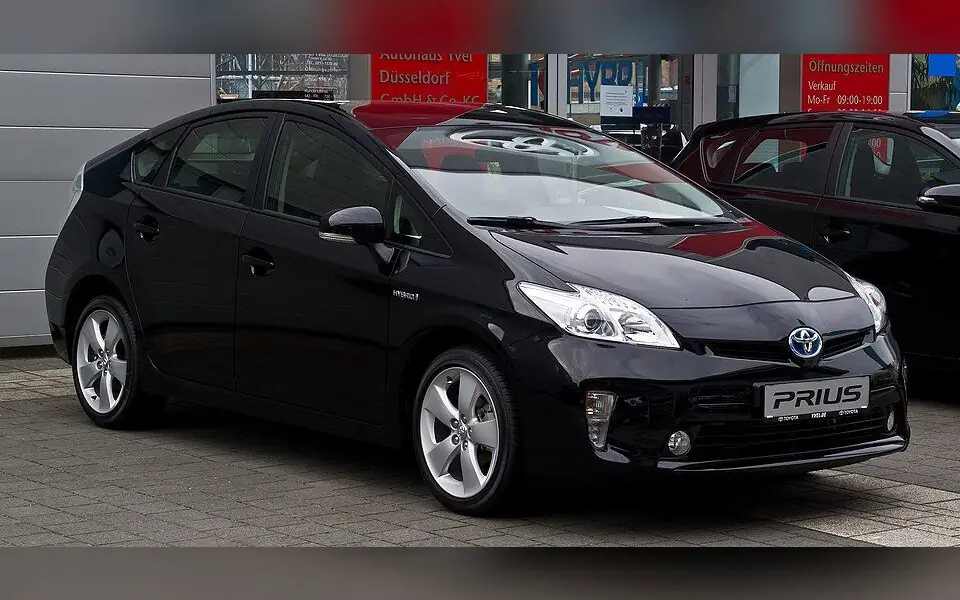
The essentials.
- 4 documented, sourced faults across its 2 engines.
- 2 of them depend on the equipment or the production date: ask what this car has.
- 6 official recalls on record: ask for the chassis number (VIN) and confirm they have been done.
- According to the data we have, the engine with the fewest documented faults is the Prius Plug-in (Plug-in hybrid).
Typical faults by engine
The period and mileage are those mentioned by each sheet's sources. They are not a maintenance interval and do not predict that any particular car will fail.
All versions
Sheets the catalogue links to all 2 of its engines.
- Clogged hybrid battery cooling fan and filterHigh-voltage battery
- Period mentioned
- 2003 onwards
- Mileage mentioned
- The sheet does not mention a mileage.
- Period mentioned
- Approx. 2010–2015
- Mileage mentioned
- The sheet does not mention a mileage.
Applies if: The Prius Plug-in uses the same 1.8 hybrid engine (2ZR-FXE).
- Curtain airbag, rusty discs and battery on the Prius IIIKnown weak points
- Period mentioned
- 2009–2016
- Mileage mentioned
- What the sheet says: Rusty brake discs (little used because of regenerative braking), shock absorbers worn from about 200,000 km, a high-voltage battery that discharges (isolated cases in 2010 and 2011) and squeaks and easily scratched interior plastics.
Applies if: Weak points of this model from inspections, breakdown statistics and recalls; anything specific to one engine is stated in the sheet.
Applies if: The Plug-in shares body and engine with the Prius III, but the guide does not cover it separately: confirm by VIN.
1.8 Hybrid
Hybrid
- Prius inverter coolant pumpElectric powertrain
- Period mentioned
- 2003–2015
- Mileage mentioned
- The sheet does not mention a mileage.
Prius Plug-in
Plug-in hybrid
We have no faults specific to this engine, only those common to every version.
Which engine has the fewest documented faults?
| Engine | Documented faults | Recalls |
|---|---|---|
| 1.8 HybridHybrid | 41 with conditions | 6 |
| Prius Plug-inPlug-in hybridFewest documented | 32 with conditions | 6 |
According to the data we have, the engine with the fewest documented faults is the Prius Plug-in (Plug-in hybrid).
By fuel type, the one with the fewest documented faults is: Plug-in hybrid.
We only count the sourced sheets we have. An engine with fewer is not guaranteed to be more reliable: it may have been studied less or sold in smaller numbers.
Official recalls: ask before you pay
A recall existing does not mean this car is affected or that it is still outstanding: it depends on the chassis number, the market and the production date.
- Ask the seller for the chassis number (VIN): it has 17 characters, appears in the car's documents and can usually also be seen at the base of the windscreen.
- Ask an official Toyota dealer, or the brand's official website if it lets you check by chassis number, whether each recall has been done or is still outstanding for that VIN.
- Manufacturer recalls are normally carried out free of charge by the official service network. If one is outstanding, ask for it to be done before you close the sale.
Toyota airbag and seat-belt recalls (2003–2024)Airbags and seat belts
How to check it: Check by VIN whether any of the recalls is outstanding (at the dealer or on the DVSA website) and carry out the inspection or replacement it requires.
View full entryToyota brake recalls (2000–2025)Brakes
How to check it: Check by VIN whether any of the recalls is outstanding (at the dealer or on the DVSA website) and carry out the inspection or replacement it requires.
View full entryToyota steering recalls (2004–2018)Steering
How to check it: Check by VIN whether any of the recalls is outstanding (at the dealer or on the DVSA website) and carry out the inspection or replacement it requires.
View full entryToyota fuel-system recalls (2002–2026)Fuel system
How to check it: Check by VIN whether any of the recalls is outstanding (at the dealer or on the DVSA website) and carry out the inspection or replacement it requires.
View full entryToyota electric and hybrid drive recalls (2012–2026)Electric powertrain
How to check it: Check by VIN whether any of the recalls is outstanding (at the dealer or on the DVSA website) and carry out the inspection or replacement it requires.
View full entryToyota engine, transmission and software recalls (2002–2026)Powertrain and engine management
How to check it: Check by VIN whether any of the recalls is outstanding (at the dealer or on the DVSA website) and carry out the inspection or replacement it requires.
View full entryOn the test drive: what to look and listen for
Taken from each sheet's symptoms and checks. You can tick off what you have already looked at: it is saved only in this browser.
0 of 4 checked
High-voltage battery
Look out for: Hybrid battery cooling maintenance message, warning light with codes P0A80 or P0A7F, a noisy fan and less electric assistance; if ignored, the battery ages faster.
Ask them to check: Clean or replace the filter and clean the fan before condemning the battery; keep the intake grille clear. At the garage, read the codes and, if needed, install the software Toyota specifies.
Electric powertrain
Look out for: Hybrid-system warning, a fan that keeps running with the car off and a risk of the inverter overheating.
Ask them to check: Check the inverter reservoir level and whether the coolant circulates, read the codes and test the pump before condemning the inverter; ask Toyota about campaigns for the VIN.
Engine
Look out for: Knocking or rattling on cold start, misfires (P0301–P0304), coolant loss and, eventually, a damaged head gasket.
Ask them to check: Read the misfire codes, watch the coolant level and clean the EGR cooler, valve and manifold preventively; if coolant is lost with no visible leak, run a combustion-gas test.
Known weak points
Look out for: Rusty brake discs (little used because of regenerative braking), shock absorbers worn from about 200,000 km, a high-voltage battery that discharges (isolated cases in 2010 and 2011) and squeaks and easily scratched interior plastics.
Ask them to check: Check the airbag recall by VIN; brake hard now and then to clean the discs and check them at every service; have the hybrid battery’s condition checked.
Sources
Every fact on this page comes from these Testigo sheets and their original sources. Sources are not checked in real time.
- Clogged hybrid battery cooling fan and filter
- Prius inverter coolant pump
- Clogged EGR and head gasket on the 1.8 hybrid (2ZR-FXE)
- Curtain airbag, rusty discs and battery on the Prius III
- Toyota airbag and seat-belt recalls (2003–2024)
- Toyota brake recalls (2000–2025)
- Toyota steering recalls (2004–2018)
- Toyota fuel-system recalls (2002–2026)
- Toyota electric and hybrid drive recalls (2012–2026)
- Toyota engine, transmission and software recalls (2002–2026)
More Toyota buying guides
- Toyota iQ2009–2015
- Toyota Urban Cruiser (I)2009–2014
- Toyota Dyna2000–2026
- Toyota Avensis (III)2009–2018
- Toyota Verso2009–2018
- Toyota Verso-S2011–2016
- Toyota Hilux (VII)2005–2016
- Toyota Aygo (I)2005–2014