Before you buy a used Volkswagen Tiguan III / Tayron.
Taken only from Testigo's sourced sheets. Use it to question the seller and on the test drive: it does not confirm that any particular car is affected.
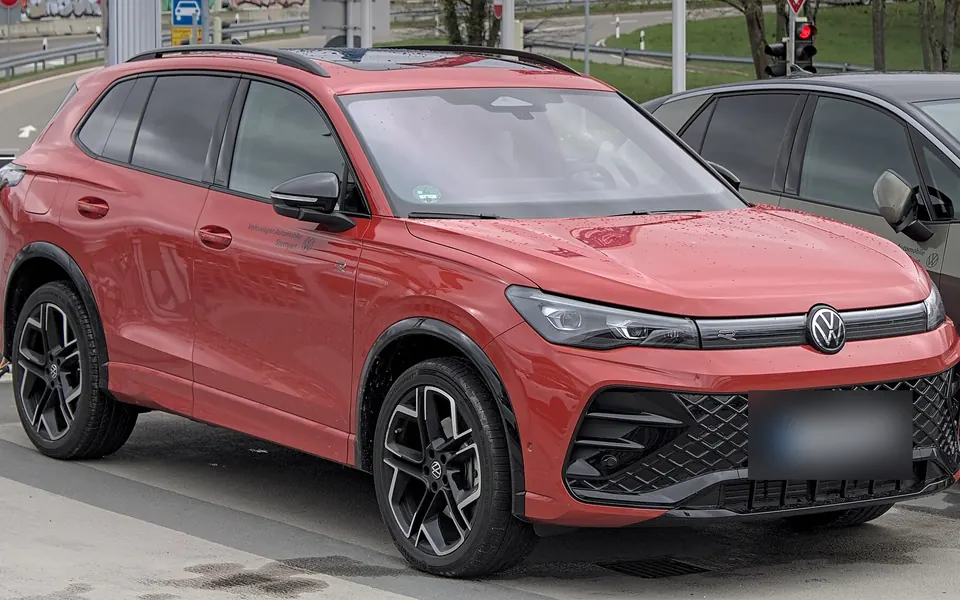
The essentials.
- 3 documented, sourced faults across its 4 engines.
- 2 of them depend on the equipment or the production date: ask what this car has.
- 1 official recall on record: ask for the chassis number (VIN) and confirm it has been done.
- According to the data we have, the engines with the fewest documented faults are: 2.0 TDI (Diesel), 1.5 eHybrid (Plug-in hybrid).
Typical faults by engine
The period and mileage are those mentioned by each sheet's sources. They are not a maintenance interval and do not predict that any particular car will fail.
All versions
Sheets the catalogue links to all 4 of its engines.
- A/C not cooling: N280 valveClimate control
- Period mentioned
- 2006–2026
- Mileage mentioned
- The sheet does not mention a mileage.
Applies if: Only if fitted with the air conditioning system described.
1.5 eTSI
Hybrid
- 1.5 TSI evo cold jerkingEngine management
- Period mentioned
- 2017–2022
- Mileage mentioned
- The sheet does not mention a mileage.
2.0 TSI
Petrol
- Assist systems that switch off for a while with a fogged or dirty front camera (Golf and Tiguan): not a faultDriver assistance
- Period mentioned
- Golf 2026–2027 and Tiguan 2025–2027 (US model years)
- Mileage mentioned
- The sheet does not mention a mileage.
Applies if: US bulletin 91-26-05 for the 2025–2027 Tiguan.
2.0 TDI · 1.5 eHybrid
2.0 TDI (Diesel) · 1.5 eHybrid (Plug-in hybrid)
We have no faults specific to this engine, only those common to every version.
Which engine has the fewest documented faults?
| Engine | Documented faults | Recalls |
|---|---|---|
| 1.5 eTSIHybrid | 21 with conditions | 0 |
| 2.0 TSIPetrol | 22 with conditions | 1 |
| 2.0 TDIDieselFewest documented | 11 with conditions | 1 |
| 1.5 eHybridPlug-in hybridFewest documented | 11 with conditions | 1 |
According to the data we have, the engines with the fewest documented faults are: 2.0 TDI (Diesel), 1.5 eHybrid (Plug-in hybrid).
By fuel type, the ones with the fewest documented faults are: Diesel, Plug-in hybrid.
We only count the sourced sheets we have. An engine with fewer is not guaranteed to be more reliable: it may have been studied less or sold in smaller numbers.
Official recalls: ask before you pay
A recall existing does not mean this car is affected or that it is still outstanding: it depends on the chassis number, the market and the production date.
- Ask the seller for the chassis number (VIN): it has 17 characters, appears in the car's documents and can usually also be seen at the base of the windscreen.
- Ask an official Volkswagen dealer, or the brand's official website if it lets you check by chassis number, whether each recall has been done or is still outstanding for that VIN.
- Manufacturer recalls are normally carried out free of charge by the official service network. If one is outstanding, ask for it to be done before you close the sale.
Seat adjustment lever may cut the belt (72DV)Passive safety / seats
Engines: 2.0 TSI (Petrol) · 2.0 TDI (Diesel) · 1.5 eHybrid (Plug-in hybrid)
How to check it: Replace affected felt under the recall; follow temporary seat-position restrictions.
View full entryOn the test drive: what to look and listen for
Taken from each sheet's symptoms and checks. You can tick off what you have already looked at: it is saved only in this browser.
0 of 3 checked
Engine management
Look out for: Rhythmic jerking (“kangaroo effect”) and hesitation when accelerating at roughly 1,200–2,000 rpm, with a cold engine and in low gears; most noticeable with a manual gearbox.
Ask them to check: Test the car from cold in first and second gear, and check at the dealer whether the latest engine control unit software is installed.
Climate control
Look out for: The air does not cool or cools intermittently (for example only at motorway speed), and sometimes the compressor rattles with the A/C on. Codes 01232 (N280 valve), P2612 or 00898.
Ask them to check: Read the codes and N280 control current with VCDS or ODIS, measure its resistance (about 10 ohms) and check the connector and wiring before replacing parts. If the valve or compressor is replaced, the whole circuit must be flushed.
Driver assistance
Look out for: Front Assist, traffic sign recognition or Travel Assist are limited or unavailable for a while and then come back; the garage cannot reproduce it.
Ask them to check: Keep the windscreen area in front of the camera clean and demisted; if the assist systems come back by themselves, no parts need replacing.
Sources
Every fact on this page comes from these Testigo sheets and their original sources. Sources are not checked in real time.
More Volkswagen buying guides
- Volkswagen T-Roc (II)2025–2026
- Volkswagen Passat B92023–2026
- Volkswagen Amarok (II)2022–2026
- Volkswagen Taigo2021–2026
- Volkswagen Multivan T7 / Transporter T72021–2026
- Volkswagen Caddy V2020–2026
- Volkswagen ID.3 / ID.4 / ID.5 / ID.7 / ID.Buzz2020–2026
- Volkswagen T-Cross2019–2026