Before you buy a used BMW Serie 5 (F10/F11).
Taken only from Testigo's sourced sheets. Use it to question the seller and on the test drive: it does not confirm that any particular car is affected.
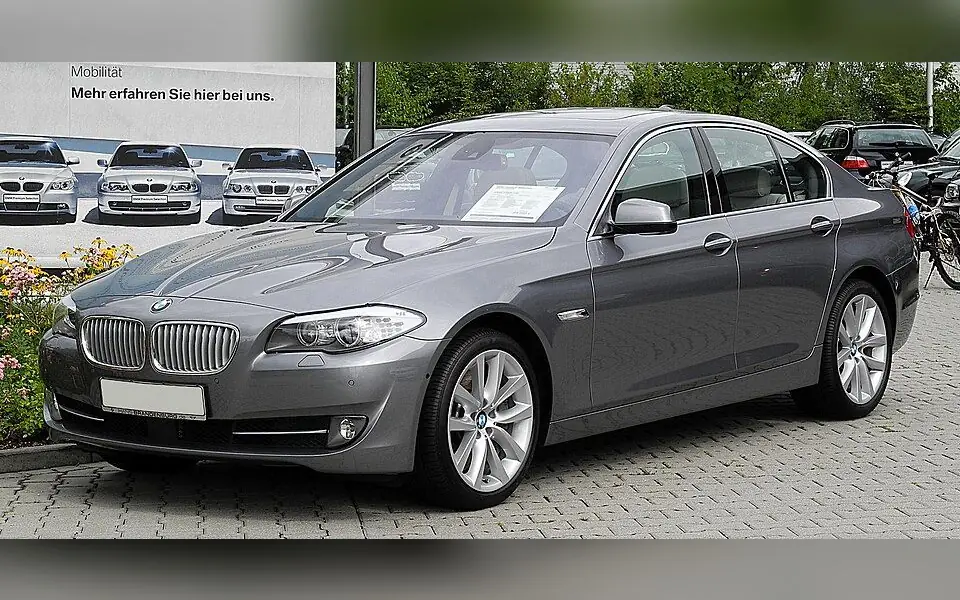
The essentials.
- 9 documented, sourced faults across its 7 engines.
- 1 of them depends on the equipment or the production date: ask what this car has.
- 1 official recall on record: ask for the chassis number (VIN) and confirm it has been done.
- According to the data we have, the engines with the fewest documented faults are: 520d (N47, hasta 2014) (Diesel), 520d (B47, desde 2014) (Diesel), 525d / 530d / 535d (N57) (Diesel), 535i / 550i (Petrol), M550d (N57, 3.0) (Diesel), M5 (S63, 4.4 V8) (Petrol).
Typical faults by engine
The period and mileage are those mentioned by each sheet's sources. They are not a maintenance interval and do not predict that any particular car will fail.
All versions
Sheets the catalogue links to all 7 of its engines.
- ZF 8HP oil level, leaks and harsh shiftsAutomatic gearbox
- Period mentioned
- 2009–2026
- Mileage mentioned
- The sheet does not mention a mileage.
Applies if: Only if fitted with the automatic gearbox described in the record.
520i / 528i (N20)
Petrol
- Broken plastic chain guidesTiming system
- Period mentioned
- Approx. 2012–2015
- Mileage mentioned
- The sheet does not mention a mileage.
- Oil filter housing gasket leakOil leaks
- Period mentioned
- 2011–2017
- Mileage mentioned
- 80,000–130,000 km
- BMW petrol electric water pump, leaks and VANOSCooling / leaks / VANOS
- Period mentioned
- 2004–2016
- Mileage mentioned
- 95,000–160,000 km
- N20 judder in hot weather caused by the wastegate pressure converterInjection / turbo
- Period mentioned
- Approx. 2012–2015
- Mileage mentioned
- The sheet does not mention a mileage.
520d (N47, hasta 2014)
Diesel
- Stretched rear timing chainTiming system
- Period mentioned
- 2007–2015 (improved from 2011)
- Mileage mentioned
- The sheet does not mention a mileage.
520d (B47, desde 2014)
Diesel
- B-engine coolant leaks and EGR coolerCooling / EGR
- Period mentioned
- 2014–2026
- Mileage mentioned
- 80,000–195,000 km
525d / 530d / 535d (N57) · M550d (N57, 3.0)
Diesel
- N57 timing chainTiming system
- Period mentioned
- 2008–2018 (most cases 2008–2011)
- Mileage mentioned
- From 200,000 km
M5 (S63, 4.4 V8)
Petrol
- N63 / S63 oil consumption and chainEngine (lubrication / timing)
- Period mentioned
- 2008–2026 (most cases on 2008–2013 N63)
- Mileage mentioned
- The sheet does not mention a mileage.
Which engine has the fewest documented faults?
| Engine | Documented faults | Recalls |
|---|---|---|
| 520i / 528i (N20)Petrol | 51 with conditions | 1 |
| 520d (N47, hasta 2014)DieselFewest documented | 21 with conditions | 1 |
| 520d (B47, desde 2014)DieselFewest documented | 21 with conditions | 1 |
| 525d / 530d / 535d (N57)DieselFewest documented | 21 with conditions | 1 |
| 535i / 550iPetrolFewest documented | 21 with conditions | 1 |
| M550d (N57, 3.0)DieselFewest documented | 21 with conditions | 1 |
| M5 (S63, 4.4 V8)PetrolFewest documented | 21 with conditions | 1 |
According to the data we have, the engines with the fewest documented faults are: 520d (N47, hasta 2014) (Diesel), 520d (B47, desde 2014) (Diesel), 525d / 530d / 535d (N57) (Diesel), 535i / 550i (Petrol), M550d (N57, 3.0) (Diesel), M5 (S63, 4.4 V8) (Petrol).
By fuel type, the one with the fewest documented faults is: Diesel.
We only count the sourced sheets we have. An engine with fewer is not guaranteed to be more reliable: it may have been studied less or sold in smaller numbers.
Official recalls: ask before you pay
A recall existing does not mean this car is affected or that it is still outstanding: it depends on the chassis number, the market and the production date.
- Ask the seller for the chassis number (VIN): it has 17 characters, appears in the car's documents and can usually also be seen at the base of the windscreen.
- Ask an official BMW dealer, or the brand's official website if it lets you check by chassis number, whether each recall has been done or is still outstanding for that VIN.
- Manufacturer recalls are normally carried out free of charge by the official service network. If one is outstanding, ask for it to be done before you close the sale.
Water in the starter motor: no start or the starter stays engaged (BMW 3, 5 and 7 Series)Electrical and electronic systems
How to check it: Ask a BMW garage to check with the VIN whether either campaign is outstanding; if the starter keeps turning or you smell burning, switch off and do not leave the car next to buildings.
View full entryOn the test drive: what to look and listen for
Taken from each sheet's symptoms and checks. You can tick off what you have already looked at: it is saved only in this browser.
0 of 9 checked
Timing system
Look out for: High-pitched whine from the engine that rises with revs, rattle on a cold start.
Ask them to check: Check the guides through the oil filler opening and listen for the whine with the bonnet open.
Look out for: Rattling from the rear of the engine (gearbox side) on a cold start, getting worse over time. In extreme cases the engine cuts out while driving.
Ask them to check: Listen with the engine fully cold, ideally with a mechanic's stethoscope on the rear of the block.
Look out for: Chain rattle for the first 5–10 seconds after starting; on engines with low oil pressure, noises and oil pump damage.
Ask them to check: Listen to a cold start and check the oil change history. The gearbox must come off to replace it.
Oil leaks
Look out for: Oil leak at the front of the engine, oil on the auxiliary belt (squeal or burning smell), sometimes oil and coolant mixing.
Ask them to check: Visual inspection of the filter housing area, the belt and the bottom of the engine.
Cooling / leaks / VANOS
Look out for: Temperature warning and limited power with no prior warning (water pump); burning oil smell or smoke from leaks onto the exhaust or belt; rough idle and VANOS codes (2A82, 2A87).
Ask them to check: Check the water pump and thermostat history, look for leaks at the valve cover and oil filter housing, and read VANOS codes.
Injection / turbo
Look out for: Repeated judder or surging when accelerating between 3,000 and 5,000 rpm in hot weather, with no engine light and no stored fault codes.
Ask them to check: Tell the garage it only happens in hot weather and between 3,000 and 5,000 rpm even with no codes; ask them to check the wastegate pressure converter (next to the oil filler cap) before replacing coils, injectors or the turbo.
Cooling / EGR
Look out for: Coolant loss with a low-level warning, coolant or oil residue at the rear of the engine; on diesels, internal coolant loss with no visible leak (EGR cooler).
Ask them to check: Check the coolant level, look for leaks under the water pump and at the oil filter housing, and on diesels confirm by VIN whether the EGR cooler campaign was done.
Engine (lubrication / timing)
Look out for: High oil consumption, blue or white smoke on start-up, misfires, chain rattle and a battery that drains.
Ask them to check: Oil consumption test, confirm by VIN that the Customer Care Package was done and listen for the chain on a cold start.
Automatic gearbox
Look out for: Harsh shifts (especially engaging D and 1st to 2nd), slipping or jerking; oil leaks from the pan, the mechatronic connector sleeve or the seals.
Ask them to check: Check the oil level with the official procedure (correct temperature and engine running), look for leaks at the pan, connector sleeve and seals, inspect the pan for impact damage and review adaptation values with ISTA.
Sources
Every fact on this page comes from these Testigo sheets and their original sources. Sources are not checked in real time.
- Broken plastic chain guides
- Oil filter housing gasket leak
- BMW petrol electric water pump, leaks and VANOS
- N20 judder in hot weather caused by the wastegate pressure converter
- Stretched rear timing chain
- B-engine coolant leaks and EGR cooler
- N57 timing chain
- N63 / S63 oil consumption and chain
- ZF 8HP oil level, leaks and harsh shifts
- Water in the starter motor: no start or the starter stays engaged (BMW 3, 5 and 7 Series)
More BMW buying guides
- BMW X3 (F25)2010–2017
- BMW Serie 5 GT (F07)2009–2017
- BMW Serie 6 (F06/F12/F13)2011–2018
- BMW Z4 (E89)2009–2016
- BMW Serie 1 (F20)2011–2019
- BMW X1 (E84)2009–2015
- BMW Serie 3 (F30/F31)2012–2019
- BMW Serie 7 (F01/F02)2008–2015