Before you buy a used Mercedes-Benz Sprinter (VS30).
Taken only from Testigo's sourced sheets. Use it to question the seller and on the test drive: it does not confirm that any particular car is affected.
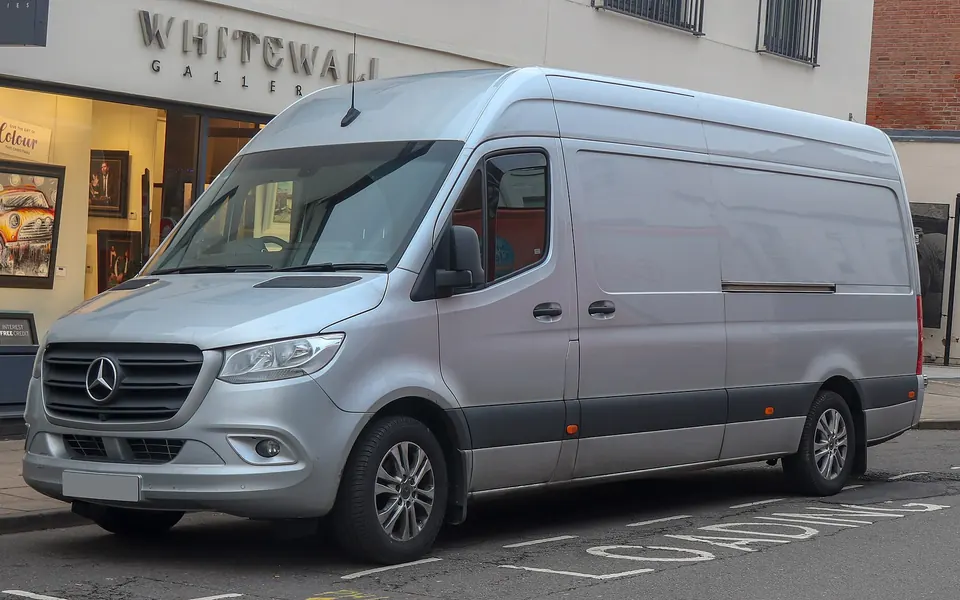
The essentials.
- 5 documented, sourced faults across its 4 engines.
- 1 official recall on record: ask for the chassis number (VIN) and confirm it has been done.
- According to the data we have, the engines with the fewest documented faults are: 2.1 CDI (OM651) (Diesel), 2.0 d (OM654) (Diesel), eSprinter (Electric).
Typical faults by engine
The period and mileage are those mentioned by each sheet's sources. They are not a maintenance interval and do not predict that any particular car will fail.
2.1 CDI (OM651)
Diesel
- Chain, injectors and coolant leaksTiming / injection
- Period mentioned
- 2008 onwards
- Mileage mentioned
- The sheet does not mention a mileage.
2.0 d (OM654)
Diesel
- OM654/OM656 AdBlue, DPF and EGRAdBlue / DPF / EGR
- Period mentioned
- 2016–2026
- Mileage mentioned
- From 100,000 km
3.0 V6 (OM642)
Diesel
- Oil cooler and injector leaksOil leaks / injectors
- Period mentioned
- 2005 onwards
- Mileage mentioned
- The sheet does not mention a mileage.
- Bucking between 1,700 and 1,900 rpm caused by soot in the OM642 EGR valveIntake / engine management
- Period mentioned
- 2006–2026
- Mileage mentioned
- The sheet does not mention a mileage.
eSprinter
Electric
- ESP software and rear e-axle gear on the eSprinterKnown weak points
- Period mentioned
- 2024–2025
- Mileage mentioned
- The sheet does not mention a mileage.
Which engine has the fewest documented faults?
| Engine | Documented faults | Recalls |
|---|---|---|
| 2.1 CDI (OM651)DieselFewest documented | 1 | 0 |
| 2.0 d (OM654)DieselFewest documented | 1 | 0 |
| 3.0 V6 (OM642)Diesel | 2 | 0 |
| eSprinterElectricFewest documented | 1 | 1 |
According to the data we have, the engines with the fewest documented faults are: 2.1 CDI (OM651) (Diesel), 2.0 d (OM654) (Diesel), eSprinter (Electric).
By fuel type, the one with the fewest documented faults is: Electric.
We only count the sourced sheets we have. An engine with fewer is not guaranteed to be more reliable: it may have been studied less or sold in smaller numbers.
Official recalls: ask before you pay
A recall existing does not mean this car is affected or that it is still outstanding: it depends on the chassis number, the market and the production date.
- Ask the seller for the chassis number (VIN): it has 17 characters, appears in the car's documents and can usually also be seen at the base of the windscreen.
- Ask an official Mercedes-Benz dealer, or the brand's official website if it lets you check by chassis number, whether each recall has been done or is still outstanding for that VIN.
- Manufacturer recalls are normally carried out free of charge by the official service network. If one is outstanding, ask for it to be done before you close the sale.
Recall: unnecessary battery contactor openingElectric powertrain
Engines: eSprinter (Electric)
How to check it: Check VIN; update gateway; inspect eVito BMS and replace if required.
View full entryOn the test drive: what to look and listen for
Taken from each sheet's symptoms and checks. You can tick off what you have already looked at: it is saved only in this browser.
0 of 5 checked
Timing / injection
Look out for: Chain rattle on a cold start; on early units, loud injector knocking; coolant loss from the plastic coolant manifold or the EGR cooler.
Ask them to check: Listen to a cold start, check the dealer's injector campaign history and check the coolant level.
AdBlue / DPF / EGR
Look out for: AdBlue or emissions warnings with a start countdown; particulate filter warning; power loss or rough idle from a dirty EGR.
Ask them to check: Read AdBlue and NOx sensor codes with Xentry, check the particulate filter regeneration history and how the car is used (short trips).
Oil leaks / injectors
Look out for: Oil pooling in the engine's V, burning oil smell, drips under the engine; or a hiss or chirp next to an injector with an exhaust smell.
Ask them to check: Visual inspection of the engine's V and the base of the injectors.
Intake / engine management
Look out for: Bucking or surging always between 1,700 and 1,900 rpm, especially on level roads with a light load; above and below that it runs fine. Sometimes with EGR valve codes and the engine warning light.
Ask them to check: Note the exact rpm at which it happens. At the garage, the manufacturer's test is to unplug the EGR valve and test drive: if the bucking disappears, the EGR is cleaned before replacing injectors or the turbo.
Known weak points
Look out for: More pedal force is needed and the stopping distance grows; loss of drive and a park lock (P) that may not hold.
Ask them to check: Check by VIN whether the campaigns exist in your country; always apply the handbrake when parking.
Sources
Every fact on this page comes from these Testigo sheets and their original sources. Sources are not checked in real time.
More Mercedes-Benz buying guides
- Mercedes-Benz Clase A (W177)2018–2026
- Mercedes-Benz Clase B (W247)2018–2026
- Mercedes-Benz AMG GT 4-Door Coupé (X290)2018–2026
- Mercedes-Benz Clase G (W463A)2018–2026
- Mercedes-Benz CLA (C118) / GLA (H247) / GLB2019–2026
- Mercedes-Benz GLS (X167)2019–2026
- Mercedes-Benz GLE (V167)2019–2026
- Mercedes-Benz EQA / EQB / EQC / EQE / EQS / EQV2019–2026