Before you buy a used Renault Kangoo (II).
Taken only from Testigo's sourced sheets. Use it to question the seller and on the test drive: it does not confirm that any particular car is affected.
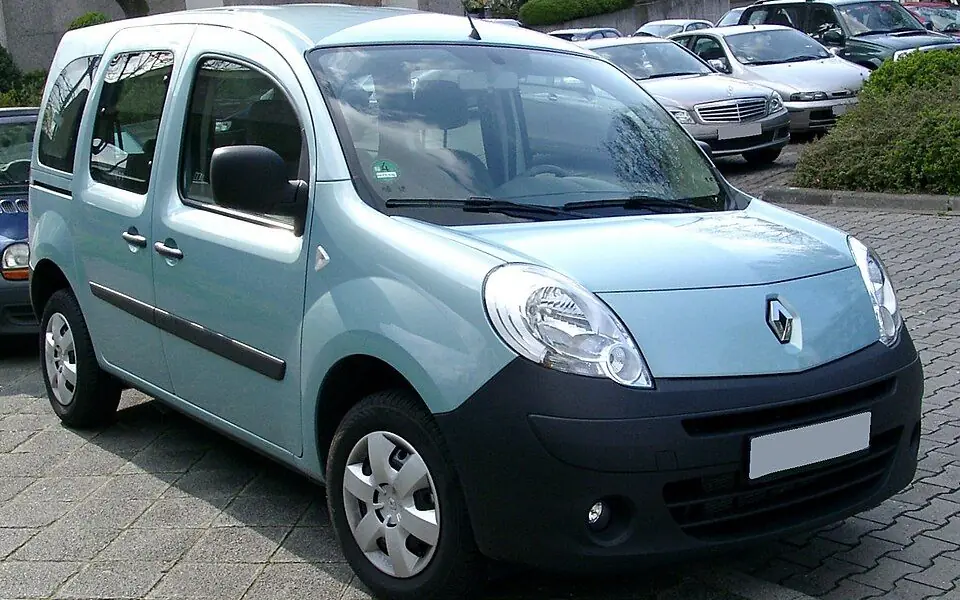
The essentials.
- 6 documented, sourced faults across its 4 engines.
- 1 of them depends on the equipment or the production date: ask what this car has.
- 11 official recalls on record: ask for the chassis number (VIN) and confirm they have been done.
- According to the data we have, the engines with the fewest documented faults are: 1.6 16V (K4M) (Petrol), Kangoo Z.E. (Electric).
Typical faults by engine
The period and mileage are those mentioned by each sheet's sources. They are not a maintenance interval and do not predict that any particular car will fail.
All versions
Sheets the catalogue links to all 4 of its engines.
- Turbo, injectors, 1.2 TCe and suspension on the Kangoo IIKnown weak points
- Period mentioned
- 2008–2021
- Mileage mentioned
- The sheet does not mention a mileage.
Applies if: Weak points of this model from inspections, breakdown statistics and recalls; anything specific to one engine is stated in the sheet.
1.6 16V (K4M) · Kangoo Z.E.
1.6 16V (K4M) (Petrol) · Kangoo Z.E. (Electric)
We have no faults specific to this engine, only those common to every version.
1.2 TCe (H5Ft)
Petrol
- Period mentioned
- Approx. 2012–2015
- Mileage mentioned
- The sheet does not mention a mileage.
- Stretched timing chain on the 0.9 and 1.2 TCeTiming system
- Period mentioned
- Approx. 2012–2020
- Mileage mentioned
- The sheet does not mention a mileage.
1.5 dCi (K9K)
Diesel
- 1.5 dCi pump and injectors with Delphi systemInjection / turbo
- Period mentioned
- Approx. 2001–2011
- Mileage mentioned
- The sheet does not mention a mileage.
- 1.5 dCi timing belt or pulley failureTiming system
- Period mentioned
- 2009–2011
- Mileage mentioned
- The sheet does not mention a mileage.
- Clogged particulate filter on the 1.5 dCiExhaust and emissions
- Period mentioned
- 2010 onwards
- Mileage mentioned
- The sheet does not mention a mileage.
Which engine has the fewest documented faults?
| Engine | Documented faults | Recalls |
|---|---|---|
| 1.6 16V (K4M)PetrolFewest documented | 11 with conditions | 11 |
| 1.2 TCe (H5Ft)Petrol | 31 with conditions | 11 |
| 1.5 dCi (K9K)Diesel | 41 with conditions | 11 |
| Kangoo Z.E.ElectricFewest documented | 11 with conditions | 11 |
According to the data we have, the engines with the fewest documented faults are: 1.6 16V (K4M) (Petrol), Kangoo Z.E. (Electric).
By fuel type, the one with the fewest documented faults is: Electric.
We only count the sourced sheets we have. An engine with fewer is not guaranteed to be more reliable: it may have been studied less or sold in smaller numbers.
Official recalls: ask before you pay
A recall existing does not mean this car is affected or that it is still outstanding: it depends on the chassis number, the market and the production date.
- Ask the seller for the chassis number (VIN): it has 17 characters, appears in the car's documents and can usually also be seen at the base of the windscreen.
- Ask an official Renault dealer, or the brand's official website if it lets you check by chassis number, whether each recall has been done or is still outstanding for that VIN.
- Manufacturer recalls are normally carried out free of charge by the official service network. If one is outstanding, ask for it to be done before you close the sale.
Renault seat-belt and anchorage recalls (2015–2020)Airbags and seat belts
How to check it: Check the recall by VIN; inspect buckles and anchorages and tighten or replace as the recall requires.
View full entryRenault steering recalls (2016–2025)Steering
How to check it: Check the recall by VIN; inspect and replace or reprogram the part named. If the maker says so, do not drive until repaired.
View full entryRenault recalls for wheel, axle and suspension fixings (2015–2026)Suspension and steering
How to check it: Check the recall by VIN; check the tightening and replace the parts named. With noise from a wheel, do not drive.
View full entryRenault recalls for fuel-leak risk (2015–2024)Fuel system
How to check it: Check the recall by VIN; with a fuel smell, do not drive and have the circuit checked; protect or replace the part named.
View full entryRenault engine, emissions and software recalls (2015–2025)Powertrain and engine management
How to check it: Check the recall by VIN; carry out the reprogramming or replacement it requires.
View full entryRenault electrical and lighting recalls (2018–2020)Electrical and electronic systems
How to check it: Check the recall by VIN; correct the wiring, reprogram or replace the part named.
View full entryRenault seat and child-lock recalls (2015–2024)Passive safety / seats
How to check it: Check the recall by VIN; inspect and reinforce or replace the part named; check the child lock stays on.
View full entryRenault body recalls: parts that may come loose (2016–2025)Bodywork
How to check it: Check the recall by VIN; reinforce, re-bond, tighten or replace the part named.
View full entryRenault brake recalls (2000–2014)Brakes
How to check it: Check the recall by VIN; inspect and replace, reprogram or correct the part named in the recall.
View full entryRenault airbag, seat-belt and pretensioner recalls (2000–2012)Airbags and seat belts
How to check it: Check the recall by VIN; inspect and replace, reprogram or correct the part named in the recall.
View full entryRenault fuel-leak recalls (2001–2013)Fuel system
How to check it: Check the recall by VIN; with a fuel smell, do not drive; reposition, tighten or replace the pipes named.
View full entryOn the test drive: what to look and listen for
Taken from each sheet's symptoms and checks. You can tick off what you have already looked at: it is saved only in this browser.
0 of 6 checked
Engine
Look out for: Oil needs topping up often; the level can reach the minimum with no warning on the dashboard. In advanced cases, timing noise, loss of power or serious engine damage.
Ask them to check: Measure oil consumption with the dipstick over several thousand km, ask the dealer for a diagnosis and the calibration update, and keep every maintenance invoice to request support.
Timing system
Look out for: Metallic chain rattle, especially when cold or at idle; engine light with a crankshaft–camshaft correlation code; in serious cases the chain jumps and damages the valves.
Ask them to check: With any chain noise or a P0016 code, diagnose straight away: measure the stretch and check the tensioner and guides before the timing jumps. Shorten oil-change intervals.
Look out for: Noise or squeal around the belts; if the timing belt breaks, the engine stops suddenly and can be badly damaged.
Ask them to check: Keep to the timing-belt interval and always replace the full kit (belt, rollers and pulleys); check the auxiliary belt and its pulley.
Injection / turbo
Look out for: Injection warning, jerking, rough idle, loss of power, smoke and sometimes a no-start.
Ask them to check: Read the codes (e.g. P0087, low rail pressure) and look for filings in the diesel filter. If the circuit is contaminated, replace pump, rail and injectors and clean the tank and lines.
Exhaust and emissions
Look out for: Particulate-filter or emissions warning, limp mode with loss of power and frequent regenerations.
Ask them to check: Read the soot load with a diagnostic tool, run a forced regeneration at the garage and check the differential-pressure sensors and EGR. Make long road trips now and then.
Known weak points
Look out for: Repeated turbo and injector problems on the 1.5 dCi; oil consumption and cold-start chain rattle on the 1.2 TCe; wear of shock absorbers, springs, track rods, drive shafts and sometimes the steering box; short-lived discs and pads; interior rattles.
Ask them to check: Measure oil consumption and listen to the chain when cold (1.2 TCe); test turbo and injectors (1.5 dCi); check suspension and brakes.
Sources
Every fact on this page comes from these Testigo sheets and their original sources. Sources are not checked in real time.
- Excessive oil consumption on the 1.2 TCe (H5Ft)
- Stretched timing chain on the 0.9 and 1.2 TCe
- 1.5 dCi pump and injectors with Delphi system
- 1.5 dCi timing belt or pulley failure
- Clogged particulate filter on the 1.5 dCi
- Turbo, injectors, 1.2 TCe and suspension on the Kangoo II
- Renault seat-belt and anchorage recalls (2015–2020)
- Renault steering recalls (2016–2025)
- Renault recalls for wheel, axle and suspension fixings (2015–2026)
- Renault recalls for fuel-leak risk (2015–2024)
- Renault engine, emissions and software recalls (2015–2025)
- Renault electrical and lighting recalls (2018–2020)
- Renault seat and child-lock recalls (2015–2024)
- Renault body recalls: parts that may come loose (2016–2025)
- Renault brake recalls (2000–2014)
- Renault airbag, seat-belt and pretensioner recalls (2000–2012)
- Renault fuel-leak recalls (2001–2013)
More Renault buying guides
- Renault Clio (IV)2012–2019
- Renault Captur (I)2013–2019
- Renault Scénic (III) / Grand Scénic (III)2009–2016
- Renault Fluence2009–2016
- Renault Mégane (III)2008–2016
- Renault Koleos (I)2008–2016
- Renault Master (III)2010–2024
- Renault Laguna (III)2007–2015