Before you buy a used BMW Serie 1 (E81/E82/E87/E88).
Taken only from Testigo's sourced sheets. Use it to question the seller and on the test drive: it does not confirm that any particular car is affected.
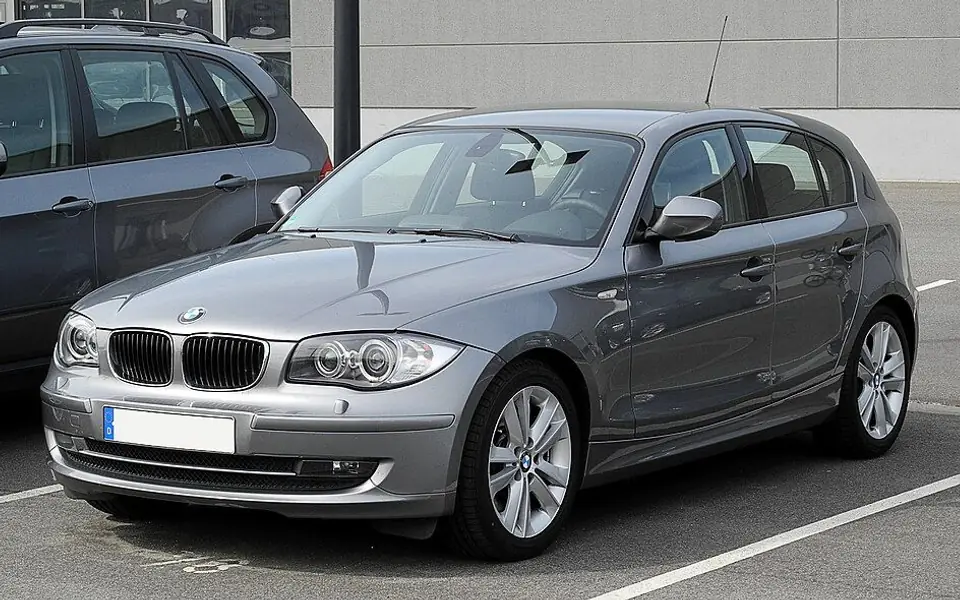
The essentials.
- 6 documented, sourced faults across its 5 engines.
- 1 official recall on record: ask for the chassis number (VIN) and confirm it has been done.
- According to the data we have, the engines with the fewest documented faults are: 116i / 118i / 120i (Petrol), 118d / 120d (M47, hasta 2007) (Diesel), 116d / 118d / 120d / 123d (N47, desde 2007) (Diesel), 130i (N52, 3.0) (Petrol).
Typical faults by engine
The period and mileage are those mentioned by each sheet's sources. They are not a maintenance interval and do not predict that any particular car will fail.
All versions
Sheets the catalogue links to all 5 of its engines.
- Corrupted FRM3 module (lights and windows)Electrical and electronic systems
- Period mentioned
- 2004–2015
- Mileage mentioned
- The sheet does not mention a mileage.
116i / 118i / 120i
Petrol
- N43 and N13 chain and guidesTiming / lubrication
- Period mentioned
- 2007–2016
- Mileage mentioned
- The sheet does not mention a mileage.
118d / 120d (M47, hasta 2007)
Diesel
- Intake swirl flaps (M47)Intake
- Period mentioned
- 2001–2007
- Mileage mentioned
- The sheet does not mention a mileage.
116d / 118d / 120d / 123d (N47, desde 2007)
Diesel
- Stretched rear timing chainTiming system
- Period mentioned
- 2007–2015 (improved from 2011)
- Mileage mentioned
- The sheet does not mention a mileage.
130i (N52, 3.0)
Petrol
- BMW petrol electric water pump, leaks and VANOSCooling / leaks / VANOS
- Period mentioned
- 2004–2016
- Mileage mentioned
- 95,000–160,000 km
1 M Coupé (N54, 3.0)
Petrol
- N54 high-pressure pump, wastegates and injectorsInjection / turbo
- Period mentioned
- 2006–2013
- Mileage mentioned
- The sheet does not mention a mileage.
These also apply, described above: BMW petrol electric water pump, leaks and VANOS
Which engine has the fewest documented faults?
| Engine | Documented faults | Recalls |
|---|---|---|
| 116i / 118i / 120iPetrolFewest documented | 2 | 1 |
| 118d / 120d (M47, hasta 2007)DieselFewest documented | 2 | 1 |
| 116d / 118d / 120d / 123d (N47, desde 2007)DieselFewest documented | 2 | 1 |
| 130i (N52, 3.0)PetrolFewest documented | 2 | 1 |
| 1 M Coupé (N54, 3.0)Petrol | 3 | 1 |
According to the data we have, the engines with the fewest documented faults are: 116i / 118i / 120i (Petrol), 118d / 120d (M47, hasta 2007) (Diesel), 116d / 118d / 120d / 123d (N47, desde 2007) (Diesel), 130i (N52, 3.0) (Petrol).
By fuel type, the one with the fewest documented faults is: Diesel.
We only count the sourced sheets we have. An engine with fewer is not guaranteed to be more reliable: it may have been studied less or sold in smaller numbers.
Official recalls: ask before you pay
A recall existing does not mean this car is affected or that it is still outstanding: it depends on the chassis number, the market and the production date.
- Ask the seller for the chassis number (VIN): it has 17 characters, appears in the car's documents and can usually also be seen at the base of the windscreen.
- Ask an official BMW dealer, or the brand's official website if it lets you check by chassis number, whether each recall has been done or is still outstanding for that VIN.
- Manufacturer recalls are normally carried out free of charge by the official service network. If one is outstanding, ask for it to be done before you close the sale.
Recall: loss of EPS assistanceSteering
How to check it: Check VIN; replace steering gear per campaign.
View full entryOn the test drive: what to look and listen for
Taken from each sheet's symptoms and checks. You can tick off what you have already looked at: it is saved only in this browser.
0 of 6 checked
Timing / lubrication
Look out for: Chain rattle on cold starts, VANOS engine light, rising oil consumption and, in severe cases, the engine seizing with no prior warning.
Ask them to check: Listen to a cold start, check the oil filler cap for plastic debris and read VANOS codes.
Electrical and electronic systems
Look out for: After a flat battery, a battery change or disconnection, or a jump start: lights, indicators or windows stop working, side or dipped lights stay on and diagnostics cannot communicate with the module (for example code 00A3C1).
Ask them to check: Check the battery and charging and try communicating with ISTA. If the module does not respond, it can be repaired by rewriting its EEPROM (specialist services or programmers) instead of being replaced, then coded. Use a voltage maintainer when working on the car.
Intake
Look out for: Loss of power, smoke or knocking, often with no prior warning: one of the flaps comes loose and drops into the cylinder.
Ask them to check: Check whether they have already been removed or replaced with blanking plugs and inspect the intake manifold.
Timing system
Look out for: Rattling from the rear of the engine (gearbox side) on a cold start, getting worse over time. In extreme cases the engine cuts out while driving.
Ask them to check: Listen with the engine fully cold, ideally with a mechanic's stethoscope on the rear of the block.
Cooling / leaks / VANOS
Look out for: Temperature warning and limited power with no prior warning (water pump); burning oil smell or smoke from leaks onto the exhaust or belt; rough idle and VANOS codes (2A82, 2A87).
Ask them to check: Check the water pump and thermostat history, look for leaks at the valve cover and oil filter housing, and read VANOS codes.
Injection / turbo
Look out for: Long cranking, hesitation, engine light and limp mode (high-pressure pump); metallic rattle at idle or between 1,500 and 3,000 rpm and low boost (wastegates); misfires from injectors.
Ask them to check: Read fuel pressure and boost codes, listen at idle and confirm by VIN that the revised pump is fitted.
Sources
Every fact on this page comes from these Testigo sheets and their original sources. Sources are not checked in real time.
More BMW buying guides
- BMW X3 (E83)2004–2010
- BMW Serie 3 (E90/E91/E92/E93)2005–2012
- BMW Serie 5 (E60/E61)2003–2010
- BMW Serie 6 (E63/E64)2003–2010
- BMW X5 (E70)2007–2013
- BMW Z4 (E85/E86)2002–2008
- BMW Serie 7 (E65/E66)2001–2008
- BMW X6 (E71/E72)2008–2014