Before you buy a used BMW Serie 7 (E65/E66).
Taken only from Testigo's sourced sheets. Use it to question the seller and on the test drive: it does not confirm that any particular car is affected.
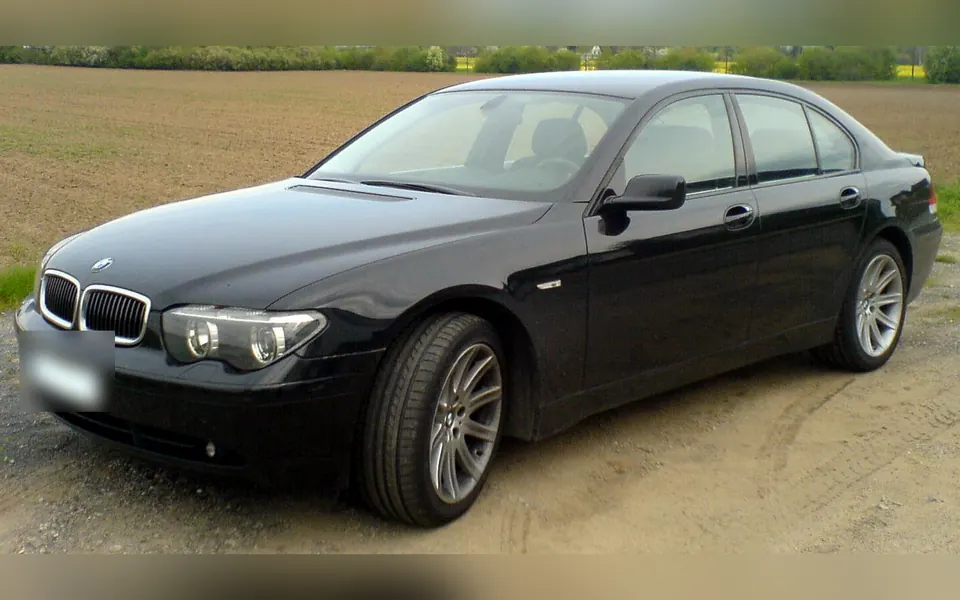
The essentials.
- 2 documented, sourced faults across its 2 engines.
- That is not much data: if no other faults show up here, it does not mean it has none.
- They all depend on the equipment or the production date: ask what this car has.
- 1 official recall on record: ask for the chassis number (VIN) and confirm it has been done.
- According to the data we have, the engine with the fewest documented faults is the 735i / 745i / 750i (Petrol).
Typical faults by engine
The period and mileage are those mentioned by each sheet's sources. They are not a maintenance interval and do not predict that any particular car will fail.
All versions
Sheets the catalogue links to all 2 of its engines.
- ZF 6HP mechatronic sleeve leak and harsh shiftsAutomatic gearbox
- Period mentioned
- Approx. 2001–2013
- Mileage mentioned
- The sheet does not mention a mileage.
Applies if: Only if fitted with the automatic gearbox described in the record.
730d (M57)
Diesel
- Intake swirl flaps (M57)Intake
- Period mentioned
- 1998–2010
- Mileage mentioned
- The sheet does not mention a mileage.
Applies if: Only if the intake manifold has swirl flaps; some versions do not. Confirm at a garage.
735i / 745i / 750i
Petrol
We have no faults specific to this engine, only those common to every version.
Which engine has the fewest documented faults?
| Engine | Documented faults | Recalls |
|---|---|---|
| 730d (M57)Diesel | 22 with conditions | 1 |
| 735i / 745i / 750iPetrolFewest documented | 11 with conditions | 1 |
According to the data we have, the engine with the fewest documented faults is the 735i / 745i / 750i (Petrol).
By fuel type, the one with the fewest documented faults is: Petrol.
We only count the sourced sheets we have. An engine with fewer is not guaranteed to be more reliable: it may have been studied less or sold in smaller numbers.
Official recalls: ask before you pay
A recall existing does not mean this car is affected or that it is still outstanding: it depends on the chassis number, the market and the production date.
- Ask the seller for the chassis number (VIN): it has 17 characters, appears in the car's documents and can usually also be seen at the base of the windscreen.
- Ask an official BMW dealer, or the brand's official website if it lets you check by chassis number, whether each recall has been done or is still outstanding for that VIN.
- Manufacturer recalls are normally carried out free of charge by the official service network. If one is outstanding, ask for it to be done before you close the sale.
Recall: heated backrest overheatingElectrical / seats
How to check it: Check VIN and heating; inspect and add fuse if required.
View full entryOn the test drive: what to look and listen for
Taken from each sheet's symptoms and checks. You can tick off what you have already looked at: it is saved only in this browser.
0 of 2 checked
Intake
Look out for: Usually none until it fails. A common early warning: oil seeping around the flap spindles on top of the engine. If a flap or its screw comes loose and enters a cylinder: sudden heavy knocking, loss of power, smoke and possible turbo damage as well.
Ask them to check: At a garage: confirm whether the manifold has swirl flaps (some versions do not), look for oil around the spindles and play in the flaps, and check the history for earlier replacement or removal. With any new metallic knocking, stop the engine and do not restart it.
Automatic gearbox
Look out for: Oil drips or dampness by the electrical connector on the side of the pan, a bump on the downshift just before stopping, harsh or flared shifts (especially 3rd-4th and 4th-5th under throttle) and a limp mode that clears after restarting.
Ask them to check: At a garage: read the gearbox codes, check the fluid level with the official procedure (correct temperature and engine running) and look for a real leak at the sleeve and pan gasket. After a fluid or parts change, the garage should reset adaptations. If limp mode persists, check solenoids and valve body before replacing the gearbox.
Sources
Every fact on this page comes from these Testigo sheets and their original sources. Sources are not checked in real time.
More BMW buying guides
- BMW Z4 (E85/E86)2002–2008
- BMW Serie 3 (E46)2000–2006
- BMW X5 (E53)2000–2006
- BMW Serie 5 (E60/E61)2003–2010
- BMW Serie 6 (E63/E64)2003–2010
- BMW Serie 5 (E39)2000–2004
- BMW X3 (E83)2004–2010
- BMW Serie 1 (E81/E82/E87/E88)2004–2011