Before you buy a used BMW Serie 5 (E39).
Taken only from Testigo's sourced sheets. Use it to question the seller and on the test drive: it does not confirm that any particular car is affected.
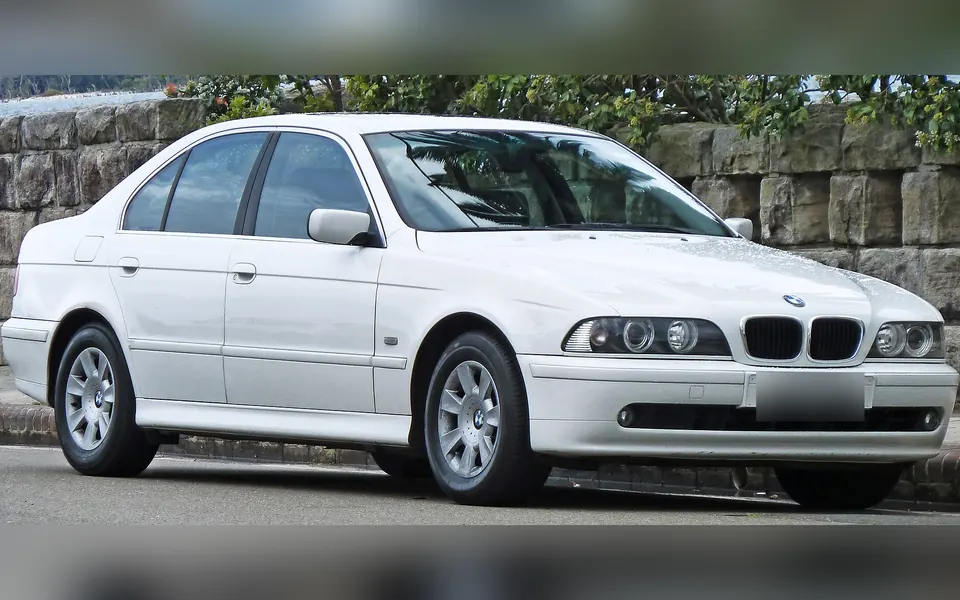
The essentials.
- 5 documented, sourced faults across its 4 engines.
- They all depend on the equipment or the production date: ask what this car has.
- 1 official recall on record: ask for the chassis number (VIN) and confirm it has been done.
- According to the data we have, the engines with the fewest documented faults are: 520d (M47) (Diesel), M5 (S62, 4.9 V8) (Petrol).
Typical faults by engine
The period and mileage are those mentioned by each sheet's sources. They are not a maintenance interval and do not predict that any particular car will fail.
All versions
Sheets the catalogue links to all 4 of its engines.
- Wiring, suspension, GM automatic and campaigns on the 5 Series E39Known weak points
- Period mentioned
- 1995–2004
- Mileage mentioned
- What the sheet says: Wiring that cracks with age: the car will not start or cuts out (ignition switch), the cluster, radio or navigation fail and the tail lights, third brake light, plate light or rear wiper go out. Suspension needing constant upkeep (wishbones, top mounts, drop links and thrust arms, with a shaking wheel under braking) and failing air levelling. Rust on the sills, jacking points, fuel flap, door edges, tailgate and bonnet. On automatic diesels, a GM gearbox that fails before 200,000 km and swirl flaps that can come loose.
Applies if: Weak points of this model from inspections, breakdown statistics and recalls; anything specific to one engine is stated in the sheet.
520i / 525i / 530i / 540i
Petrol
- Period mentioned
- 1998–2006
- Mileage mentioned
- The sheet does not mention a mileage.
Applies if: Only six-cylinder 520i, 525i and 530i (M52TU/M54); not the 540i V8.
- Crankcase ventilation (CCV) valve on the M52TU / M54Intake / engine management
- Period mentioned
- 1998–2006
- Mileage mentioned
- The sheet does not mention a mileage.
Applies if: Only six-cylinder 520i, 525i and 530i (M52TU/M54); not the 540i V8.
- Double VANOS seals (M52TU / M54)Timing system
- Period mentioned
- 1998–2006
- Mileage mentioned
- The sheet does not mention a mileage.
Applies if: Only six-cylinder 520i, 525i and 530i (M52TU/M54); not the 540i V8.
520d (M47) · M5 (S62, 4.9 V8)
520d (M47) (Diesel) · M5 (S62, 4.9 V8) (Petrol)
We have no faults specific to this engine, only those common to every version.
525d / 530d (M57)
Diesel
- Intake swirl flaps (M57)Intake
- Period mentioned
- 1998–2010
- Mileage mentioned
- The sheet does not mention a mileage.
Applies if: Only if the intake manifold has swirl flaps; some versions do not. Confirm at a garage.
Which engine has the fewest documented faults?
| Engine | Documented faults | Recalls |
|---|---|---|
| 520i / 525i / 530i / 540iPetrol | 44 with conditions | 1 |
| 520d (M47)DieselFewest documented | 11 with conditions | 1 |
| 525d / 530d (M57)Diesel | 22 with conditions | 1 |
| M5 (S62, 4.9 V8)PetrolFewest documented | 11 with conditions | 1 |
According to the data we have, the engines with the fewest documented faults are: 520d (M47) (Diesel), M5 (S62, 4.9 V8) (Petrol).
By fuel type, the one with the fewest documented faults is: Diesel.
We only count the sourced sheets we have. An engine with fewer is not guaranteed to be more reliable: it may have been studied less or sold in smaller numbers.
Official recalls: ask before you pay
A recall existing does not mean this car is affected or that it is still outstanding: it depends on the chassis number, the market and the production date.
- Ask the seller for the chassis number (VIN): it has 17 characters, appears in the car's documents and can usually also be seen at the base of the windscreen.
- Ask an official BMW dealer, or the brand's official website if it lets you check by chassis number, whether each recall has been done or is still outstanding for that VIN.
- Manufacturer recalls are normally carried out free of charge by the official service network. If one is outstanding, ask for it to be done before you close the sale.
Recall: driver airbagPassive safety
How to check it: Check VIN; inspect and replace as required.
View full entryOn the test drive: what to look and listen for
Taken from each sheet's symptoms and checks. You can tick off what you have already looked at: it is saved only in this browser.
0 of 5 checked
Cooling
Look out for: Coolant loss without an obvious puddle, sweet smell, low-level warning, steam in the engine bay, heater stops warming and the temperature needle rises. Expansion tank failure is usually sudden; the water pump can fail with no visible leak.
Ask them to check: With the engine cold, check the level and look for cracks or dried coolant on the tank, radiator neck and thermostat housing. At a garage: pressure-test the system and inspect the pump. If the temperature rises, stop somewhere safe: a single overheat can warp the aluminium head. Never open the system hot.
Intake / engine management
Look out for: High oil consumption, bluish smoke, rough idle, whistling from a vacuum leak, engine light with lean-mixture codes and very strong suction when trying to remove the oil filler cap at idle.
Ask them to check: At a garage: smoke-test the intake to find leaks (CCV hoses, intake boots, DISA valve seal, valve cover gasket) and check whether the dipstick tube return is blocked. A cold-climate version of the system exists for cold regions.
Timing system
Look out for: Loss of torque and pull below about 3,000 rpm, louder or unsteady idle, the engine bogs when the air conditioning is switched on and sometimes VANOS fault codes. On 1998–2000 M52TU engines, jolts or stalling on cold starts.
Ask them to check: Read the engine codes and, at a garage, compare actual and requested camshaft positions in live data. Rule out vacuum leaks and the CCV first, as they cause similar symptoms. On M52TU engines with cold jolts, the kit maker describes a test with the intake VANOS solenoid unplugged.
Known weak points
Look out for: Wiring that cracks with age: the car will not start or cuts out (ignition switch), the cluster, radio or navigation fail and the tail lights, third brake light, plate light or rear wiper go out. Suspension needing constant upkeep (wishbones, top mounts, drop links and thrust arms, with a shaking wheel under braking) and failing air levelling. Rust on the sills, jacking points, fuel flap, door edges, tailgate and bonnet. On automatic diesels, a GM gearbox that fails before 200,000 km and swirl flaps that can come loose.
Ask them to check: Test every switch and light; check the underside and suspension; on automatic diesels, change the gearbox oil often and check the flaps; campaigns by VIN.
Intake
Look out for: Usually none until it fails. A common early warning: oil seeping around the flap spindles on top of the engine. If a flap or its screw comes loose and enters a cylinder: sudden heavy knocking, loss of power, smoke and possible turbo damage as well.
Ask them to check: At a garage: confirm whether the manifold has swirl flaps (some versions do not), look for oil around the spindles and play in the flaps, and check the history for earlier replacement or removal. With any new metallic knocking, stop the engine and do not restart it.
Sources
Every fact on this page comes from these Testigo sheets and their original sources. Sources are not checked in real time.
More BMW buying guides
- BMW Serie 3 (E46)2000–2006
- BMW X5 (E53)2000–2006
- BMW Z3 (E36/7)2000–2002
- BMW Serie 7 (E65/E66)2001–2008
- BMW Z4 (E85/E86)2002–2008
- BMW Serie 5 (E60/E61)2003–2010
- BMW Serie 6 (E63/E64)2003–2010
- BMW X3 (E83)2004–2010