Before you buy a used Ford E-Transit.
Taken only from Testigo's sourced sheets. Use it to question the seller and on the test drive: it does not confirm that any particular car is affected.
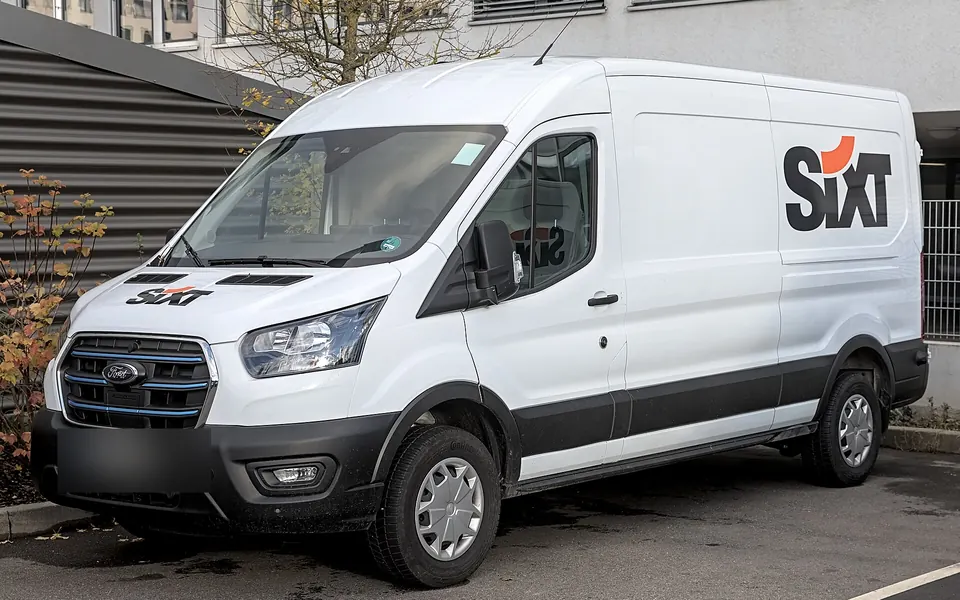
The essentials.
- 2 documented, sourced faults for its engine.
- That is not much data: if no other faults show up here, it does not mean it has none.
- 1 of them depends on the equipment or the production date: ask what this car has.
- 3 official recalls on record: ask for the chassis number (VIN) and confirm they have been done.
Typical faults by engine
The period and mileage are those mentioned by each sheet's sources. They are not a maintenance interval and do not predict that any particular car will fail.
E-Transit
Electric
- Rear half-shaft and battery tray on the E-TransitHigh-voltage battery
- Period mentioned
- 2022–2025
- Mileage mentioned
- The sheet does not mention a mileage.
- Stops charging on DC fast chargers because of the charging module software (Mach-E and E-Transit)Electrical charging
- Period mentioned
- Mach-E 2021–2023 built up to 25/6/2023 and E-Transit 2022–2025 (US model years)
- Mileage mentioned
- The sheet does not mention a mileage.
Applies if: US bulletin SSM 55080 for the 2022–2025 E-Transit; in Europe, ask the dealer.
Official recalls: ask before you pay
A recall existing does not mean this car is affected or that it is still outstanding: it depends on the chassis number, the market and the production date.
- Ask the seller for the chassis number (VIN): it has 17 characters, appears in the car's documents and can usually also be seen at the base of the windscreen.
- Ask an official Ford dealer, or the brand's official website if it lets you check by chassis number, whether each recall has been done or is still outstanding for that VIN.
- Manufacturer recalls are normally carried out free of charge by the official service network. If one is outstanding, ask for it to be done before you close the sale.
Ford brake recalls (2001–2026)Brakes
How to check it: Check by VIN whether any of the recalls is outstanding (at the dealer or on the DVSA website) and carry out the inspection or replacement it requires.
View full entryFord electric and hybrid drive recalls (2010–2026)Electric powertrain
How to check it: Check by VIN whether any of the recalls is outstanding (at the dealer or on the DVSA website) and carry out the inspection or replacement it requires.
View full entryFord electrical, lighting and electronics recalls (2002–2026)Electrical and electronic systems
How to check it: Check by VIN whether any of the recalls is outstanding (at the dealer or on the DVSA website) and carry out the inspection or replacement it requires.
View full entryOn the test drive: what to look and listen for
Taken from each sheet's symptoms and checks. You can tick off what you have already looked at: it is saved only in this browser.
0 of 2 checked
High-voltage battery
Look out for: Loss of drive and a risk of the parked van rolling; on chassis cabs, water entering the battery with a short-circuit risk.
Ask them to check: Always apply the handbrake; check the campaigns by VIN.
Electrical charging
Look out for: Charging stops on DC fast chargers; it still charges on level 1 or level 2 AC chargers.
Ask them to check: Charge on AC in the meantime and ask the garage to check whether new SOBDM software is available before replacing the charge port.
Sources
Every fact on this page comes from these Testigo sheets and their original sources. Sources are not checked in real time.
More Ford buying guides
- Ford Ranger (IV)2022–2026
- Ford Transit / Tourneo Connect (III)2022–2026
- Ford Mustang Mach-E2021–2026
- Ford Transit / Tourneo Custom (II)2023–2026
- Ford Explorer EV2024–2026
- Ford Mustang (VII)2024–2026
- Ford Transit / Tourneo Courier (II)2024–2026
- Ford Puma2019–2026