Before you buy a used Renault Captur (II).
Taken only from Testigo's sourced sheets. Use it to question the seller and on the test drive: it does not confirm that any particular car is affected.
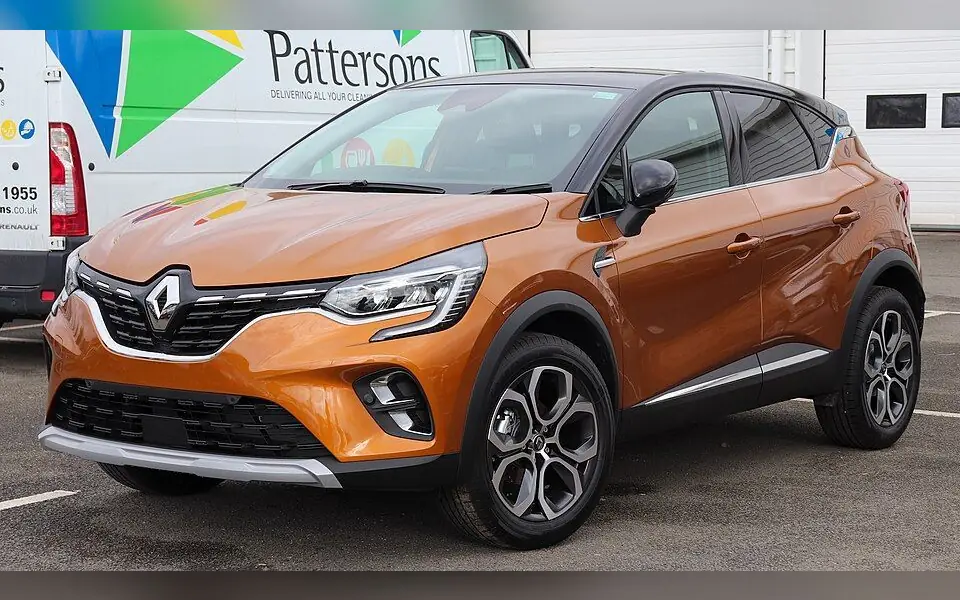
The essentials.
- 3 documented, sourced faults across its 6 engines.
- 2 of them depend on the equipment or the production date: ask what this car has.
- 4 official recalls on record: ask for the chassis number (VIN) and confirm they have been done.
- According to the data we have, the engines with the fewest documented faults are: 1.0 TCe (H4Dt) (Petrol), 1.3 TCe / mild hybrid (H5Ht) (Petrol), 1.0 TCe GLP (LPG / CNG).
Typical faults by engine
The period and mileage are those mentioned by each sheet's sources. They are not a maintenance interval and do not predict that any particular car will fail.
All versions
Sheets the catalogue links to all 6 of its engines.
- Electronics, EDC gearbox and suspension on the Captur IIKnown weak points
- Period mentioned
- 2019 onwards
- Mileage mentioned
- The sheet does not mention a mileage.
Applies if: Weak points of this model from inspections, breakdown statistics and recalls; anything specific to one engine is stated in the sheet.
1.0 TCe (H4Dt) · 1.3 TCe / mild hybrid (H5Ht) · 1.0 TCe GLP
1.0 TCe (H4Dt) (Petrol) · 1.3 TCe / mild hybrid (H5Ht) (Petrol) · 1.0 TCe GLP (LPG / CNG)
We have no faults specific to this engine, only those common to every version.
E-Tech Hybrid 145 · E-Tech Plug-in 160
E-Tech Hybrid 145 (Hybrid) · E-Tech Plug-in 160 (Plug-in hybrid)
- Period mentioned
- 2020–2023
- Mileage mentioned
- The sheet does not mention a mileage.
Applies if: Only E-Tech built between 29/4/2020 and 13/4/2023.
1.5 Blue dCi (K9K)
Diesel
- Clogged particulate filter on the 1.5 dCiExhaust and emissions
- Period mentioned
- 2010 onwards
- Mileage mentioned
- The sheet does not mention a mileage.
Which engine has the fewest documented faults?
| Engine | Documented faults | Recalls |
|---|---|---|
| 1.0 TCe (H4Dt)PetrolFewest documented | 11 with conditions | 4 |
| 1.3 TCe / mild hybrid (H5Ht)PetrolFewest documented | 11 with conditions | 4 |
| 1.0 TCe GLPLPG / CNGFewest documented | 11 with conditions | 4 |
| E-Tech Hybrid 145Hybrid | 22 with conditions | 4 |
| E-Tech Plug-in 160Plug-in hybrid | 22 with conditions | 4 |
| 1.5 Blue dCi (K9K)Diesel | 21 with conditions | 4 |
According to the data we have, the engines with the fewest documented faults are: 1.0 TCe (H4Dt) (Petrol), 1.3 TCe / mild hybrid (H5Ht) (Petrol), 1.0 TCe GLP (LPG / CNG).
By fuel type, the ones with the fewest documented faults are: Petrol, LPG / CNG.
We only count the sourced sheets we have. An engine with fewer is not guaranteed to be more reliable: it may have been studied less or sold in smaller numbers.
Official recalls: ask before you pay
A recall existing does not mean this car is affected or that it is still outstanding: it depends on the chassis number, the market and the production date.
- Ask the seller for the chassis number (VIN): it has 17 characters, appears in the car's documents and can usually also be seen at the base of the windscreen.
- Ask an official Renault dealer, or the brand's official website if it lets you check by chassis number, whether each recall has been done or is still outstanding for that VIN.
- Manufacturer recalls are normally carried out free of charge by the official service network. If one is outstanding, ask for it to be done before you close the sale.
Electric parking brake that does not apply properly (2024–2025 Renault and Dacia)Suspension and steering
How to check it: Check the campaign by VIN at the dealer; meanwhile leave the car in gear or in P and check it does not move before getting out.
View full entryRenault engine, emissions and software recalls (2015–2025)Powertrain and engine management
How to check it: Check the recall by VIN; carry out the reprogramming or replacement it requires.
View full entryRenault electric and hybrid vehicle recalls (2017–2025)Electric powertrain
How to check it: Check the recall by VIN; always use the parking brake until repaired and replace the parts named.
View full entryRenault body recalls: parts that may come loose (2016–2025)Bodywork
How to check it: Check the recall by VIN; reinforce, re-bond, tighten or replace the part named.
View full entryOn the test drive: what to look and listen for
Taken from each sheet's symptoms and checks. You can tick off what you have already looked at: it is saved only in this browser.
0 of 3 checked
Exhaust and emissions
Look out for: Particulate-filter or emissions warning, limp mode with loss of power and frequent regenerations.
Ask them to check: Read the soot load with a diagnostic tool, run a forced regeneration at the garage and check the differential-pressure sensors and EGR. Make long road trips now and then.
Known weak points
Look out for: Infotainment, lane assist, tyre-pressure monitoring and stop-start faults; a trip meter that resets itself; harsh EDC shifts; at the roadworthiness test, suspension and handbrake; direct-injection carbon over time.
Ask them to check: Ask for software updates; test the EDC in traffic; check suspension and handbrake; check the campaign by VIN.
Gearbox
Look out for: “Stop” warning with the message “electrical fault, danger”, loss of drive and the car stranded.
Ask them to check: Ask Renault by VIN whether the reprogramming was done; with the warning, stop somewhere safe.
Sources
Every fact on this page comes from these Testigo sheets and their original sources. Sources are not checked in real time.
- Clogged particulate filter on the 1.5 dCi
- Electronics, EDC gearbox and suspension on the Captur II
- “Onduflex” washer in the E-Tech hybrid gearbox
- Electric parking brake that does not apply properly (2024–2025 Renault and Dacia)
- Renault engine, emissions and software recalls (2015–2025)
- Renault electric and hybrid vehicle recalls (2017–2025)
- Renault body recalls: parts that may come loose (2016–2025)
More Renault buying guides
- Renault Clio (V)2019–2026
- Renault Arkana2021–2026
- Renault Kangoo (III)2021–2026
- Renault Mégane E-Tech Electric2022–2026
- Renault Austral2022–2026
- Renault Espace (VI)2023–2026
- Renault Scénic E-Tech Electric2024–2026
- Renault Symbioz2024–2026